In the realm of industrial automation, precision measurement and reliable data acquisition are paramount. Among the myriad of sensing technologies available, the ring laser count sensor stands out as a sophisticated and highly accurate solution for detecting and quantifying rotational or linear movements. This article delves into the operational principles, key advantages, typical applications, and selection considerations for ring laser count sensors, providing a comprehensive overview for engineers and technical professionals.
At its core, a ring laser count sensor operates on the principle of laser interferometry. The sensor typically consists of a laser source that emits a coherent light beam, which is split and directed to form a closed-loop optical path—a "ring." When the sensor is aligned with a rotating or moving target, such as a shaft with reflective markings or a coded disc, the light beam interacts with the target's surface. As the target moves, it modulates the optical path, creating interference patterns. These patterns are detected by a photodetector within the sensor and converted into electrical pulses. Each pulse corresponds to a discrete unit of movement, allowing for precise counting of revolutions, linear displacement, or speed.
The inherent design of ring laser sensors offers several distinct advantages. First and foremost is exceptional accuracy and resolution. Capable of detecting minute movements—often down to sub-micron levels—these sensors provide high-resolution data essential for applications like precision machining, semiconductor manufacturing, and scientific instrumentation. Their non-contact measurement method eliminates mechanical wear, ensuring long-term stability and reducing maintenance needs. Additionally, ring laser sensors exhibit high response speeds, making them suitable for dynamic processes involving rapid motion. They are also largely immune to environmental factors such as electromagnetic interference, dust, or oil mist, provided they are properly housed, enhancing reliability in harsh industrial settings.
Typical applications of ring laser count sensors span various industries. In manufacturing, they are integral to CNC machines for monitoring spindle rotation and tool positioning, ensuring dimensional accuracy in machined parts. Within the packaging industry, these sensors count products on high-speed conveyor belts, enabling precise inventory control and packaging operations. Robotics utilizes them for joint angle measurement and feedback control, facilitating precise movement and assembly tasks. Furthermore, in aerospace and automotive testing, ring laser sensors measure rotational speed of turbines, engines, and wheels, contributing to performance analysis and safety evaluations.
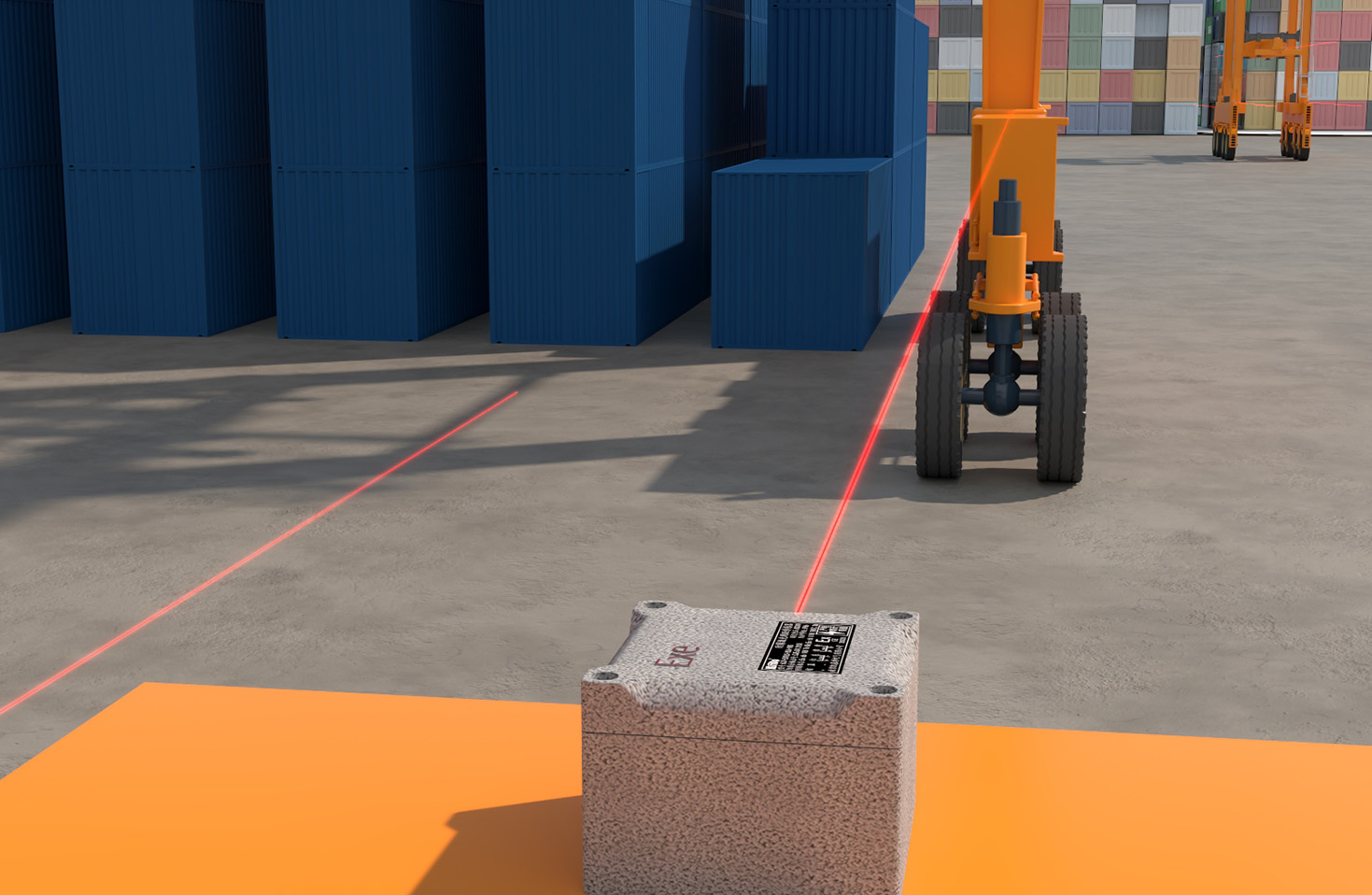
When selecting a ring laser count sensor for a specific application, several factors must be considered. The required resolution and accuracy should align with the process tolerances. The sensor's measurement range and maximum operating speed must accommodate the target's motion parameters. Environmental conditions, including temperature extremes, humidity, and potential exposure to contaminants, dictate the necessary ingress protection (IP) rating and housing material. Output interface compatibility—whether analog voltage, digital pulses, or fieldbus protocols like PROFINET or EtherCAT—is crucial for integration with existing control systems. Lastly, ease of installation and alignment, along with vendor support for calibration and troubleshooting, can significantly impact implementation success.
In conclusion, ring laser count sensors represent a high-performance sensing technology that addresses the demanding requirements of modern industrial automation. By leveraging laser interferometry, they deliver unparalleled precision and reliability for motion detection and counting tasks. As industries continue to advance toward smarter, more connected operations—embracing concepts like Industry 4.0 and the Industrial Internet of Things (IIoT)—the role of such accurate sensors becomes increasingly vital. Engineers are encouraged to evaluate their specific application needs thoroughly to harness the full potential of ring laser count sensors, thereby enhancing process efficiency, product quality, and overall system intelligence.