In the realm of industrial automation, where precision, reliability, and safety are non-negotiable, the choice of sensing components is paramount. Among these, the original proximity sensor stands as a critical, often unsung hero. Unlike generic or aftermarket alternatives, an original proximity sensor is specifically engineered and manufactured by the original equipment manufacturer (OEM) of a larger system or machine. This intrinsic link between sensor and system is the foundation of its superior performance.
The core advantage of an original proximity sensor lies in its guaranteed compatibility and seamless integration. Designed in tandem with the host machinery—be it a robotic arm, a conveyor system, or a high-speed packaging line—these sensors communicate flawlessly with the control unit. They speak the correct "language," operating at the precise voltage, current, and signal protocol required. This eliminates the guesswork, configuration headaches, and potential communication errors that can plague the integration of third-party sensors. The result is a system that functions as a cohesive, optimized whole from the moment of installation.
Performance consistency is another hallmark. Original manufacturers subject their proximity sensors to rigorous testing under conditions that mirror real-world industrial environments. This includes extreme temperatures, exposure to coolants, oils, and metal particulates, and resistance to vibration and electromagnetic interference. An original inductive proximity sensor, for instance, is calibrated to detect specific metals at exact ranges with unwavering repeatability. A capacitive original sensor is finely tuned for its intended material detection, avoiding false triggers. This level of predictable performance is essential for maintaining product quality, optimizing cycle times, and preventing costly production stoppages.
Durability and longevity are engineered into these components from the outset. Using high-grade materials and robust sealing techniques (often meeting IP67 or IP69K ratings), original proximity sensors are built to endure the harsh conditions of factory floors. Their mean time between failures (MTBF) is typically documented and validated, providing plant managers with reliable data for maintenance scheduling and lifecycle costing. While the initial purchase price may be higher than a generic equivalent, the total cost of ownership is often lower due to reduced downtime, fewer replacements, and avoided production losses from sensor failure.
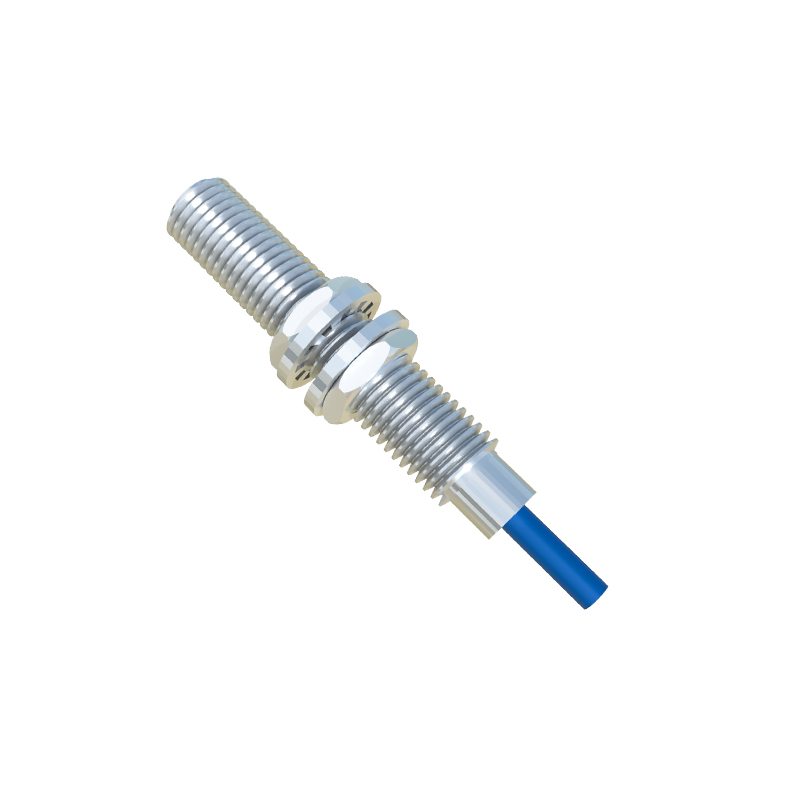
From a technical support and documentation perspective, sourcing original sensors simplifies operations. Maintenance teams have access to accurate, manufacturer-provided datasheets, wiring diagrams, and troubleshooting guides. When issues arise, OEM technical support can provide definitive assistance, as they possess complete knowledge of the sensor's design parameters and its interaction with their equipment. This contrasts sharply with the opaque support channels that may accompany non-original parts.
The application spectrum for original proximity sensors is vast. In automotive manufacturing, they ensure robotic welders are in perfect position. In food and beverage processing, stainless-steel housed original sensors withstand washdowns while detecting product presence on lines. In material handling, they provide precise position feedback for automated guided vehicles (AGVs) and crane systems. In each case, the sensor is not just an add-on but an integral, certified component of the automation solution.
Ultimately, specifying original proximity sensors is an investment in system integrity. It is a decision that prioritizes long-term operational stability over short-term cost savings. In an era of smart factories and Industry 4.0, where data accuracy and equipment interoperability are crucial, the role of the genuine, OEM-engineered sensor becomes even more critical. It ensures that the foundational layer of data acquisition—the detection of an object's presence or absence—is trustworthy, forming a reliable basis for all subsequent automation, analysis, and control.