Proximity sensors are fundamental components in modern automation, playing a critical role in counting objects without physical contact. Their counting principle is elegantly simple yet highly effective, forming the backbone of numerous industrial and consumer applications. Understanding how these sensors perform counting operations requires a look into their core functionality and the logical systems that interpret their signals.
At its heart, the counting function is an application built upon the basic sensing action. A proximity sensor, whether inductive, capacitive, photoelectric, or ultrasonic, detects the presence or absence of a target object within its sensing range. Each detection event generates a discrete electronic signal—typically a change in voltage or current from the sensor's output. This signal transition, from "off" to "on" or vice-versa, is the fundamental pulse that represents one count. For instance, as a bottle moves past a photoelectric sensor on a conveyor belt, it interrupts the light beam. This interruption causes the sensor's output to switch states, creating a single, clean pulse.
The raw pulse from the sensor is not a count by itself; it must be processed. This is where counters or programmable logic controllers (PLCs) enter the picture. The sensor's output wire is connected to a counter input. This counter is an electronic device or a software function programmed to recognize each signal transition as a countable event. Modern systems often use "high-speed counters" within PLCs that can accurately capture very fast pulse sequences, ensuring no counts are missed even with rapidly moving objects. The counter is programmed with logic: it might increment by one for every rising edge (transition from low to high voltage) or for every falling edge (high to low), depending on the application setup. This programming defines what constitutes one countable event.
Accuracy in proximity sensor counting hinges on several factors. First is the sensor's response time—the speed at which it can detect an object and change its output state. A fast response time is crucial for high-speed production lines. Second is the object's characteristics. For reliable counting, objects must be separated by a minimum distance. If objects are too close together, they may be sensed as one continuous presence, resulting in an undercount. This is known as "shielding" or "mutual interference." Proper sensor selection and mounting position are adjusted to ensure each object creates a distinct, separate pulse. Debouncing is another critical electronic technique. Mechanical vibration or sensor oscillation might cause the output to flicker rapidly when an object is at the very edge of the detection field. Debouncing circuits or software filters ignore these rapid, spurious transitions, counting only one sustained detection.
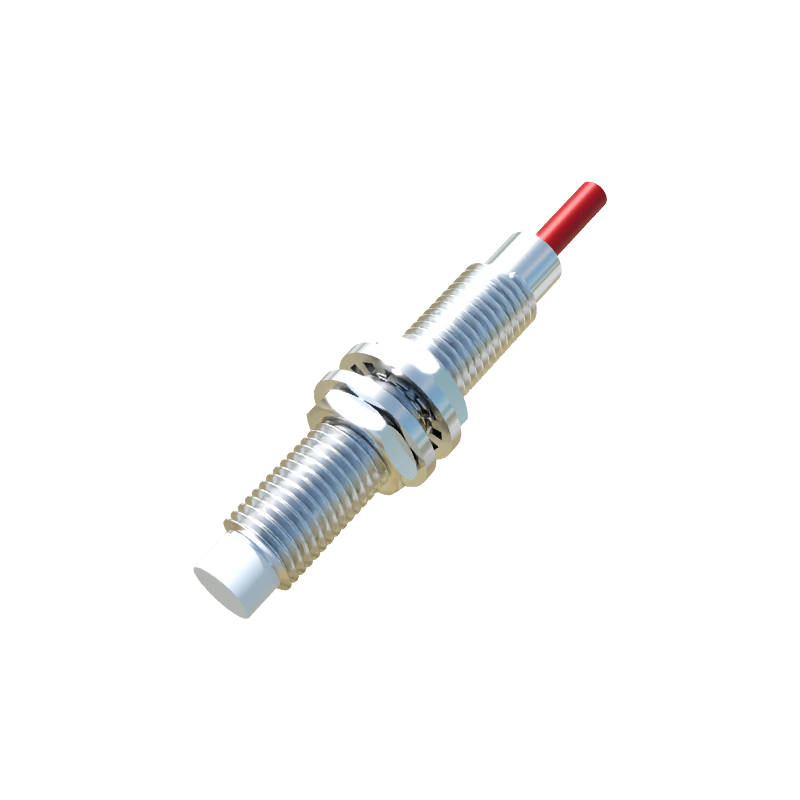
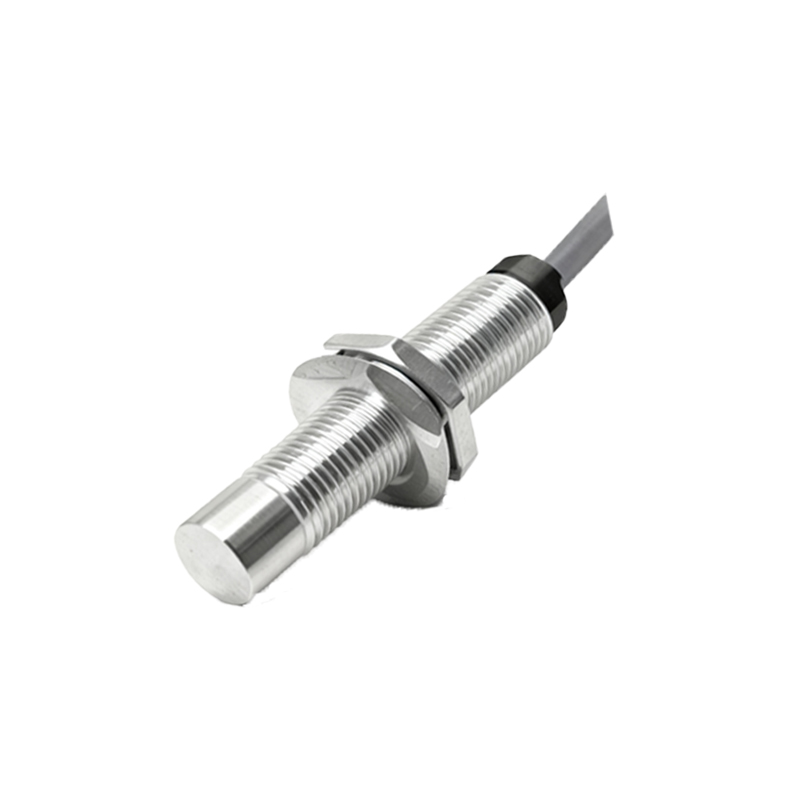
Different sensor types are suited to different counting tasks. Inductive proximity sensors are ideal for counting metallic objects, like engine parts or cans, in harsh industrial environments. Capacitive sensors can count non-metallic materials such as plastic bottles, wood, or liquids. Photoelectric sensors, through beam-break or reflective modes, are extremely versatile for counting objects of various materials on conveyors, in packaging, and in logistics. Ultrasonic sensors can count objects where other technologies struggle, such as transparent glass or in dusty conditions, by measuring the time-of-flight of sound waves.
The applications of sensor-based counting are vast. In manufacturing, they count components for inventory, control batch sizes, and monitor production rates. In packaging, they ensure the correct number of items are placed in each box. In automotive assembly, they count parts fed to robots. In warehousing, they monitor items passing through sorting gates. Beyond simple incrementing, advanced counting systems use sensors in pairs for bidirectional counting (determining if objects are entering or leaving a space) or in arrays for complex sorting and routing decisions.
In summary, the counting principle of proximity sensors transforms a simple presence-detection mechanism into a powerful quantitative tool. By generating a precise electrical pulse for each detected object and coupling that pulse with a fast, logical counter, these systems achieve high levels of accuracy and reliability. This seamless integration of sensing and logic is what drives efficiency, automation, and precise control across countless industries, making proximity sensor counting a silent but indispensable technology in the modern world.