Selecting the ideal proximity sensor for an industrial application is a critical decision that impacts system reliability, efficiency, and cost. As an experienced electrical engineer, I've witnessed numerous projects where the wrong sensor choice led to downtime or performance issues. This guide distills key selection criteria to help you make an informed decision.
First, understand the fundamental types. Inductive proximity sensors are the workhorses for detecting metallic objects, typically ferrous metals like steel. Their operation is based on generating an electromagnetic field. When a metal target enters this field, it causes a change in oscillation amplitude, which the sensor detects. They are robust, contactless, and excellent for harsh environments with dust or oil. However, they are ineffective for non-metallic materials. For these, capacitive proximity sensors are the solution. They can detect a wide variety of materials—liquids, plastics, wood, and even granular substances—by sensing changes in capacitance. Photoelectric sensors, using a light beam (often infrared, laser, or visible LED), offer the longest sensing ranges and are perfect for detecting small objects or applications requiring precise positioning. Finally, ultrasonic sensors use sound waves, making them suitable for detecting objects of varying colors and transparency, as well as for distance measurement and level sensing.
The core of the selection process lies in evaluating your application's specific parameters. Begin with the Target Material. Is it metal, plastic, liquid, or something else? This immediately narrows down your sensor type. For instance, detecting a plastic bottle cap on a conveyor belt rules out an inductive sensor.
Next, consider the Sensing Distance, often called the nominal sensing range (Sn). This is the distance at which the sensor reliably detects a standard target. Always derate this value. For reliable operation, choose a sensor with a rated sensing distance 20-30% greater than your actual required distance to account for temperature fluctuations, voltage variations, and target material inconsistencies. Don't forget the Installation Constraints. Will the sensor be flush-mounted or non-flush? Flush-mounted inductive sensors can be installed metal-to-metal without affecting their sensing range, whereas non-flush types offer longer ranges but require clearance around the sensing face.
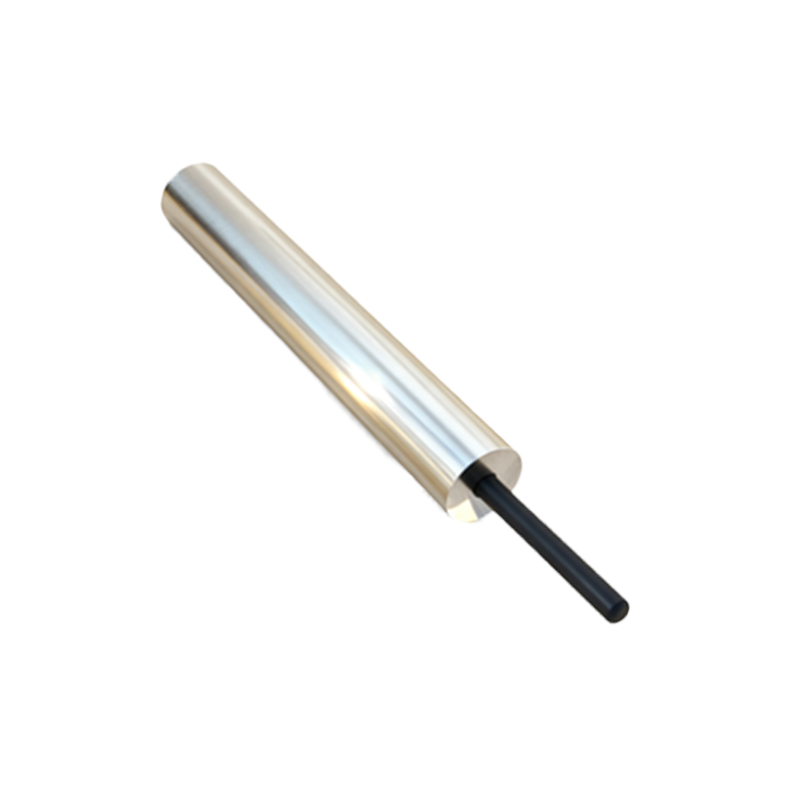
The Output Configuration is crucial for integration. Do you need a digital switch output (PNP/NPN sourcing/sinking), an analog output (4-20mA, 0-10V) for distance-proportional signals, or a specialized IO-Link digital communication output for advanced diagnostics and parameterization? Match this to your PLC or controller input. Switching Frequency defines how quickly the sensor can respond to targets passing by. A high-speed packaging line requires a sensor with a kHz-range frequency, while a slow-moving actuator does not.
Environmental factors are non-negotiable. Evaluate the IP (Ingress Protection) Rating. A washdown area in a food plant demands at least IP67 (dust-tight and protected against temporary immersion) or IP69K (for high-pressure, high-temperature cleaning). For outdoor use, consider sensors with robust housings and ratings like IP68. Temperature Range, both ambient and housing, must align with the operating environment. Extreme cold or heat can affect performance and lifespan. Also, assess exposure to Chemicals, Oils, or Welding Spatter. Stainless steel housings or specialized coatings (e.g., PTFE) may be necessary.
Electrical characteristics are fundamental. Ensure the Supply Voltage (e.g., 10-30V DC, 20-250V AC) matches your plant's power system. Output Current capacity must be sufficient to drive the connected load (relay, PLC input, etc.) with a safety margin. For DC sensors, pay close attention to the wiring scheme (2-wire, 3-wire, 4-wire) and whether you need a normally-open (NO) or normally-closed (NC) contact.
Finally, look beyond basic specs. Modern sensors offer Diagnostic Features like LED indicators for output status and power, short-circuit protection, and overload protection. For Industry 4.0 applications, sensors with IO-Link capability provide invaluable data on operating hours, temperature stress, and signal quality, enabling predictive maintenance. Always consider the mechanical design: Housing Shape (cylindrical, rectangular, slot-style) and Connection Type (pre-wired cable, quick-disconnect M8/M12 connector) affect installation ease and maintenance.
In summary, there is no universal "best" proximity sensor. The optimal choice is a systematic balance of target properties, environmental conditions, electrical requirements, and desired functionality. By methodically analyzing these factors, you can specify a sensor that delivers long-term, trouble-free operation, ensuring the smooth and efficient performance of your automated system. Always consult the manufacturer