In the realm of industrial automation, diffuse reflective proximity sensors stand as a pivotal technology for non-contact object detection. These sensors operate on a straightforward yet effective principle: they emit a beam of light, typically infrared or visible LED-based, and detect the light that is scattered back from a target object. Unlike through-beam or retro-reflective sensors, diffuse sensors do not require a separate receiver or reflector; the sensor itself houses both the emitter and receiver. This self-contained design simplifies installation and alignment, making them highly versatile for diverse applications.
The core mechanism involves the sensor's light source projecting onto a surface. When an object enters the sensing range, part of the emitted light diffusely reflects off the object and returns to the receiver. The sensor's internal circuitry then processes this signal to trigger an output, such as switching a load or sending data to a controller. Key performance parameters include sensing distance, which varies based on the object's color, material, and surface texture. For instance, a white, matte surface reflects more light, allowing for longer detection ranges, while dark or glossy surfaces may reduce effective distance due to absorption or specular reflection. Modern diffuse sensors often incorporate background suppression or foreground suppression technologies to enhance reliability by ignoring objects beyond a set distance or distinguishing between close and far targets.
Applications of diffuse reflective proximity sensors are extensive across manufacturing, packaging, material handling, and robotics. They are commonly used for detecting presence or absence of items on conveyor belts, counting products, monitoring fill levels in containers, and ensuring proper positioning in assembly lines. Their robustness against environmental factors like dust, moisture, and vibration—especially in models with IP67 or higher ratings—makes them suitable for harsh industrial settings. Additionally, advancements in miniaturization and smart features, such as IO-Link connectivity, enable real-time diagnostics and parameter adjustments, boosting operational efficiency.
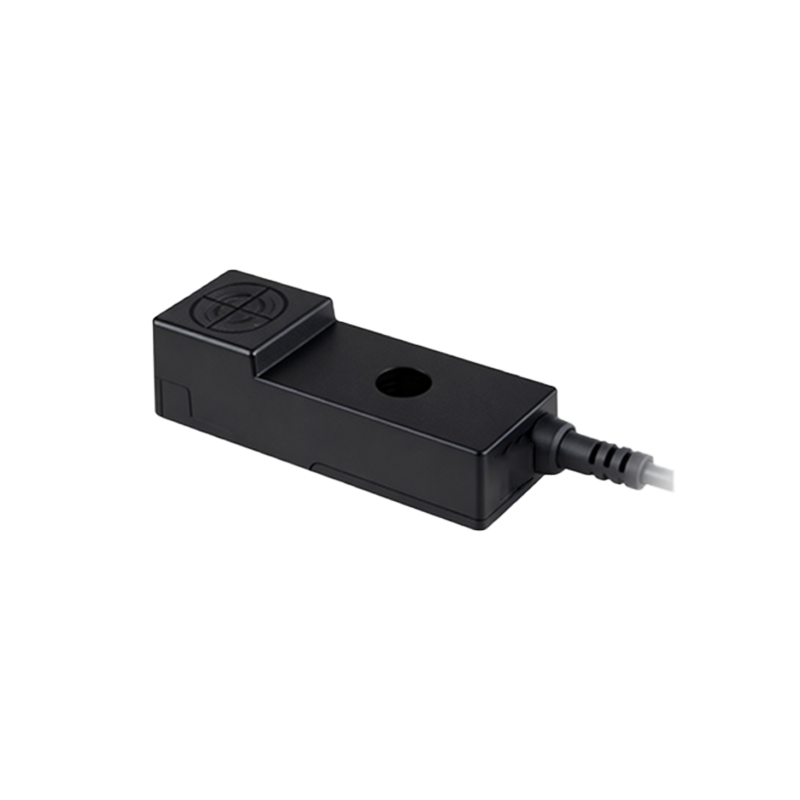
When selecting a diffuse sensor, engineers must consider factors like sensing range, response time, output type (e.g., NPN/PNP, analog, or digital), and environmental conditions. Calibration and testing with actual target objects are crucial to ensure optimal performance. Regular maintenance, including lens cleaning and checking for alignment shifts, helps prevent false triggers and downtime. As Industry 4.0 evolves, these sensors continue to integrate with IoT systems, providing data for predictive maintenance and process optimization. In summary, diffuse reflective proximity sensors offer a cost-effective, flexible solution for object detection, driving precision and automation in modern industrial ecosystems.