In the landscape of modern industrial automation, precision and reliability are paramount. Among the myriad of technologies enabling this high level of control, laser positioning sensors stand out as a critical component. These sophisticated devices utilize laser beams to detect, measure, and verify the position of objects with exceptional accuracy, fundamentally transforming operations across manufacturing, robotics, logistics, and quality control.
At its core, a laser positioning sensor operates by emitting a focused beam of light towards a target. The sensor then analyzes the reflected light—either through triangulation, time-of-flight, or phase-shift measurement principles—to calculate the exact distance or position of the object. This non-contact method offers significant advantages over traditional mechanical or ultrasonic sensors, including higher speed, micron-level precision, and immunity to environmental factors like dust, noise, or varying surface textures. For instance, in automated assembly lines, these sensors ensure components are placed correctly before welding or fastening, drastically reducing error rates and material waste.
The applications of laser positioning sensors are vast and varied. In robotics, they provide essential feedback for robotic arms performing precise tasks such as pick-and-place, welding, or painting, enabling real-time adjustments and enhancing path accuracy. Within the logistics sector, these sensors facilitate automated guided vehicles (AGVs) in navigating warehouses by detecting pallets and obstacles, thus optimizing storage and retrieval processes. Furthermore, in quality assurance, laser sensors perform critical dimensional inspections, verifying part tolerances and detecting defects without physical contact, which preserves product integrity and accelerates throughput.

Another pivotal role lies in alignment and calibration processes. Whether aligning semiconductor wafers in electronics manufacturing or calibrating cutting tools in CNC machining, laser positioning sensors deliver the sub-micron accuracy required for high-value production. Their ability to function in challenging environments, such as high temperatures or volatile areas, further underscores their robustness. Modern iterations also integrate with Industrial Internet of Things (IIoT) platforms, allowing for data collection and predictive maintenance. By monitoring sensor performance and trends, engineers can preemptively address drift or contamination, minimizing downtime.
Despite their advantages, selecting the appropriate laser sensor necessitates careful consideration of factors like range, resolution, response time, and environmental conditions. For example, a time-of-flight sensor might be ideal for long-range detection in warehouse automation, while a triangulation-based sensor excels in short-range, high-precision measurement tasks. Additionally, proper installation and calibration are crucial to mitigate issues like beam interference or misalignment.
Looking ahead, advancements in laser technology and artificial intelligence are poised to expand the capabilities of these sensors. Smart sensors with embedded AI can now interpret complex patterns and make autonomous decisions, paving the way for more adaptive and intelligent automation systems. As industries continue to pursue greater efficiency and miniaturization, the demand for advanced laser positioning solutions will only intensify.
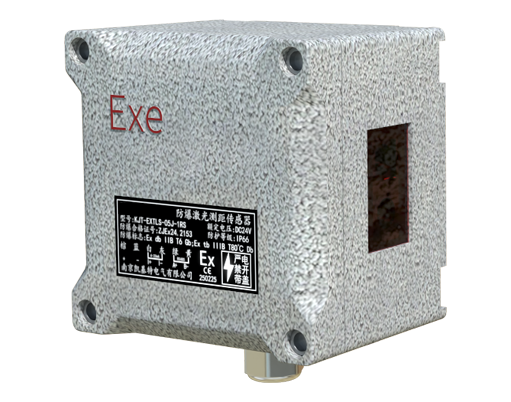
In conclusion, laser positioning sensors are indispensable tools in the quest for operational excellence. By delivering unmatched precision and reliability, they not only enhance productivity and quality but also drive innovation across sectors. Their evolving integration with digital systems promises to further solidify their role as the eyes of modern automation, enabling smarter, more responsive industrial ecosystems.