In the realm of industrial automation and control systems, the reliability and precision of sensing components are non-negotiable. Among the myriad of options available, Gowang proximity sensor switches have carved out a reputation for robust performance in demanding environments. This article provides a technical examination of these inductive proximity sensors, their operational principles, key specifications, and typical application scenarios, tailored for engineers and procurement specialists.
Fundamentally, a Gowang proximity sensor is a type of non-contact electronic sensor. It detects the presence or absence of metallic objects—typically ferrous metals like steel and iron, with some models tuned for non-ferrous metals like aluminum, copper, or brass—without any physical contact. The core technology is based on the principle of electromagnetic induction. The sensor's face contains an oscillator circuit that generates a high-frequency electromagnetic field. When a metallic target enters this field, eddy currents are induced on the target's surface. This causes a change in the oscillation amplitude within the sensor, which is detected by a threshold circuit. This change triggers a solid-state switch (usually an NPN or PNP transistor) to change state, sending a clear signal to the connected programmable logic controller (PLC) or other control unit.
The construction of Gowang sensors is designed for industrial durability. Housings are commonly made from nickel-plated brass, stainless steel, or high-grade PBT plastic, offering excellent resistance to corrosion, chemicals, and physical impact. Many models feature IP67 or IP68 ingress protection ratings, making them suitable for washdown environments in food processing or resistant to coolants and oils in machining centers. The sensing face is often a wear-resistant material like PTFE or ceramic, ensuring long-term stability even with abrasive media nearby.
Key performance parameters define their suitability for specific tasks. Sensing distance, a critical specification, is rated as the "nominal sensing distance (Sn)" under standardized conditions. Common ranges for barrel-style sensors are from 2mm to 15mm. It is crucial to note that the actual sensing distance can be affected by the target material's type, size, and shape. Temperature range is another vital factor, with standard models operating reliably from -25°C to +70°C, and specialized versions extending this range. Switching frequency, indicating how many on/off cycles the sensor can handle per second, determines its capability in high-speed counting or positioning applications. Output configurations are predominantly DC 3-wire types, with NPN (sinking) and PNP (sourcing) outputs available to interface seamlessly with different PLC input card conventions. Some models also offer analog (4-20mA or 0-10V) or IO-Link outputs for more advanced data communication.
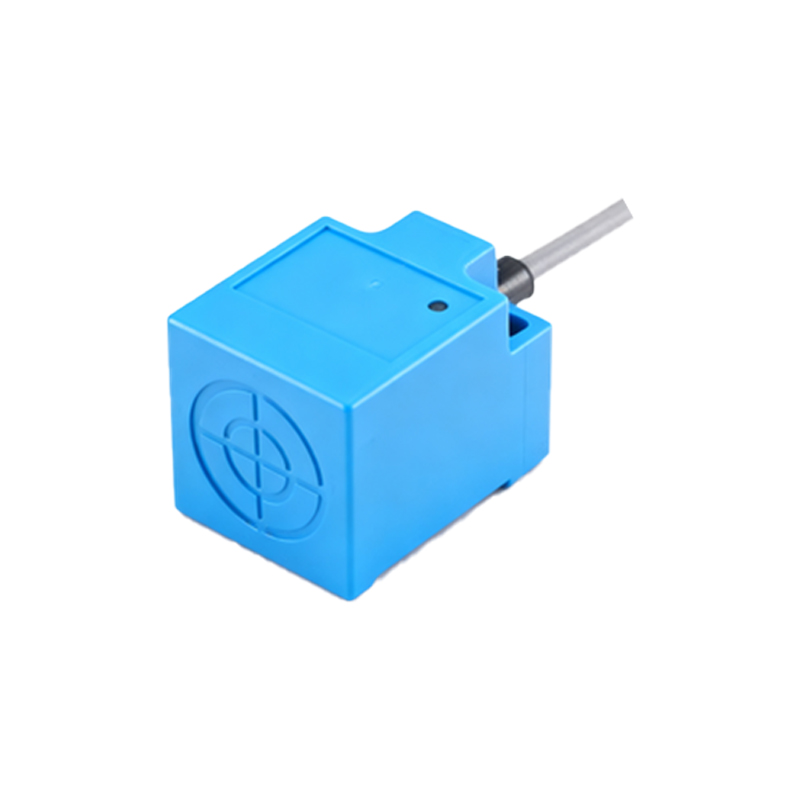
Wiring and installation follow industry standards. The standard three wires are: brown for DC positive supply (typically 10-30V DC), blue for DC common (0V), and black for the switched output signal. Proper shielding and routing of cables are recommended to minimize electrical noise interference in plant environments. Mounting requires attention to ensure non-metallic surroundings in the sensing area to prevent false triggering, and adequate clearance between multiple sensors to avoid mutual interference.
Application examples for Gowang proximity sensors are extensive across factory floors. They are quintessential for end-of-stroke detection on pneumatic or hydraulic cylinders, where they provide precise feedback on piston position. In conveyor systems, they count passing products, detect jams, or confirm the presence of components for robotic pick-and-place operations. Within machine tools, they serve as limit switches for axis movement or tool changer positioning. Their non-contact nature makes them ideal for repetitive tasks where mechanical limit switches would suffer from wear, such as in high-cycle packaging machinery or automotive assembly lines.
When selecting a Gowang sensor, engineers must consider several factors: the target material composition, the required sensing distance, the environmental conditions (presence of dust, moisture, or chemicals), the electrical interface of the control system, and the physical space constraints for mounting. Consulting the detailed datasheet for derating curves, temperature coefficients, and housing dimensions is always a best practice.
In conclusion, Gowang proximity sensor switches represent a mature and critical technology in industrial sensing. Their solid-state, non-contact operation provides a maintenance-free and highly reliable solution for object detection and position feedback. By understanding their underlying technology, specifications, and application guidelines, engineers can effectively integrate these components to enhance the efficiency, safety, and precision of automated systems. As Industry 4.0 evolves, the foundational role of such robust, discrete sensors remains undiminished, forming the essential sensory layer for smarter manufacturing.