In the rapidly evolving landscape of industrial automation and human-machine interaction, VR infrared proximity sensors have emerged as a critical enabling technology. These sophisticated devices, which integrate infrared (IR) light emission and detection principles within virtual reality (VR) and augmented reality (AR) systems, are fundamentally reshaping how machines perceive and respond to their environment and users. Unlike traditional sensors, VR infrared proximity sensors are designed for high-precision, non-contact distance measurement and spatial awareness, making them indispensable in modern smart factories, robotics, and interactive systems.
At its core, the technology operates by emitting a beam of infrared light, typically from a light-emitting diode (LED) or a laser diode. This invisible light travels until it encounters an object within its field of view. A portion of the light is reflected back towards the sensor, where a dedicated photodiode or an array detects it. The sensor's internal circuitry, often utilizing time-of-flight (ToF) or triangulation methods, then calculates the distance to the object based on the intensity of the reflected signal or the time delay between emission and reception. This process occurs thousands of times per second, providing real-time, millimeter-accurate proximity data.
The integration of this technology into VR/AR ecosystems is particularly transformative. In VR headsets, for instance, an array of IR proximity sensors performs crucial functions. They enable precise head and controller tracking within a defined space, allowing for immersive, room-scale experiences. More fundamentally, they act as a vital safety feature by detecting when a user is too close to physical boundaries or obstacles, triggering visual warnings within the virtual environment. Furthermore, these sensors facilitate intuitive user interactions, such as gesture recognition and eye-tracking, by monitoring the precise position of hands, fingers, and gaze relative to the device.
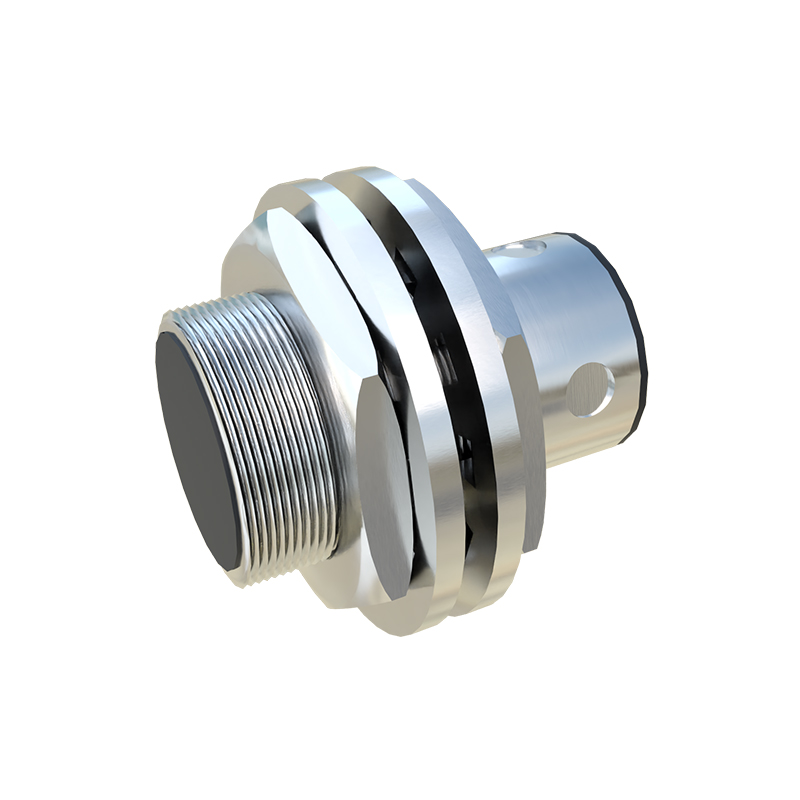
Beyond consumer electronics, the industrial applications of VR infrared proximity sensors are vast and growing. In automated guided vehicles (AGVs) and autonomous mobile robots (AMRs), these sensors provide essential collision avoidance capabilities. They create a dynamic safety bubble around the machinery, detecting personnel, equipment, or unexpected obstacles and initiating immediate stops or path corrections. On assembly lines, they are deployed for precise object detection, part presence verification, and robotic guidance, ensuring flawless pick-and-place operations and quality control. Their immunity to ambient visible light and ability to function in low-visibility conditions (such as smoke or dust) make them exceptionally reliable in harsh industrial settings.
The advantages over conventional sensing methods like ultrasonic or capacitive sensors are significant. IR proximity sensors offer superior resolution, faster response times, and are less susceptible to acoustic noise or material dielectric properties. Their compact size allows for seamless integration into sleek VR hardware and complex robotic end-effectors. However, engineers must account for certain limitations. Performance can be degraded by highly reflective or absorbent surfaces, extreme ambient IR interference (e.g., from sunlight or high-temperature sources), and optical obstructions. Therefore, proper sensor selection, calibration, and environmental shielding are paramount in system design.
Looking ahead, the future of VR infrared proximity sensors is intertwined with advancements in AI and sensor fusion. The next generation of sensors will feature enhanced miniaturization, lower power consumption, and higher data rates. More importantly, they will not operate in isolation. The trend is toward intelligent sensor systems where data from IR proximity sensors is fused with inputs from cameras, LiDAR, and inertial measurement units (IMUs). This multi-modal perception, processed by edge-computing AI algorithms, will enable unprecedented levels of contextual awareness. For example, a collaborative robot (cobot) could not only sense a human's proximity but also interpret their intent through gesture analysis, allowing for more natural and safe collaboration.
In conclusion, VR infrared proximity sensors represent a pivotal convergence of optics, electronics, and software. They are the unseen eyes of next-generation industrial and interactive systems, providing the essential spatial intelligence that drives automation, safety, and immersive experiences. As VR/AR technologies mature and Industry 4.0 initiatives accelerate, the demand for more advanced, reliable, and intelligent proximity sensing solutions will only intensify. For engineers and system integrators, mastering this technology is no longer optional but a fundamental requirement for building the responsive and intelligent systems of tomorrow.