In the realm of industrial automation, precise length measurement is a critical parameter for ensuring product quality, optimizing processes, and maintaining operational efficiency. Among the various technologies employed for this purpose, proximity sensors have emerged as a robust, reliable, and versatile solution. Unlike contact-based measurement tools that can cause wear or damage, proximity sensors operate without physical contact, making them ideal for high-speed, continuous, or delicate applications. This article delves into the principles, types, and practical implementations of proximity sensors for length measurement, highlighting their advantages and key considerations for system integration.
Proximity sensors function by detecting the presence or absence of a target object within a specified sensing range. For length measurement, this capability is leveraged by monitoring the movement of a target attached to a moving component, such as a conveyor belt, linear actuator, or rotating shaft. The most common types used in length measurement are inductive, capacitive, and photoelectric (optical) proximity sensors. Inductive sensors are ideal for detecting metallic objects, utilizing electromagnetic fields to sense ferrous and non-ferrous metals. They are highly durable and resistant to environmental factors like dust, oil, and moisture, making them suitable for harsh industrial environments. Capacitive sensors, on the other hand, can detect both metallic and non-metallic materials, including plastics, liquids, and granular substances, by measuring changes in capacitance. Photoelectric sensors use light beams, typically infrared or laser, to detect objects and are excellent for long-range sensing and high-precision applications.
The fundamental approach to length measurement with proximity sensors involves counting pulses or measuring time intervals. In rotary applications, a sensor is positioned to detect features on a rotating wheel or encoder disk coupled to a linear motion system. Each detected feature generates a pulse, and the total number of pulses corresponds to the distance traveled. For instance, if a wheel has a known circumference and the sensor counts the revolutions or teeth on a gear, the linear displacement can be accurately calculated using the formula: Length = (Number of Pulses / Pulses per Revolution) × Circumference. In linear setups, a sensor may detect marks, holes, or irregularities on a moving strip or tape. Advanced systems often integrate multiple sensors or use analog output sensors that provide a continuous voltage or current signal proportional to the distance, enabling real-time monitoring and control.
Key advantages of using proximity sensors for length measurement include non-contact operation, which eliminates mechanical wear and allows for high-speed measurement without slippage or drag. They offer fast response times, often in the microsecond range, ensuring accuracy in dynamic processes. Additionally, their solid-state design enhances longevity and reduces maintenance needs compared to mechanical counters or encoders. Modern proximity sensors also feature robust communication protocols like IO-Link, enabling seamless integration with Programmable Logic Controllers (PLCs) and Industrial Internet of Things (IIoT) systems for data logging, analytics, and predictive maintenance.
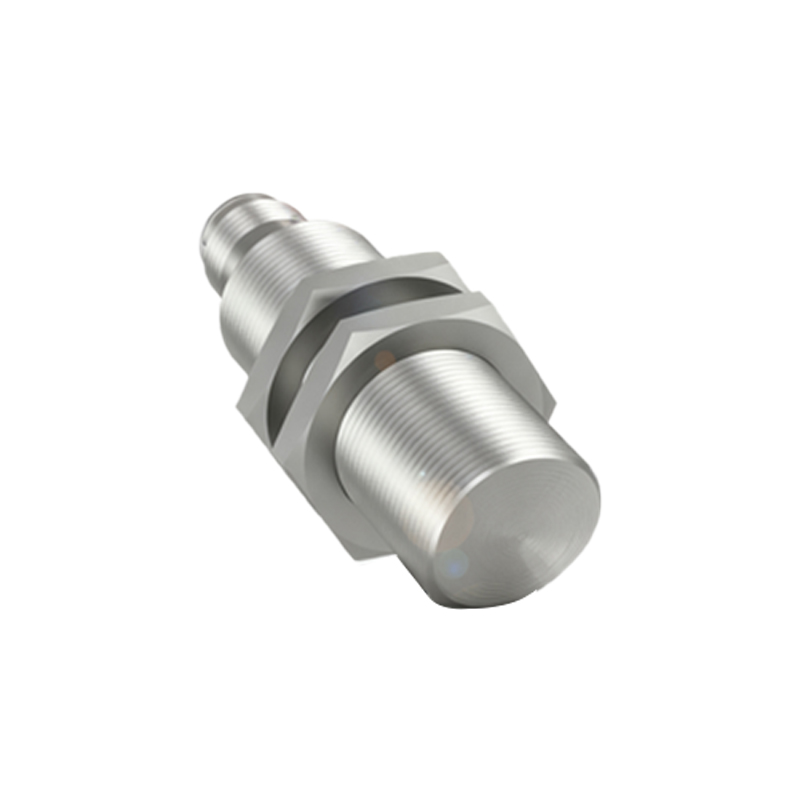
However, successful implementation requires careful consideration of several factors. The sensing range and resolution must match the application's precision requirements—ultrasonic or laser-based sensors may be needed for sub-millimeter accuracy. Environmental conditions, such as temperature fluctuations, vibration, and electromagnetic interference, can affect sensor performance, necessitating proper shielding and mounting. Material properties of the target, including color, reflectivity, and conductivity, also influence sensor selection; for example, photoelectric sensors may struggle with transparent or highly reflective surfaces. Calibration is crucial to account for mechanical tolerances and ensure measurement consistency over time.
In practical applications, proximity sensors are widely used in industries like packaging, textiles, metal processing, and printing. In wire and cable manufacturing, they measure the length of extruded products by counting rotations of a capstan wheel. In paper converting, they monitor roll diameter and web length to prevent breaks and optimize material usage. Automotive assembly lines employ them to verify component positioning and track conveyor movement. With the advent of Industry 4.0, these sensors are increasingly part of smart systems that provide real-time feedback for adaptive control, reducing waste and improving overall equipment effectiveness (OEE).
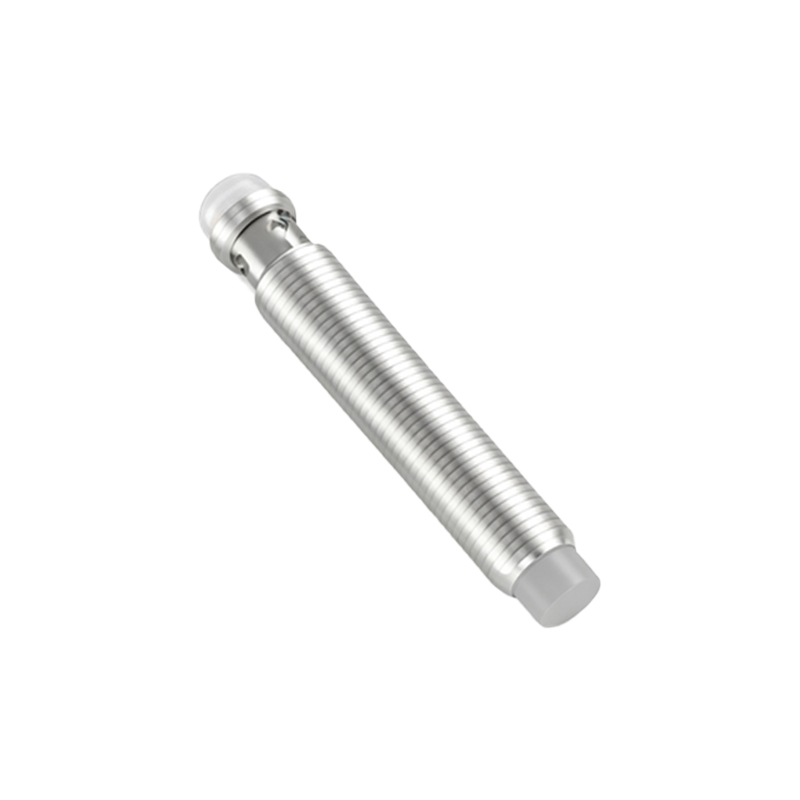
In conclusion, proximity sensors offer a flexible and efficient solution for length measurement in diverse industrial settings. By understanding their operating principles, selecting the appropriate type, and addressing integration challenges, engineers can harness their full potential to enhance automation, accuracy, and productivity. As technology advances, innovations in sensor miniaturization, wireless connectivity, and AI-driven diagnostics will further expand their role in the evolving landscape of industrial measurement and control.