In the realm of industrial automation and control systems, proximity sensors are indispensable components for non-contact detection of objects. Among the various types, sensors often categorized under designations like Type E and Type D represent distinct operational principles and application niches. This article delves into the technical characteristics, working mechanisms, and optimal use cases for these two prevalent categories of proximity sensors.
Proximity sensors, fundamentally, are devices that detect the presence or absence of an object within a specified range without physical contact. They achieve this by emitting an electromagnetic field, beam, or ultrasonic waves and monitoring changes in the return signal. The "E" and "D" classifications, while not universal standard nomenclature, are commonly used in industry parlance and manufacturer catalogs to differentiate between primary sensing technologies. Typically, "E" refers to Eddy-current or inductive sensors, while "D" often denotes Dielectric or capacitive sensors. Understanding this distinction is crucial for selecting the right sensor for a given task.
Type E: Inductive Proximity Sensors
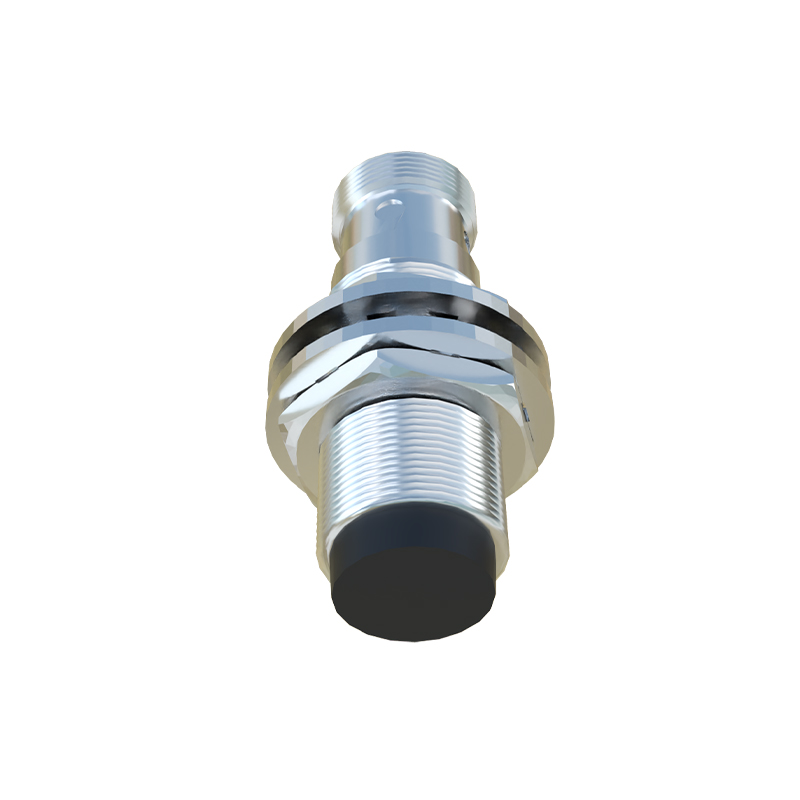
Inductive proximity sensors are the workhorses of metal detection. Their operation is based on the principle of electromagnetic induction. The sensor generates a high-frequency oscillating electromagnetic field from its active face. When a metallic object (the target) enters this field, eddy currents are induced on the surface of the metal. These eddy currents draw energy from the oscillator, causing a reduction in the oscillation amplitude. The sensor's internal circuit detects this amplitude change and triggers a switching output.
Key attributes of Type E sensors include:
Target Material: Exclusively detect ferrous and non-ferrous metals. Detection range and sensitivity can vary with metal type (e.g., steel is detected at the nominal range, while aluminum or copper may require a reduced sensing distance).
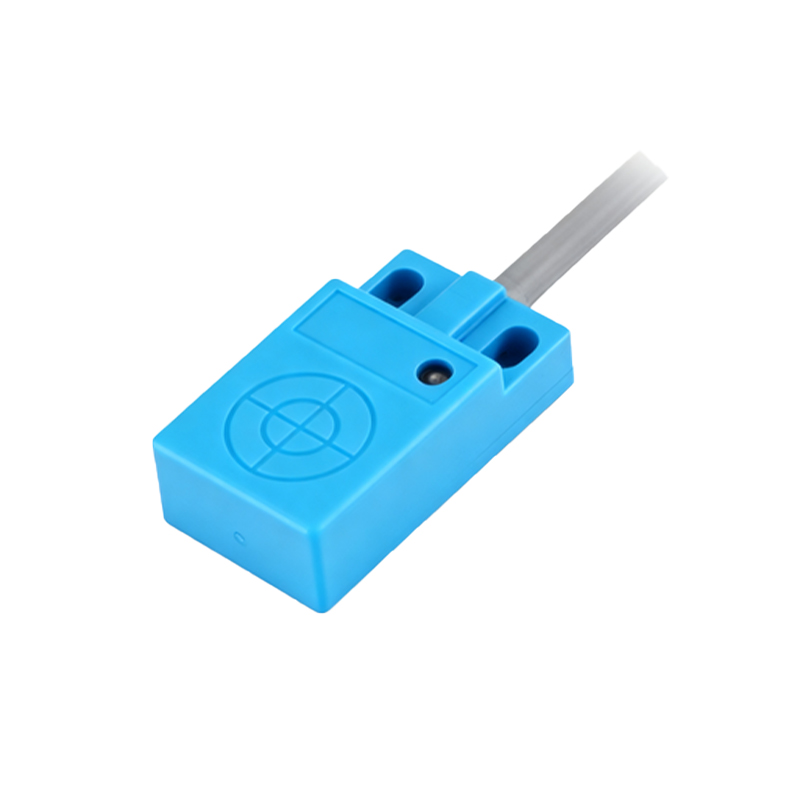
Sensing Range: Generally limited, from a few millimeters up to about 60 mm for larger models.
Environmental Robustness: Highly resistant to environmental factors like dust, dirt, oil, and moisture. They are unaffected by target color, transparency, or surface finish, as long as it is conductive.
Common Applications: Position sensing of metal parts (e.g., in CNC machines, robotic arms), counting metal objects on conveyors, limit switching in hydraulic cylinders, and detecting the presence of tools.
Type D: Capacitive Proximity Sensors
Capacitive proximity sensors operate on the principle of capacitance change. The sensor's active face acts as one plate of a capacitor, with the ground plane or the sensor housing acting as the other. The space between forms the dielectric. When any object (the target) approaches the active face, it alters the dielectric constant of this space, thereby changing the capacitance. The sensor's circuitry is tuned to oscillate at a specific frequency. The introduction of the target changes this frequency, and the circuit detects the shift to activate the output.
Key attributes of Type D sensors include:
Target Material: Can detect virtually any material—metals, plastics, glass, wood, liquids, powders, and granular substances. This makes them incredibly versatile.
Sensing Range: Similar to or slightly less than inductive sensors for metals, but can be adjusted (via a potentiometer) to sense different materials by changing the sensitivity threshold.
Environmental Considerations: Can be influenced by ambient humidity, extreme temperatures, or conductive dust, which may affect the dielectric constant. Enclosures are typically made of materials like PTFE or PEEK for chemical resistance when detecting aggressive media.
Common Applications: Liquid level detection in non-metallic tanks, presence detection of plastic bottles or cardboard boxes, material level monitoring in silos (for grains, powders), and touch-sensitive control interfaces.
Choosing Between Type E and Type D
The selection criterion is straightforward but critical:
Use an Inductive (Type E) sensor when your application involves detecting metallic objects only in challenging industrial environments. Its robustness and immunity to non-metallic substances prevent false triggers.
Use a Capacitive (Type D) sensor when you need to detect non-metallic materials or a wide variety of materials, including metals. Its adjustable sensitivity is a key advantage for fine-tuning applications like level control.
Both sensor types are available in diverse form factors (cylindrical, rectangular, ring-shaped), output configurations (PNP/NPN, NO/NC, analog), and connection types (pre-wired, quick-disconnect). Proper installation is paramount; maintaining the recommended lateral and axial clearance from metal mounting surfaces prevents interference, especially for inductive sensors.
In conclusion, the "E" and "D" of proximity sensors signify a fundamental technological divide. Inductive (E) sensors offer targeted, robust metal detection, while capacitive (D) sensors provide broad-spect