Laser sensors have become indispensable tools in modern industrial automation, offering unparalleled precision in distance measurement and object detection. At their core, these devices operate on the principle of emitting a focused beam of light—typically from a laser diode—toward a target. The sensor then analyzes the light that returns, either through triangulation, time-of-flight (ToF), or phase-shift methods, to calculate the exact distance to the object.
The most common method for short to medium-range applications is laser triangulation. In this approach, the sensor projects a laser spot onto the target surface. The reflected light is captured by a receiver lens at a known angle relative to the emitter. By analyzing the position of the reflected spot on a CMOS or CCD array, the sensor's internal processor calculates the distance using trigonometric relationships. This method provides high resolution, often in the micrometer range, making it ideal for tasks like thickness gauging, profile scanning, and precision assembly.
For longer distances, time-of-flight (ToF) sensors are typically employed. These devices measure the time it takes for a laser pulse to travel to the target and back. Since the speed of light is constant, the distance can be derived from the formula: Distance = (Speed of Light × Time of Flight) / 2. Modern ToF sensors use advanced timing circuits to achieve accuracies within millimeters over ranges extending to several hundred meters. They are widely used in applications such as level monitoring in silos, vehicle detection, and large-scale 3D mapping.

Phase-shift measurement is another refined technique, often used in high-precision rangefinders. Here, the sensor modulates the amplitude of the laser beam at a specific frequency. The phase difference between the emitted and reflected modulated signal is measured. This phase shift is directly proportional to the distance traveled. This method excels in environments requiring very fine resolution and stability, though its effective range is generally shorter than that of ToF systems.
Key factors influencing laser sensor performance include the target's surface properties, environmental conditions, and sensor specifications. Highly reflective or transparent surfaces can scatter or absorb laser light, leading to measurement errors. Many industrial sensors incorporate algorithms to compensate for varying surface colors and textures. Environmental challenges like dust, fog, or extreme temperatures are mitigated through protective housings and specialized optical filters.

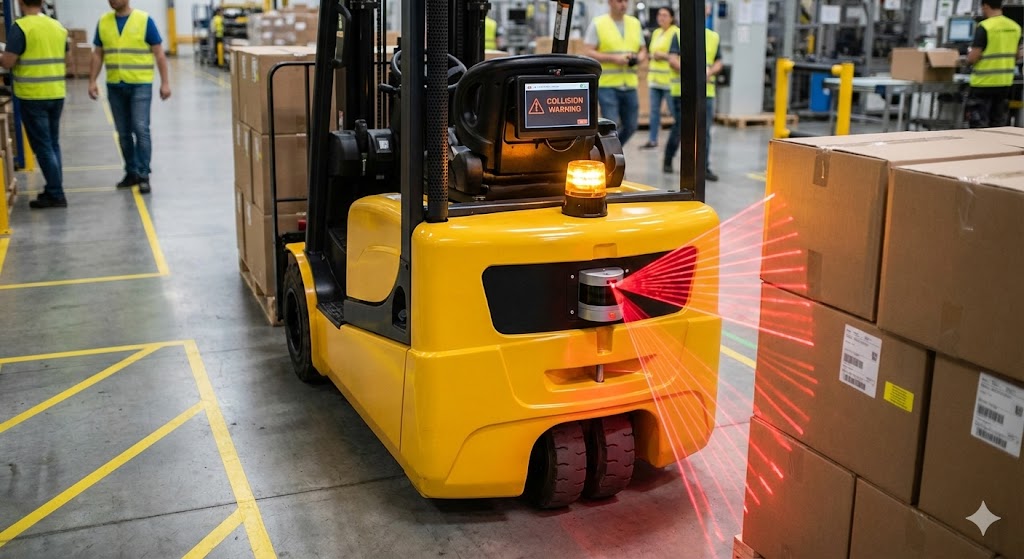
In industrial settings, laser distance sensors are integral to robotics, quality control, and logistics. Robotic arms use them for precise positioning and obstacle avoidance. In automated production lines, they verify component dimensions and alignments without physical contact, preventing wear and contamination. Warehouse automation systems rely on laser sensors for pallet dimensioning and inventory management, optimizing storage space and retrieval processes.
Advancements in laser technology continue to enhance sensor capabilities. The development of blue laser diodes, for instance, offers better performance on organic materials compared to traditional infrared lasers. Integration with Industrial Internet of Things (IIoT) platforms enables real-time data analytics and predictive maintenance, where sensors not only measure distance but also monitor their own health and calibration status.
Selecting the appropriate laser sensor requires careful consideration of the measurement range, required accuracy, response time, and environmental robustness. Engineers must also evaluate the output interface—whether analog voltage, current loop, or digital protocols like IO-Link or Ethernet/IP—to ensure seamless integration with existing control systems.
In conclusion, laser sensors provide a critical foundation for precision and efficiency in industrial automation. By understanding the underlying principles of triangulation, time-of-flight, and phase-shift measurement, engineers can deploy these versatile tools to solve complex measurement challenges, driving innovation and reliability in manufacturing and beyond. Their ability to deliver non-contact, high-speed, and accurate distance data makes them a cornerstone of modern smart factories and automated processes.