In industrial automation and machinery design, the precise and reliable detection of objects is paramount. Among the various sensing solutions, proximity sensors stand out for their non-contact operation, durability, and versatility. However, the effectiveness of any proximity sensor is heavily dependent on its installation. This is where the L-type proximity sensor mounting bracket becomes an indispensable component. Often overlooked, this simple piece of hardware is critical for ensuring optimal sensor performance, longevity, and system accuracy.
An L-type bracket, as the name suggests, is a mounting accessory shaped like the letter "L." It is typically constructed from robust materials such as stainless steel, aluminum, or galvanized steel, chosen for their strength, corrosion resistance, and ability to withstand harsh industrial environments like manufacturing floors, packaging lines, and robotic cells. The primary function of this bracket is to provide a secure, stable, and adjustable platform for mounting cylindrical inductive, capacitive, or photoelectric proximity sensors.
The design philosophy behind the L-type bracket addresses several key engineering challenges. First, it offers positional flexibility. The standard design features elongated mounting slots on both the vertical and horizontal legs. These slots allow for fine adjustments in both the X and Y axes after the bracket is secured to a machine frame or panel. This adjustability is crucial for aligning the sensor's sensing face precisely with the target object, ensuring the detection range and repeatability specified in the sensor's datasheet are achieved in practice. A misaligned sensor can lead to false triggers, missed detections, and ultimately, production downtime or quality issues.
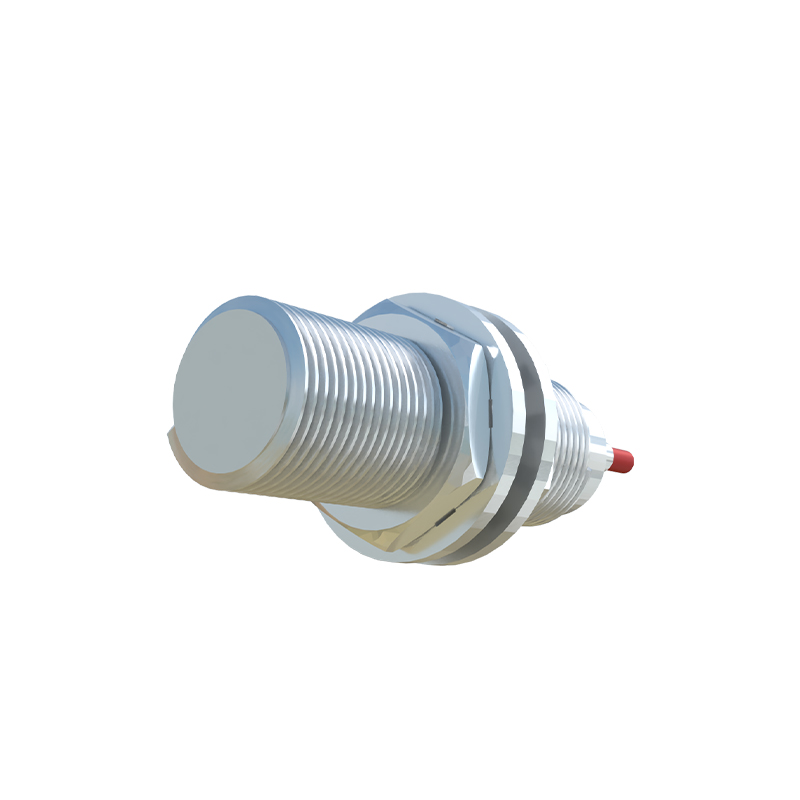
Second, the L-bracket provides necessary offset and protection. In many applications, the sensor cannot be mounted directly onto the machine structure due to spatial constraints, interfering machinery parts, or the risk of physical damage from passing objects. The bracket holds the sensor away from the mounting surface, creating a safe offset. This stand-off distance protects the sensor body from impacts, vibrations, and accumulation of debris. Furthermore, by positioning the sensor correctly, the bracket can help avoid sensing errors caused by the proximity of metallic machine parts (for inductive sensors) or ensure the correct beam path for photoelectric sensors.
Installation best practices for L-type brackets begin with selection. Engineers must specify a bracket compatible with the sensor's housing diameter. Common sizes are designed to accommodate industry-standard cylindrical sensors with diameters like 12mm, 18mm, or 30mm. The mounting hole on the horizontal leg is sized to provide a snug fit, often secured with an integrated locking screw or a separate clamp collar to prevent sensor rotation or slippage under vibration.
When mounting, it is essential to use the appropriate fasteners—usually metric screws and nuts—and torque them to the manufacturer's specifications to prevent loosening. The bracket should be mounted to a clean, flat, and rigid surface. After rough positioning, the sensor is inserted and loosely clamped. The final, precise alignment is then made by gently tapping the sensor or bracket into position while monitoring the sensor's output signal, often using the indicator LED. Once optimal alignment is confirmed, all locking screws on the bracket and sensor clamp must be fully tightened.
Beyond the standard fixed L-bracket, variations exist to solve specific problems. Swivel-head or pivot brackets incorporate a ball joint, allowing for angular adjustment in multiple planes, which is ideal for complex alignment scenarios. Some brackets come with vibration-damping inserts for applications with high levels of mechanical shock. For corrosive environments, brackets with specialized coatings or made from marine-grade stainless steel are available.
In conclusion, the L-type proximity sensor mounting bracket is a fundamental element in a well-engineered sensing system. Its role in providing mechanical stability, precise alignment, and physical protection directly translates to enhanced system reliability, reduced maintenance, and consistent process quality. Specifying the correct bracket and following proper installation procedures are simple yet effective steps that every electrical engineer, maintenance technician, and machine designer should prioritize to maximize the return on investment from their sensor technology and ensure seamless, uninterrupted industrial operations.