In the realm of industrial automation and machinery, proximity switch sensors stand as fundamental components, enabling non-contact detection of objects with remarkable precision and reliability. These devices, often simply called proximity sensors, operate by emitting an electromagnetic field or a beam of electromagnetic radiation and detecting changes in the field or return signal. The primary advantage is clear: they can detect objects without physical contact, thereby eliminating mechanical wear and tear, increasing operational speed, and enhancing system longevity.
The core technology behind proximity sensors varies, leading to several distinct types, each suited for specific applications. Inductive proximity sensors are among the most common. They generate an oscillating electromagnetic field and detect the eddy current losses caused when a metallic object enters this field. Consequently, they are exclusively used for detecting metals, particularly ferrous metals like steel and iron, though some models can detect non-ferrous metals like aluminum, copper, or brass at reduced sensing ranges. These sensors are workhorses in machine tools, automotive assembly lines, and metal stamping presses.
In contrast, capacitive proximity sensors can detect both metallic and non-metallic materials, including liquids, powders, plastics, and glass. They function by measuring changes in capacitance between the sensor and the target object. When an object nears the sensing face, it alters the dielectric constant of the surrounding space, triggering the switch. This makes them ideal for applications like level detection in tanks (for liquids or granular materials), material handling for non-metallic products, and presence detection of packaging materials.
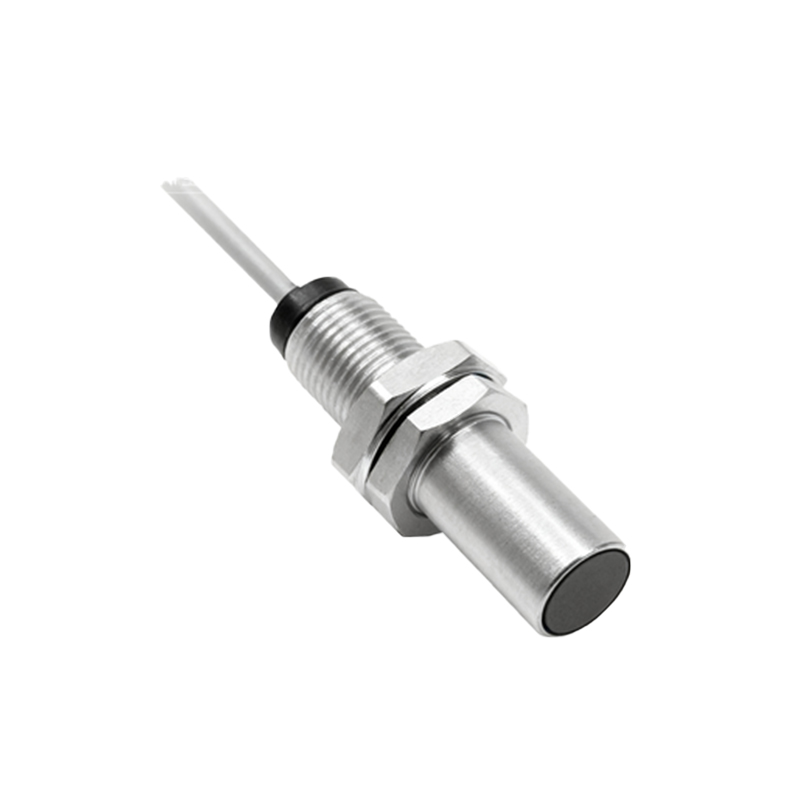
For applications requiring longer sensing distances or detection of any solid object regardless of material, photoelectric sensors are frequently employed. While technically a broader category, they share the non-contact principle. These sensors use a light beam (visible red, infrared, or laser) and detect its presence, absence, or reflection. Common configurations include through-beam (separate emitter and receiver), retro-reflective (bouncing light off a reflector), and diffuse (reflecting light directly off the target object). They are ubiquitous in packaging, material handling, and safety light curtains.
Another critical type is the ultrasonic proximity sensor. These devices emit high-frequency sound waves and evaluate the echo received back. They calculate the time interval between sending the signal and receiving the echo to determine the distance to an object. Ultrasonic sensors excel in harsh environments where dust, smoke, or target color might photoelectric sensors. They are commonly used for distance measurement, level sensing of bulk solids or liquids, and object detection in challenging industrial settings.
Selecting the right proximity switch sensor requires careful consideration of several key parameters. The sensing range, defined as the maximum distance at which the sensor can reliably detect a standard target, is paramount. Environmental factors such as temperature extremes, humidity, presence of chemicals, or washdown requirements (IP ratings) must be evaluated. The output type is also crucial; sensors typically provide discrete digital outputs (like NPN or PNP transistor outputs for PLCs) or analog outputs (like 4-20 mA or 0-10 V for proportional distance measurement). Other factors include the target material, size, and required response speed.
Installation and wiring are straightforward but demand attention. Proper mounting, ensuring adequate clearance from metal surrounds (especially for inductive types), and correct electrical connection as per the datasheet are essential for optimal performance. Regular maintenance is minimal but should include periodic cleaning of the sensing face to remove dirt, dust, or oil buildup that could impair function.
In conclusion, proximity switch sensors are indispensable in modern industrial systems. From ensuring precise positioning in robotic arms to counting bottles on a conveyor or preventing overfill in a silo, their applications are vast and varied. Understanding the different operating principles—inductive, capacitive, photoelectric, and ultrasonic—empowers engineers and technicians to make informed selection decisions. By matching the sensor's characteristics to the specific application demands for target material, sensing distance, and environmental conditions, one can build robust, efficient, and highly reliable automated systems that form the backbone of contemporary manufacturing and process control.