In the realm of industrial automation and precision engineering, laser sensor guidance has emerged as a cornerstone technology, enabling unparalleled accuracy in positioning, measurement, and control. This article delves into the core methodologies of laser sensor guidance, exploring their operational principles, applications, and the technological nuances that define their performance.
At its essence, laser guidance relies on the emission of coherent light beams—typically from laser diodes—and the precise analysis of their interaction with a target. The fundamental principle involves triangulation or time-of-flight (ToF) measurements. In triangulation-based systems, a laser projects a point or line onto a target surface. A receiver, positioned at a known angle relative to the emitter, captures the reflected light. Displacement of the target alters the angle of reflection, and sophisticated algorithms calculate the exact position or profile in three-dimensional space. This method is exceptionally suited for high-resolution tasks like surface inspection, contour mapping, and robotic pick-and-place operations where micron-level precision is paramount.
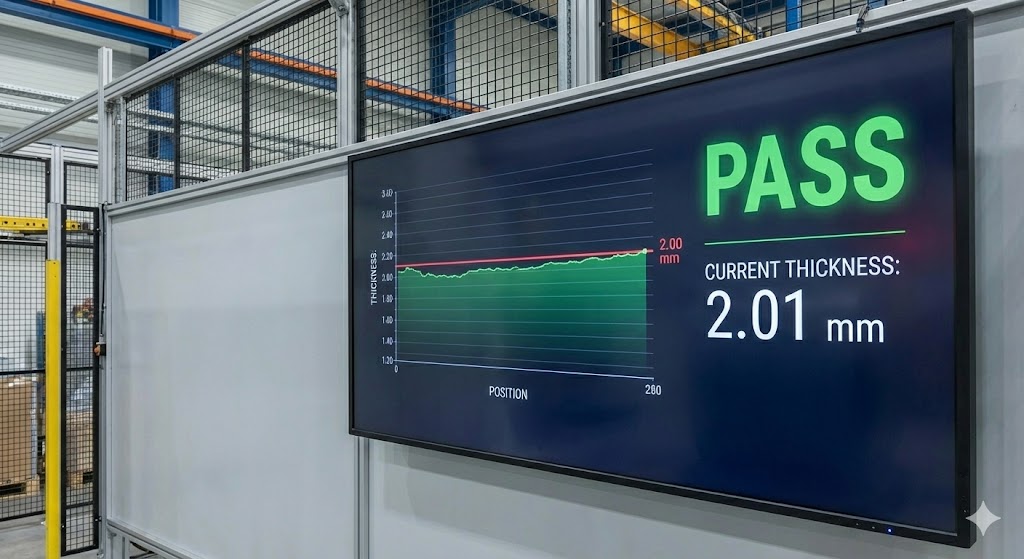
Conversely, Time-of-Flight (ToF) laser sensors measure the round-trip time for a laser pulse to travel to a target and back. Given the constant speed of light, the sensor computes distance with remarkable speed, making it ideal for applications requiring rapid, long-range measurements, such as in autonomous guided vehicles (AGVs), bulk material level monitoring, and large-scale metrology. Modern ToF systems often utilize phase-shift analysis of modulated continuous-wave lasers for enhanced resolution at shorter distances.
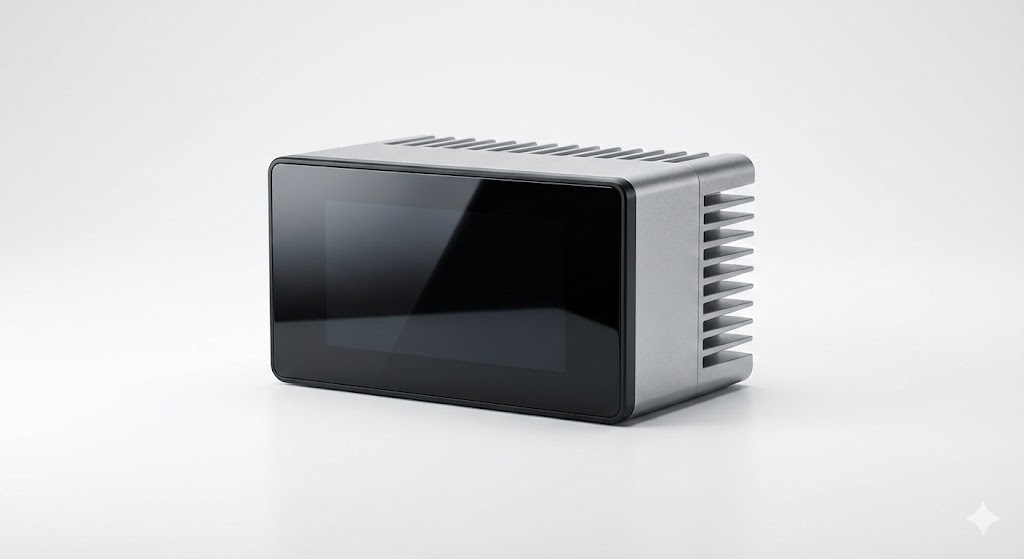
Beyond these primary methods, advanced guidance techniques integrate laser scanning. Here, a moving mirror or rotating head deflects the laser beam across a field of view, creating detailed 2D or 3D point clouds. This capability is pivotal in sectors like automotive manufacturing for body-in-white inspection and in logistics for volumetric dimensioning of packages. The sensor's guidance logic interprets this cloud data to identify objects, verify dimensions, or guide robotic paths.
Another critical evolution is the integration of laser sensors with machine vision and inertial measurement units (IMUs) in multi-sensor fusion systems. A laser may provide precise distance data, while a camera adds contextual visual information, and an IMU accounts for platform orientation. This synergy creates robust guidance solutions resilient to environmental variables like ambient light interference or vibration, which can challenge standalone laser systems.
The selection of a specific laser guidance method hinges on application-specific demands: required accuracy, measurement range, operational speed, environmental conditions, and cost. For instance, a triangulation sensor guides a robotic arm in assembling micro-electronics, while a long-range ToF lidar guides an unmanned mining vehicle. Each system's software—comprising filtering, calibration, and object recognition algorithms—is as vital as its hardware, transforming raw laser data into actionable guidance commands.
In conclusion, laser sensor guidance is not a monolithic technology but a spectrum of sophisticated methods. From the precise triangulation in controlled factory cells to the robust ToF systems in dynamic outdoor environments, these technologies collectively drive automation forward. As laser sources become more powerful and compact, and computational power grows, we anticipate even more innovative guidance paradigms, further blurring the lines between measurement and intelligent control in the industrial landscape.