In the realm of industrial automation, proximity sensors play a pivotal role in detecting the presence or absence of objects without physical contact. Determining the optimal sensing distance is crucial for ensuring reliable operation, minimizing false triggers, and extending sensor lifespan. This article delves into the factors influencing sensing distance and provides practical guidelines for achieving peak performance.
Proximity sensors, including inductive, capacitive, and photoelectric types, operate based on electromagnetic fields or light beams. The nominal sensing distance (Sn) specified by manufacturers is typically measured under ideal conditions: using a standard target (e.g., a square steel plate for inductive sensors) at room temperature with no external interference. However, real-world applications rarely match these conditions. Key variables affecting optimal distance include target material, size, shape, environmental factors like temperature and humidity, and the presence of contaminants such as dust or oil.
For inductive sensors, optimal distance is highly dependent on the target's metallic composition. Ferrous metals (e.g., iron) allow for longer sensing ranges compared to non-ferrous metals like aluminum or copper. As a rule of thumb, the effective sensing distance can be reduced by up to 40% for non-ferrous targets. Additionally, target size matters—if the target is smaller than the sensor's active surface, the sensing distance decreases proportionally. To optimize performance, engineers should maintain an installation distance at 70-80% of the nominal Sn, accounting for potential mechanical tolerances and target alignment shifts during operation.
Capacitive sensors, used for detecting non-metallic materials, are sensitive to environmental changes. Humidity or moisture can alter dielectric constants, leading to sensing drift. Thus, the optimal distance should be calibrated on-site, often set lower than Sn to avoid false detection from background objects. Shielding techniques and adjustable sensitivity settings are essential for fine-tuning.
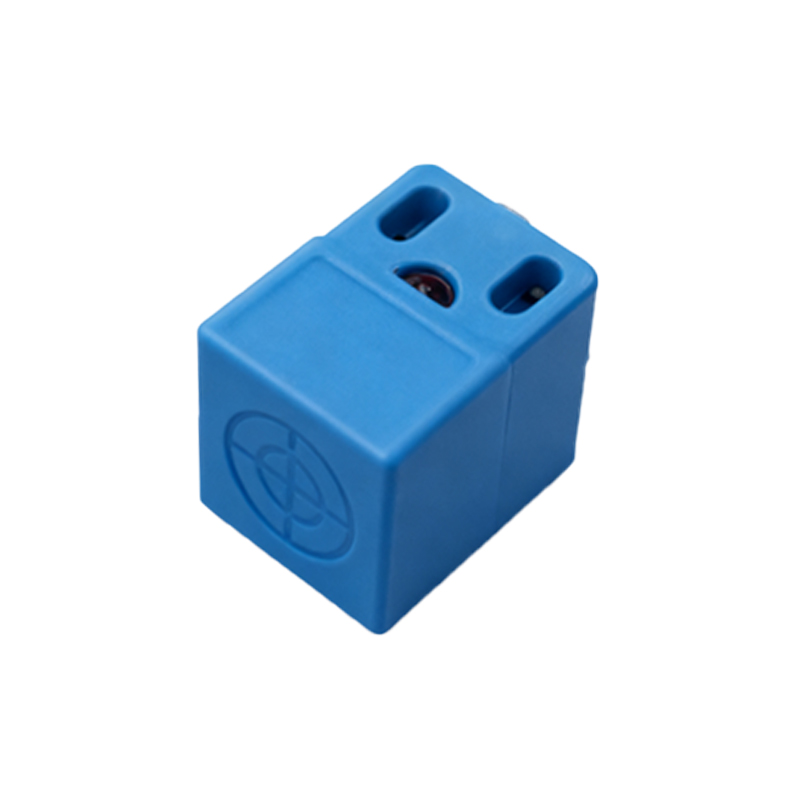
Photoelectric sensors, employing infrared or laser beams, require clear line-of-sight. Their optimal distance depends on factors like target color, reflectivity, and ambient light. Dark, absorbent surfaces reduce effective range, while bright surfaces may cause over-reflection. Using diffuse or retro-reflective models with background suppression can help maintain consistent detection within a recommended range of 50-90% of Sn, depending on application stability.
Installation practices significantly impact sensing distance. Sensors should be mounted securely to prevent vibration-induced errors, with adequate clearance from metal surfaces to avoid electromagnetic interference. Regular maintenance, including lens cleaning for photoelectric sensors and checking for wear, ensures long-term accuracy. In dynamic settings, such as conveyor systems, consider adding a safety margin—for instance, setting the trigger point 20% closer than the maximum detectable range to accommodate speed variations.
Advanced sensors with teach-in functionality or IO-Link communication allow for real-time adjustment and monitoring, enabling adaptive control of sensing distance based on process changes. This is particularly beneficial in flexible manufacturing environments where target materials vary frequently.
Ultimately, the optimal sensing distance is not a fixed value but a balance between reliability, efficiency, and environmental constraints. By understanding sensor specifications, conducting thorough testing with actual targets, and implementing robust installation protocols, engineers can maximize uptime and precision in automated systems. As Industry 4.0 evolves, integrating smart sensors with predictive analytics will further refine distance optimization, paving the way for more resilient and intelligent industrial operations.