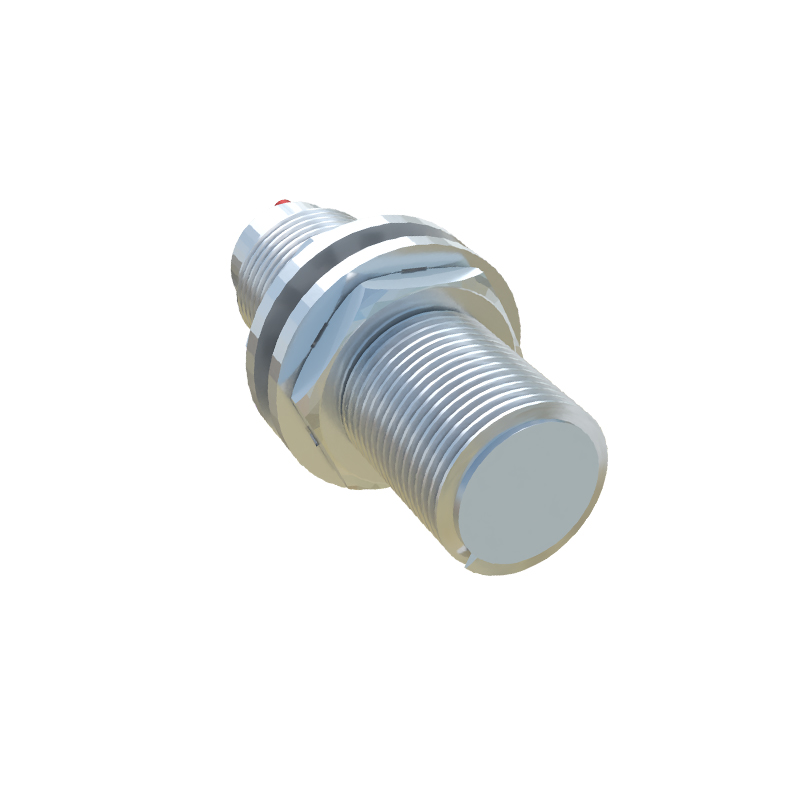
Proximity sensors are indispensable components in modern industrial automation, robotics, and safety systems. These devices detect the presence or absence of objects without physical contact, relying on various physical principles to sense different materials. Understanding what proximity sensors can detect is crucial for selecting the right sensor for specific applications. This article explores the detection capabilities of common proximity sensor types, including inductive, capacitive, ultrasonic, and photoelectric sensors, detailing the materials and conditions they are designed to sense.
Inductive proximity sensors are widely used in manufacturing environments. They generate an electromagnetic field and detect changes caused by metallic objects. Primarily, they sense ferrous metals such as iron and steel with high sensitivity. They can also detect non-ferrous metals like aluminum, copper, and brass, though typically at a reduced sensing range. Inductive sensors do not detect non-metallic materials such as plastics, wood, ceramics, or liquids. Their operation is ideal for applications like metal part counting, position verification in machinery, or detecting the presence of a metal gear tooth.
Capacitive proximity sensors, on the other hand, can detect both metallic and non-metallic materials. They work by sensing changes in capacitance caused by the presence of any object that alters the electrostatic field around the sensor's active face. This allows them to detect materials like plastics, glass, wood, paper, ceramics, and various liquids or granular substances. They are commonly used for level detection in tanks (e.g., sensing liquid or powder levels), detecting filled bottles on a conveyor, or presence sensing of non-metallic objects. Some capacitive sensors can even detect materials through thin non-metallic container walls.
Ultrasonic proximity sensors emit high-frequency sound waves and measure the time it takes for the echo to return. They can detect almost any solid or liquid object, regardless of material composition, color, or transparency. This includes metals, plastics, wood, liquids, and even transparent materials like glass or clear films, which can challenge optical sensors. However, their performance can be affected by the object's surface texture (very soft materials may absorb sound) and environmental factors like temperature gradients or air turbulence. They excel in applications such as distance measurement, bulk material level sensing, and detecting objects in challenging environments where dirt or dust is present.
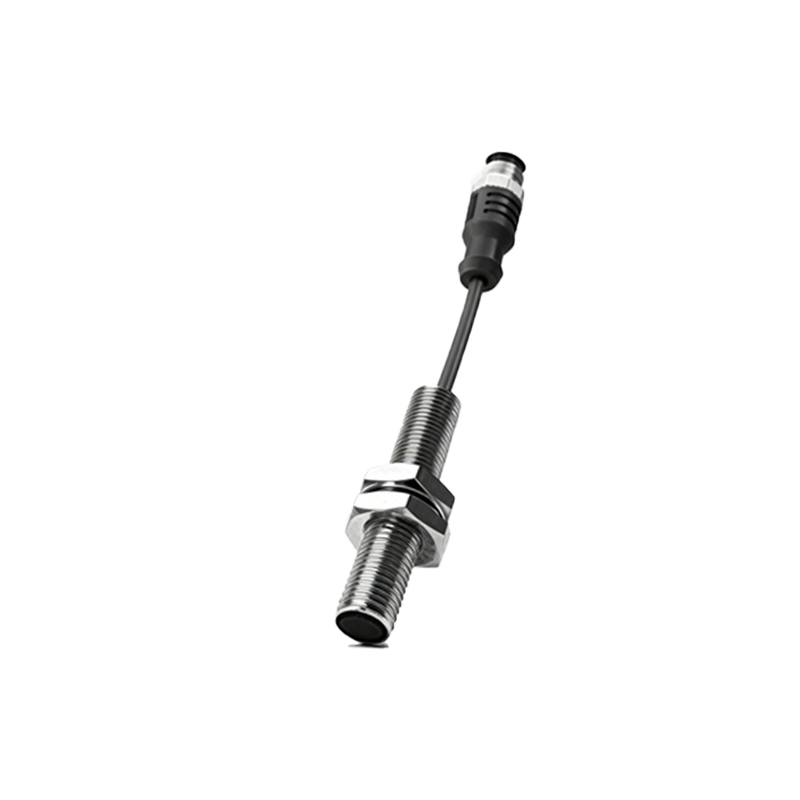
Photoelectric sensors use a light beam (usually infrared, visible red, or laser) to detect objects. They are highly versatile and can detect objects of almost any material—opaque, translucent, or even transparent—provided the object affects the light beam. Diffuse reflective sensors detect objects by reflecting light off the target, suitable for most solid materials. Through-beam sensors, with separate emitter and receiver, can detect any object that breaks the beam, including clear glass or films. Retro-reflective sensors use a reflector and can detect objects that interrupt the beam. However, highly transparent or mirror-like surfaces may pose detection challenges. Photoelectric sensors are prevalent in packaging, material handling, and assembly line automation.
Each sensor type has its limitations. Inductive sensors are material-specific. Capacitive sensors can be influenced by environmental humidity or contaminants. Ultrasonic sensors may have dead zones and can be confused by multiple reflections. Photoelectric sensors can struggle with certain optical properties or ambient light interference. The key to successful application is matching the sensor's detection principle to the target material's physical properties, the required sensing distance, environmental conditions, and the needed response speed and accuracy.
In summary, the detection capability of a proximity sensor is fundamentally tied to its operating technology. Inductive sensors detect metals; capacitive sensors detect nearly all materials by their dielectric constant; ultrasonic sensors detect materials via sound reflection; and photoelectric sensors detect materials based on light interaction. By carefully considering the target object's composition, size, and the operating environment, engineers can leverage these sensors to achieve reliable, efficient, and contactless detection across countless industrial and commercial scenarios.