In the rapidly evolving landscape of industrial automation and precision measurement, laser sensors have emerged as indispensable tools, with Xinshe laser sensors standing out for their reliability, accuracy, and innovative design. As a seasoned electrical engineer with extensive experience in sensor technologies, I have witnessed firsthand the transformative impact of these devices across various sectors. This article delves into the technical specifications, operational principles, and diverse applications of Xinshe laser sensors, highlighting their role in enhancing efficiency and safety in contemporary industrial environments.
Xinshe laser sensors utilize advanced laser diode technology to emit focused light beams, which are then reflected off target objects and detected by sensitive receivers. The time-of-flight or triangulation methods employed enable precise distance measurement, often with resolutions down to micrometers. Key features include high-speed response times, typically in the microsecond range, and robust construction that withstands harsh conditions such as extreme temperatures, dust, and vibrations. Models range from compact, low-power units for delicate tasks to heavy-duty variants for rugged applications, ensuring versatility across industries.
One of the primary advantages of Xinshe laser sensors is their non-contact nature, which minimizes wear and tear while allowing measurements on sensitive or moving surfaces. In manufacturing, they are integral to quality control processes, such as inspecting component dimensions, detecting surface defects, and aligning assembly lines. For instance, in automotive production, these sensors verify part tolerances in real-time, reducing waste and improving product consistency. Similarly, in electronics, they facilitate precise positioning of circuit boards and microcomponents, crucial for miniaturization trends.
Beyond manufacturing, Xinshe laser sensors play a vital role in logistics and warehousing. Automated guided vehicles (AGVs) rely on them for navigation and obstacle avoidance, ensuring smooth material handling operations. In packaging lines, sensors monitor fill levels and label placement, optimizing throughput. Additionally, their application extends to safety systems, where they act as guards on machinery to prevent accidents by detecting human presence in hazardous zones.
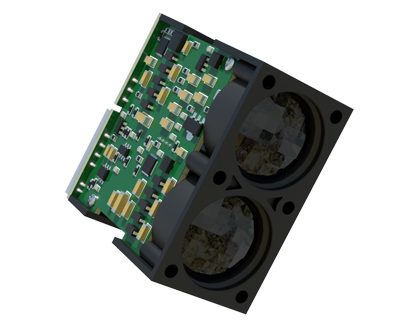
The integration of Xinshe laser sensors with IoT and Industry 4.0 frameworks further amplifies their utility. Through connectivity protocols like Ethernet/IP or Modbus, sensor data can be streamed to centralized control systems for predictive maintenance and analytics. This enables proactive adjustments, reducing downtime and energy consumption. For example, in smart factories, laser sensors contribute to adaptive manufacturing processes that respond dynamically to changing demands.

From an engineering perspective, selecting the right Xinshe laser sensor involves considering factors such as measurement range, accuracy requirements, environmental conditions, and compatibility with existing infrastructure. Regular calibration and maintenance are essential to sustain performance, though these sensors are designed for longevity with minimal upkeep. As technology advances, we anticipate enhancements in areas like multi-sensor fusion and AI-driven interpretation, which will unlock new possibilities for automation.
In conclusion, Xinshe laser sensors represent a cornerstone of modern industrial innovation, offering precision and adaptability that drive operational excellence. Their widespread adoption underscores the importance of reliable sensing solutions in achieving efficiency, safety, and sustainability goals. For engineers and industry professionals, staying abreast of these developments is key to leveraging their full potential in an increasingly automated world.