In the rapidly evolving landscape of industrial automation, laser sensors have become indispensable tools for precision measurement, quality control, and process monitoring. Their non-contact, high-speed, and highly accurate capabilities make them superior to many traditional sensing methods. For engineers and system integrators tasked with selecting the optimal sensor for a demanding application, navigating the vast market can be challenging. This article provides a technical ranking and comparison of leading industrial laser sensor technologies and manufacturers, based on critical performance parameters, application suitability, and overall value proposition.
Our ranking methodology considers several key factors: measurement accuracy and resolution, measurement range, response speed, environmental robustness (including IP rating and resistance to ambient light, dust, and vibration), ease of integration and programming, software support, and total cost of ownership. It is crucial to note that the "best" sensor is entirely application-dependent; a sensor perfect for sub-micron semiconductor inspection may be unsuitable for rough distance measurement in a steel mill.
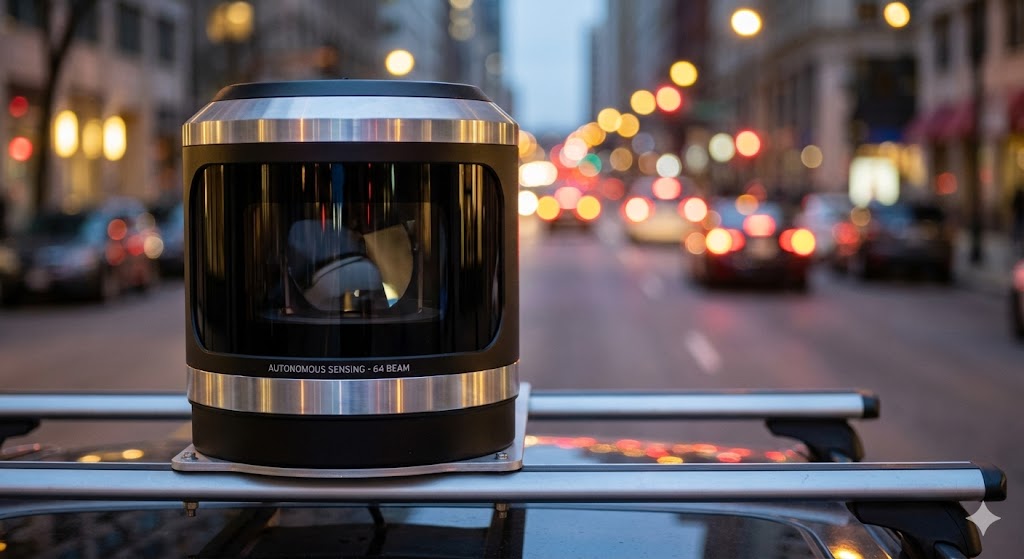
Tier 1: Ultra-High Precision & Performance
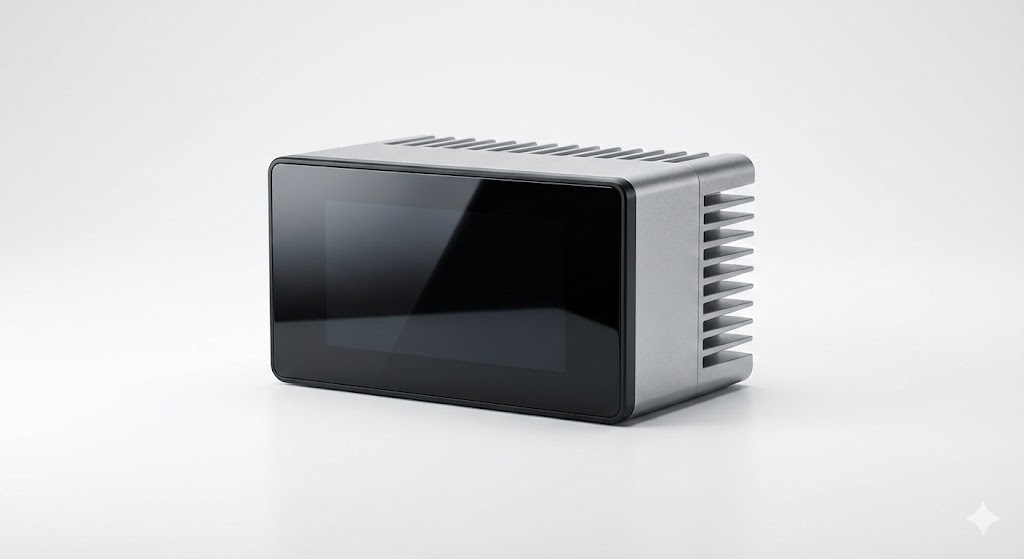
This tier is dominated by sensors designed for laboratory-grade measurements in manufacturing environments. They offer nanometer-level resolution and exceptional stability.
* Key Players: Keyence (LK-G Series, IL Series), Micro-Epsilon (scanCONTROL, optoNCDT), MITUTOYO.
* Analysis: Keyence's LK-G series confocal displacement sensors often lead in benchmarks for ultra-high precision, capable of resolving 10nm changes on glossy or transparent surfaces—a significant challenge for other technologies. Micro-Epsilon's laser triangulation and confocal chromatic sensors are renowned for their high bandwidth and robust data processing, excelling in dynamic measurement tasks. Sensors in this tier typically feature advanced noise reduction algorithms, superior optics, and sophisticated software for data analysis. The primary trade-off is cost, both for the initial hardware and the often-required proprietary controllers or software licenses.
Tier 2: High-Performance General Purpose
This category represents the workhorses of industrial automation, balancing excellent accuracy (micrometer to sub-micrometer level) with greater flexibility, wider measurement ranges, and more competitive pricing.
* Key Players: SICK (OD, OD5, DT50 Series), Banner Engineering (LE550, Q5X Series), Omron (ZX-L, ZX2 Series), Panasonic (HG-C Series).
* Analysis: SICK's laser sensors are synonymous with ruggedness and reliability in harsh environments (IP67/IP69K), offering excellent performance in logistics, automotive, and heavy industry. Banner Engineering's Q5X, with its patented technology to ignore challenging backgrounds, solves specific application headaches like detecting clear objects. Omron's ZX series provides an outstanding balance of user-friendly setup (via intuitive teach-mode) and stable performance for tasks like height discrimination, edge detection, and width measurement. This tier is ideal for the majority of assembly, robotics, and inspection lines.
Tier 3: Cost-Effective & Specialized Solutions
These sensors offer solid performance for well-defined tasks at a lower entry point. They may have narrower ranges or reduced specifications but are perfectly suited for volume applications where specific needs are clear.
* Key Players: Balluff (BOD Series), Turck (Q130 Series), ifm electronic (O5D, OGD Series), Pepperl+Fuchs (R200 Series).
* Analysis: Manufacturers like Balluff and Turck excel in providing sensors that integrate seamlessly into factory network architectures (IO-Link, PROFINET, EtherNet/IP), offering significant value through simplified wiring and diagnostics. ifm electronic's sensors are known for their durability and straightforward operation. The focus here is on providing reliable, good-enough accuracy for presence detection, basic positioning, or binary decision-making without the overhead of ultra-high precision.
Emerging Trends & Technology Considerations:
* Integrated Vision Sensors: The line between laser displacement sensors and 2D/3D vision sensors is blurring. Products like Keyence's CV-X series or Cognex's VisionPro can combine laser profiling with image analysis.
* Blue Laser Technology: For applications involving red-hot metals, organic materials, or low-reflectance surfaces, blue lasers (shorter wavelength) provide significantly improved signal stability and spot definition compared to traditional red lasers.
* IO-Link: The proliferation of IO-Link digital communication is a game-changer, enabling remote parameter setting, condition monitoring, and detailed diagnostic data from the sensor head itself.
Selection Checklist for Engineers:
1. Define the *Object:* Material, surface (color, gloss, texture), size, and possible movement.
2. Define the *Measurement:* Required resolution, accuracy, repeatability, and measurement range (stand-off).
3. Define the *Environment:* Temperature, contaminants, ambient light, vibration, and required ingress protection.
4. Define the *Integration:* Required output (analog, digital, serial), response frequency, mounting constraints, and communication protocol.
5. Define the *Budget:* Consider total cost, including mounting accessories, controller, and software.
In conclusion, while Keyence and Micro-Epsilon lead in pure precision, SICK, Banner, and Omron dominate the high-performance general market with more robust and sometimes more user-friendly packages. For networked, cost-sensitive applications, the solutions from Balluff, Turck, and ifm are highly compelling. The final choice must be driven by a rigorous technical assessment of the application's non-negotiable requirements against the sensor's proven capabilities.