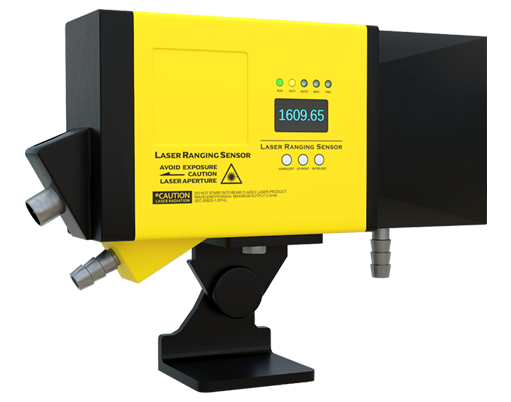
In industrial automation and precision measurement, laser sensors are indispensable tools for non-contact detection, distance measurement, and surface profiling. However, one of the most common yet challenging scenarios engineers face is deploying these sensors on inclined or non-perpendicular surfaces. The performance and accuracy of a laser sensor can be significantly compromised when the target surface is not orthogonal to the sensor's emission axis. This article delves into the technical principles, practical challenges, and optimization strategies for using laser sensors on sloped surfaces.
The fundamental operating principle of most industrial laser sensors, particularly laser triangulation sensors and time-of-flight (ToF) sensors, relies on the geometric relationship between the emitted laser beam, the target surface, and the receiving element. In an ideal setup, the laser beam strikes a surface perpendicularly. The reflected light, or the time delay for ToF sensors, is then measured to calculate distance or detect presence. When the surface is inclined, several physical phenomena occur. First, the angle of incidence changes, leading to a shift in the angle of reflection. For specular (shiny) surfaces, this can cause the reflected beam to miss the sensor's receiver entirely, resulting in a loss of signal. For diffuse (matte) surfaces, while some light is scattered back, the intensity and the spot geometry on the receiver's photodiode array are altered. This alteration introduces measurement error, often manifesting as reduced accuracy, signal dropout, or erroneous readings.
The primary challenges include signal integrity degradation, spot distortion, and increased sensitivity to surface properties. On a highly reflective inclined surface, the specular reflection can create a "glint" effect, overwhelming the receiver or directing the beam away. On dark or absorbent materials, the already weak diffuse reflection becomes even weaker at an angle, pushing the signal close to the noise floor. Furthermore, the laser spot, which is typically circular on a perpendicular surface, becomes elliptical on a slope. This elliptical shape can span multiple pixels on the receiver's array, making it difficult for the sensor's internal processor to accurately determine the centroid of the spot, which is crucial for precise triangulation calculations.
To mitigate these issues, several engineering strategies can be employed. Sensor selection is paramount. Some advanced laser sensors are specifically designed with algorithms to compensate for inclination. Look for models featuring "tilt compensation" or "surface angle correction" in their specifications. These sensors often use advanced signal processing to analyze the shape of the reflected spot and adjust the output accordingly. Secondly, mechanical adjustment offers a straightforward solution. By using adjustable mounting brackets, the sensor itself can be tilted to ensure its beam is as close to perpendicular to the target surface as possible. This is often the most effective method for fixed applications.
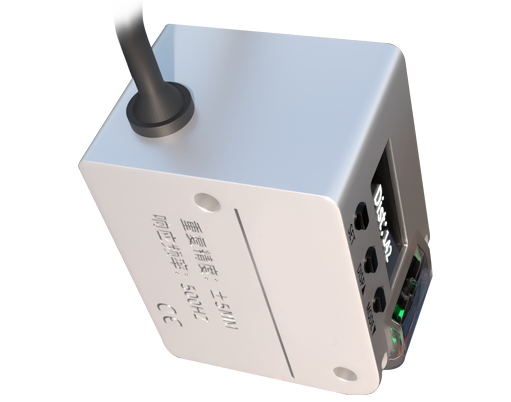
Thirdly, understanding and controlling the surface characteristics is critical. For problematic shiny surfaces, applying a diffuse coating (like a matte paint or tape) to the measurement area can convert a specular reflection into a more manageable diffuse one. If coating is not possible, reducing the sensor's laser power or using a sensor with a narrower, more focused beam can sometimes help by minimizing the spread of the glint. Additionally, the use of accessories like polarizing filters can be highly effective. A polarizing filter placed in front of the sensor's receiver can block the horizontally polarized light typical of specular reflections, allowing only the useful diffuse component to pass through.
In application setup, thorough calibration on the actual inclined surface is non-negotiable. Instead of relying on flat-surface calibration data, perform a multi-point calibration across the expected range of slopes and distances. This builds a correction map within the sensor or the controlling system. For dynamic systems where the angle changes, integrating an inertial measurement unit (IMU) or a secondary angle sensor to provide real-time tilt data to the laser sensor's controller allows for dynamic software compensation.

In conclusion, while inclined surfaces present a genuine challenge for laser sensing, they are not insurmountable obstacles. Success hinges on a systematic approach: selecting the right sensor technology, implementing precise mechanical alignment, managing surface optics, and employing rigorous, context-specific calibration. By addressing the physics of inclined reflection proactively, engineers can unlock reliable and accurate laser sensor performance across a vast array of demanding industrial applications, from robotic welding seam tracking to automated inspection on conveyor belts with variable product orientation.