In the realm of industrial automation, proximity sensor dispensing machines represent a critical fusion of sensing technology and precise fluid application. These specialized systems are engineered to apply adhesives, sealants, or lubricants with exceptional accuracy onto components where proximity sensors are integrated or assembled. The core function hinges on the non-contact detection capability of proximity sensors, which guide the dispensing head to the exact location without physical touch, ensuring both product integrity and process consistency.
The operational principle is elegantly straightforward yet technologically sophisticated. A proximity sensor, often inductive or capacitive, is mounted on or near the dispensing nozzle. As the target component—typically made of metal, plastic, or ceramic—approaches within the sensor's preset detection range, it triggers an electrical signal. This signal is instantly processed by the machine's programmable logic controller (PLC), which then commands the dispensing system to initiate or cease the fluid discharge at the precise millisecond. This closed-loop feedback mechanism eliminates positional errors common in mechanical contact methods, drastically reducing material waste and rework rates. For instance, in automotive electronics assembly, such machines deposit exact amounts of thermally conductive epoxy onto sensor housings, ensuring optimal heat dissipation and long-term reliability.
Key advantages of employing proximity sensor-guided dispensing are manifold. First, precision: modern systems achieve repeatability within microns, essential for miniaturized components in sectors like consumer electronics and medical devices. Second, speed: non-contact detection allows for continuous high-speed operation without deceleration for physical alignment, significantly boosting production throughput. Third, versatility: adjustable sensor sensitivity accommodates diverse materials and component geometries, from tiny semiconductor chips to larger industrial connectors. Fourth, durability: by avoiding physical impact, both the dispenser tip and the delicate sensor components experience less wear, lowering maintenance costs and downtime.
The integration of these machines into smart factory environments is increasingly seamless. Through Industrial Internet of Things (IIoT) platforms, data on dispensing cycles, adhesive volume per unit, and sensor response times can be monitored in real-time. Predictive analytics algorithms can forecast maintenance needs for the proximity sensors or fluid pumps, preempting failures. Moreover, compatibility with robotics—such as collaborative robots (cobots) equipped with dispensing tools—enables flexible, automated lines that can quickly adapt to new product designs. In aerospace manufacturing, for example, robotic arms with proximity-sensing dispensers apply sealants along intricate aircraft sensor housings, meeting stringent safety standards with unwavering consistency.
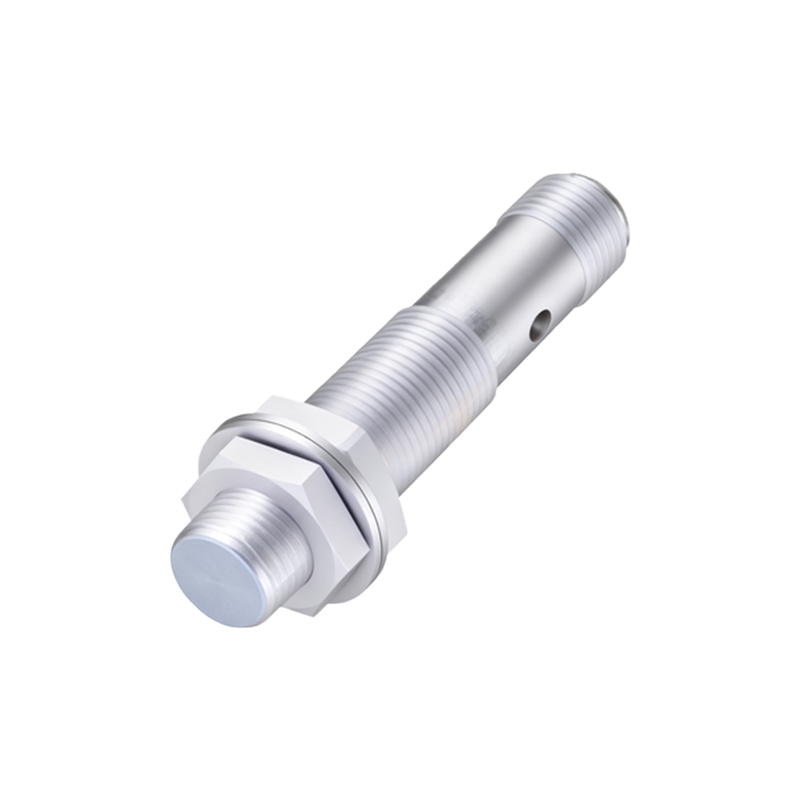
Selecting an appropriate proximity sensor dispensing machine requires careful consideration of several technical parameters. The type of proximity sensor must match the target material; inductive sensors are ideal for metals, while capacitive variants detect non-metallics. Detection range, typically from a few millimeters to several centimeters, should align with the working distance needed. Fluid viscosity dictates the pump type—whether time-pressure, auger, or positive displacement—to ensure stable bead formation. Environmental factors like temperature fluctuations, dust, or chemical exposure also influence sensor choice and machine enclosure ratings. Leading manufacturers often provide customizable solutions, allowing engineers to specify sensor brands, nozzle configurations, and software interfaces tailored to their production line's unique demands.
Despite their robustness, these systems are not without challenges. Sensor interference from adjacent metallic objects or strong electromagnetic fields can cause false triggering. Regular calibration is essential to maintain accuracy, especially when switching adhesive types. However, ongoing advancements are mitigating these issues. The advent of self-calibrating sensors with integrated diagnostics, coupled with machine learning algorithms that compensate for environmental drift, is setting new benchmarks for reliability. Furthermore, the development of multi-sensor arrays enables complex 3D dispensing paths on contoured surfaces, expanding applications in emerging fields like wearable technology and advanced driver-assistance systems (ADAS).
In conclusion, proximity sensor dispensing machines are indispensable tools in modern precision manufacturing. They embody the synergy between accurate sensing and controlled fluid dynamics, driving quality and efficiency across industries. As automation evolves toward greater autonomy and adaptability, these machines will continue to integrate smarter sensors and data-driven controls, solidifying their role in the future of industrial production. Their ability to deliver micron-level accuracy at high speeds ensures that as products become smaller and more complex, manufacturing processes remain both economically viable and technically superior.