In the realm of air quality monitoring and industrial safety, laser dust sensors have emerged as a pivotal technology for detecting and measuring particulate matter (PM) concentrations with high precision. Unlike traditional scattering-based optical sensors, modern laser dust sensors utilize the principle of laser scattering, where a laser diode emits a focused beam of light onto airborne particles. As these particles pass through the detection chamber, they scatter the laser light in various directions. A photodetector, strategically positioned at a specific angle (commonly 90 degrees), captures this scattered light. The intensity of the scattered signal is directly proportional to the particle size and concentration, enabling the sensor to calculate PM levels, typically categorized as PM1.0, PM2.5, and PM10. This method offers superior accuracy and sensitivity compared to older infrared LED-based sensors, especially for fine particles that pose significant health risks.
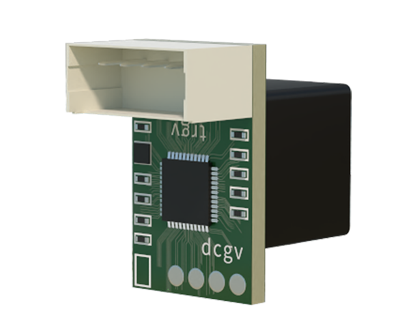
The core components of a laser dust sensor include the laser emitter, optical detection chamber, photodetector, and signal processing circuitry. The laser emitter, often a low-power diode, provides a stable and coherent light source. The detection chamber is meticulously designed to minimize background noise and ensure that only airborne particles interact with the laser beam. Advanced models incorporate aerodynamic designs or fans to maintain a consistent airflow sample, enhancing measurement reliability. The photodetector converts the scattered light into an electrical signal, which is then amplified and processed by an onboard microprocessor. Algorithms, such as those based on Mie scattering theory, are applied to correlate the signal with particle mass concentration, compensating for factors like humidity and particle composition.
Laser dust sensors find extensive applications across diverse industries. In consumer electronics, they are integrated into air purifiers, smart thermostats, and wearable devices to provide real-time indoor air quality feedback. In HVAC systems, these sensors enable automated control of ventilation based on particulate levels, improving energy efficiency and occupant health. Industrial settings rely on them for monitoring workplace safety in environments like mining, construction, and manufacturing, where dust exposure can lead to respiratory diseases. Additionally, environmental monitoring stations use laser dust sensors for tracking urban pollution and conducting climate research, thanks to their ability to detect fine particulates over wide concentration ranges.
When selecting a laser dust sensor, several technical parameters must be considered. Measurement range is critical; sensors should cover from low concentrations (e.g., 0–1,000 μg/m³) to high levels for industrial use. Accuracy and resolution determine the sensor’s reliability, with high-end models offering errors as low as ±10% and resolution down to 1 μg/m³. Response time, typically a few seconds to minutes, affects real-time monitoring capabilities. Environmental durability is also key—sensors should operate effectively across temperatures from -10°C to 60°C and humidity up to 95% RH, with some featuring anti-contamination coatings to resist dust accumulation. Communication interfaces like UART, I2C, or PWM facilitate integration with control systems, while power consumption impacts battery-operated devices.
Despite their advantages, laser dust sensors face challenges such as calibration drift over time and sensitivity to high humidity or extreme temperatures. Regular maintenance, including cleaning optical surfaces and recalibration, is essential for long-term accuracy. Innovations in the field are addressing these issues through self-cleaning mechanisms, multi-wavelength lasers for particle differentiation, and AI-enhanced data processing to filter outliers. As regulations on air quality tighten globally, the demand for robust, cost-effective laser dust sensors is expected to grow, driving further advancements in miniaturization and IoT connectivity.
In summary, laser dust sensors represent a sophisticated solution for particulate matter detection, combining optical engineering with electronic processing. Their ability to provide precise, real-time data makes them indispensable in promoting health, safety, and environmental sustainability. By understanding their working principles and application needs, engineers and users can leverage these sensors to create smarter, cleaner environments.