In the dynamic landscape of modern manufacturing, precision, efficiency, and quality control are paramount. Among the array of advanced technologies driving this evolution, welding laser sensors have emerged as a critical component, fundamentally transforming welding processes across industries such as automotive, aerospace, shipbuilding, and heavy machinery. These sophisticated devices leverage laser technology to provide real-time, non-contact measurement and guidance, addressing longstanding challenges in traditional welding methods. This article delves into the core functions, operational principles, and significant benefits of welding laser sensors, highlighting their indispensable role in contemporary industrial applications.
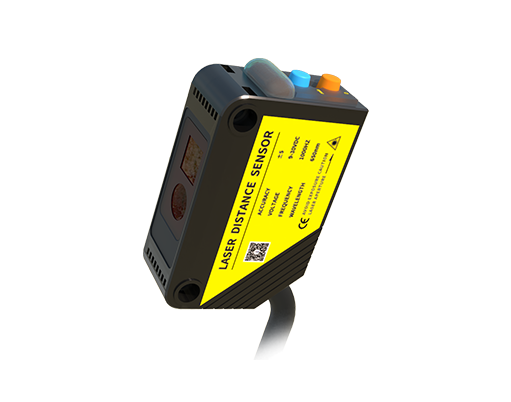
At its essence, a welding laser sensor is a non-contact measurement system that utilizes a laser beam to scan and analyze the workpiece geometry before, during, and after the welding operation. The sensor typically projects a structured laser line or pattern onto the target surface. A high-resolution camera or photodetector then captures the reflection of this pattern. By analyzing the deformation or displacement of the laser line caused by the surface contours, seams, or joint profiles, the sensor's onboard processor can calculate precise three-dimensional coordinates. This data is transmitted in real-time to the welding robot or control system, enabling adaptive adjustments to the welding torch's path, speed, and parameters.
The primary functions of welding laser sensors can be categorized into several key areas: seam tracking, joint finding and profiling, adaptive process control, and post-weld inspection. Seam tracking is perhaps the most celebrated application. In manual or pre-programmed robotic welding, even minor deviations in part fit-up, thermal distortion, or fixture inaccuracies can lead to the weld bead straying from the intended joint, resulting in defects like lack of fusion or excessive penetration. A laser sensor mounted ahead of the welding torch continuously scans the joint, detecting its exact centerline and providing corrective feedback to the robot. This ensures the torch follows the seam perfectly, regardless of part variations, significantly improving weld consistency and first-pass yield.

Joint finding and profiling involve the sensor scanning the workpiece before the arc is initiated. It identifies the joint type (e.g., butt, lap, fillet, V-groove), measures its geometry (gap width, mismatch, bevel angle), and determines its precise location in space. This information is crucial for programming the optimal welding strategy, including the number of passes, wire feed speed, and arc voltage. For complex joints or assemblies with inherent dimensional tolerances, this pre-scan capability eliminates time-consuming manual teaching and enables true "plug-and-produce" automation.
Adaptive process control takes sensor integration a step further. By monitoring the weld pool geometry or the joint profile in real-time during the welding process, the sensor can trigger dynamic adjustments. For instance, if the sensor detects a widening gap, it can command the system to increase wire feed rate or adjust oscillation width to fill the void adequately. Conversely, for a narrowing joint, it can reduce heat input to prevent burn-through. This closed-loop control maximizes process stability and accommodates real-world part inconsistencies that are impossible to predict in offline programming.
Furthermore, post-weld inspection sensors can measure the final weld bead profile—assessing parameters like reinforcement height, width, and undercut depth—immediately after welding. This provides instant quality verification, allowing for rapid corrective action if a parameter drifts out of specification, thereby reducing scrap and rework.
The advantages of implementing welding laser sensors are substantial and multifaceted. Firstly, they dramatically enhance weld quality and consistency by eliminating human error and compensating for part variability. This leads to stronger, more reliable welds that meet stringent industry standards. Secondly, they boost productivity by reducing setup and programming time, minimizing arc-on time through optimal pathing, and cutting down on non-value-added inspection and rework. Thirdly, they increase process flexibility, allowing a single robotic cell to handle a wider variety of parts and joint configurations without extensive retooling. Finally, they contribute to significant cost savings by reducing material waste, energy consumption, and labor costs associated with manual intervention and defect correction.

Operational considerations for these sensors include selecting the appropriate type (e.g., through-arc sensing vs. laser-based, 2D vs. 3D scanners) based on the application, joint type, and required accuracy. Environmental factors such as spatter, fumes, and intense arc radiation must be mitigated through proper sensor mounting, protective enclosures, or air purge systems. Integration with the existing robotic controller and welding power source requires careful planning to ensure seamless data communication and synchronized operation.
In conclusion, welding laser sensors are not merely optional accessories but foundational elements of intelligent, Industry 4.0-ready welding systems. They bridge the gap between digital design intent and physical execution, transforming welding from a skill-based craft into a precise, data-driven science. As manufacturing demands continue to push for higher quality, greater agility, and lower costs, the adoption and continued advancement of welding laser sensor technology will undoubtedly remain a key competitive differentiator for forward-thinking fabricators worldwide. Their role is pivotal in achieving the vision of fully autonomous, zero-defect production lines.