In the realm of industrial automation and control systems, magnetic proximity sensors are indispensable components for non-contact detection of ferromagnetic objects. Among the various markings and codes found on these devices, "BRN" frequently appears, particularly in wiring and terminal designations. This article delves into the technical significance of BRN, its role in sensor operation, and best practices for integration.
Fundamentally, "BRN" is an abbreviation for the color Brown. In the standardized wiring conventions for many sensors, especially those following international standards like IEC 60947-5-2 or common regional practices, the brown wire is universally designated as the positive supply voltage terminal (often labeled as L+ or +V). This color-coding system is critical for ensuring correct and safe electrical connections, preventing reverse polarity, and facilitating quick installation and maintenance by technicians globally.
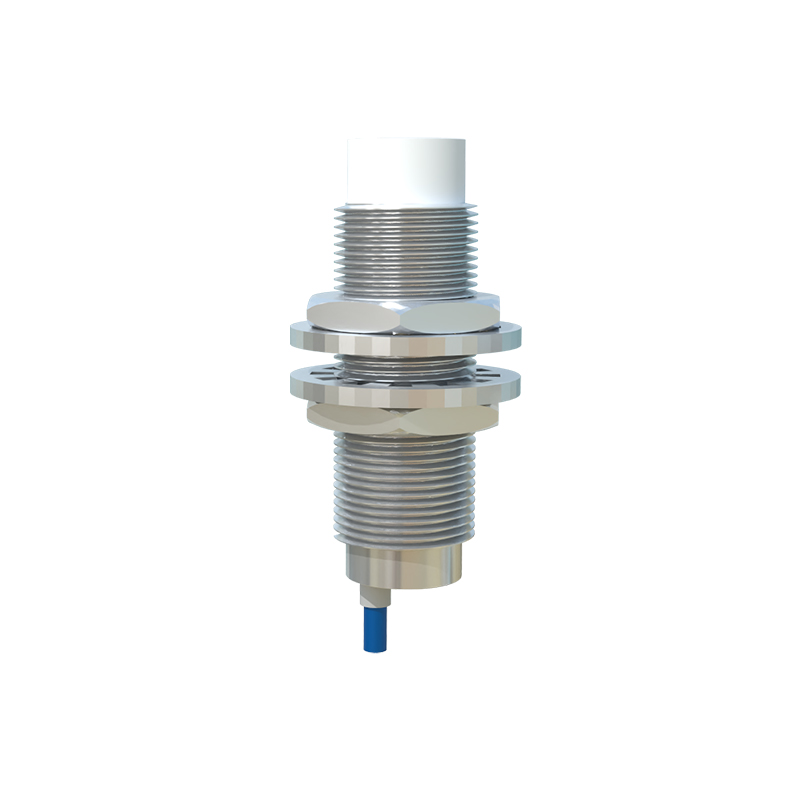
A typical three-wire DC magnetic proximity sensor will have leads colored Brown (BRN), Blue (BLU), and Black (BLK). The Brown wire connects to the positive DC supply voltage, which is usually in the range of 10-30 VDC for standard models. The Blue wire is consistently the negative supply or common return (0V or DC-). The Black wire is the output signal line. In a normally open (NO) configuration, the black wire switches to supply voltage (sourcing) or to 0V (sinking) when a magnetic field of sufficient strength—typically from a permanent magnet or a ferrous target entering the sensing zone—activates the sensor. The consistent use of BRN for positive power is a cornerstone of interoperability and safety.
The importance of adhering to this color code cannot be overstated. Incorrectly connecting the BRN wire to a negative terminal or load can lead to immediate device failure, potential damage to the connected programmable logic controller (PLC) input card, or even a safety hazard. Furthermore, understanding that BRN equals power is essential when interfacing sensors from different manufacturers, as it provides a reliable constant amidst varying housing designs, sensing ranges, and output types (PNP vs. NPN, NO vs. NC).
Beyond basic wiring, the BRN terminal's role is tied to the sensor's internal solid-state electronics. The supplied power via the brown wire energizes the oscillator, amplifier, and output switching circuit (often a transistor). The sensor generates a high-frequency magnetic field. When a ferromagnetic target enters this field, it causes eddy current losses or alters the oscillation amplitude, which the detection circuit monitors. Upon reaching a threshold, the circuit triggers the output state change. A stable, clean power supply on the BRN line is therefore crucial for reliable switching, noise immunity, and achieving the sensor's specified repeatability and longevity.
For system designers and engineers, several key considerations involve the BRN connection:
1. Power Supply Specifications: Always verify the voltage and current ratings on the sensor datasheet. Connecting 24VDC to a sensor rated for 12VDC via the BRN wire will cause failure.
2. Protection Circuits: While many sensors have built-in reverse polarity and short-circuit protection, it is good practice to use external fuses or circuit breakers on the supply line.
3. Wiring Practices: Use shielded cables in electrically noisy environments. Connect the shield to ground at the controller end, but ensure the BRN (power) and BLU (0V) wires are correctly isolated within the cable.
4. Diagnostics: During troubleshooting, the first step is often to check for the correct voltage between the BRN and BLU terminals with a multimeter. Absence of power here immediately narrows down the fault to the supply circuit.
In conclusion, the designation BRN on a magnetic proximity sensor is far more than a simple color label. It represents the critical positive power supply connection that fuels the sensor's intelligent detection capabilities. Mastery of this and associated color codes (BLU for 0V, BLK for output) is fundamental for any engineer or technician working in electrical control panel design, machinery installation, or automation system maintenance. By ensuring precise and informed handling of the BRN terminal, professionals guarantee system reliability, safety, and optimal performance in demanding industrial applications.