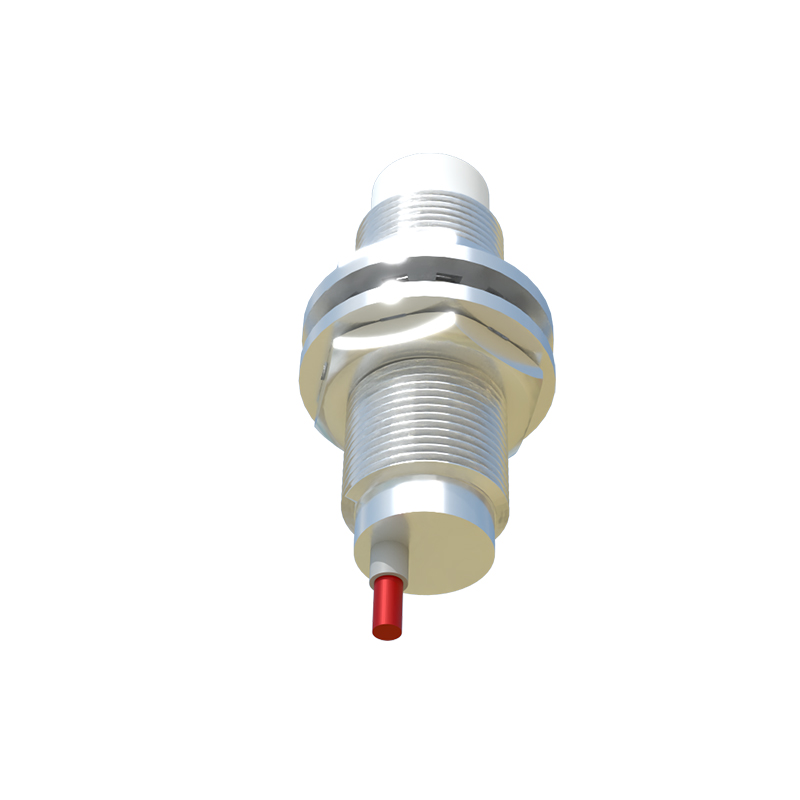
Inductive proximity sensors are non-contact electronic devices designed to detect the presence of metallic objects without physical contact. Operating on the principle of electromagnetic induction, these sensors generate an oscillating electromagnetic field from a coil. When a metallic target enters this field, eddy currents are induced in the object, causing a change in the oscillation amplitude. This alteration is detected by the sensor's circuitry, triggering an output signal. The robustness, reliability, and high switching frequency of inductive sensors make them indispensable in modern industrial automation.
One of the primary applications of inductive proximity sensors is in manufacturing assembly lines. They are extensively used for position detection, such as verifying the presence of components on conveyor belts. For instance, in automotive manufacturing, sensors ensure that engine parts are correctly positioned before robotic arms perform welding or assembly tasks. Their ability to withstand harsh environments—including exposure to dust, oil, and vibrations—makes them ideal for heavy machinery and automotive plants. Unlike optical sensors, inductive variants are immune to ambient light interference, ensuring consistent performance in varied lighting conditions.
Material handling systems also heavily rely on inductive sensors for object counting and sorting. In packaging industries, these sensors detect metallic labels or caps on bottles, enabling precise counting and diverting items for quality control. Additionally, they monitor the fill levels of metallic containers in food and beverage processing, preventing overflows or shortages. The sensors' fast response time, often in microseconds, allows high-speed operations without bottlenecks, enhancing overall throughput.
In the realm of safety and automation, inductive proximity sensors contribute to machine guarding and collision avoidance. Integrated into robotic cells, they detect unauthorized entry or unexpected obstacles, triggering emergency stops to protect personnel and equipment. For example, in CNC machining centers, sensors confirm the closure of safety doors before initiating operations, complying with international safety standards like ISO 13849. Their fail-safe design minimizes downtime and reduces accident risks, fostering a secure work environment.
Another critical application is in precision engineering, such as in semiconductor fabrication. Here, miniature inductive sensors detect minute metallic components during lithography or etching processes. Their high repeatability and accuracy—with sensing distances ranging from millimeters to several centimeters—ensure meticulous alignment and placement. Advanced models feature analog outputs for distance measurement, enabling continuous monitoring of tool wear or part dimensions in real-time. This capability supports predictive maintenance, reducing unplanned outages and extending machinery lifespan.
The selection of inductive proximity sensors depends on factors like target material, sensing range, and environmental conditions. Ferrous metals (e.g., steel) are detected at longer ranges due to higher magnetic permeability, while non-ferrous metals (e.g., aluminum) require calibrated sensors. Shielded designs offer flush mounting in metallic enclosures, whereas unshielded types provide extended sensing distances. Industry trends emphasize miniaturization, with compact sensors fitting into tight spaces, and IoT integration for data logging and remote diagnostics.
In conclusion, inductive proximity sensors are versatile tools driving efficiency across sectors from automotive to electronics. Their durability, speed, and adaptability to industrial challenges underscore their value in automation. As smart manufacturing evolves, these sensors will continue to play a pivotal role in enabling seamless, safe, and productive operations. Engineers must stay abreast of technological advancements to leverage their full potential in innovative applications.