In the rapidly evolving landscape of industrial automation and quality control, multi-axis laser sensors have emerged as a cornerstone technology, enabling unprecedented levels of precision, speed, and flexibility. Unlike traditional single-point or 1D laser sensors, these advanced systems utilize multiple laser beams or sophisticated scanning mechanisms to capture dimensional data across two or three axes simultaneously. This capability transforms complex measurement and inspection tasks, providing comprehensive spatial information that is critical for modern manufacturing, robotics, and research applications.
The core principle of a multi-axis laser sensor involves the projection of laser lines or patterns onto a target object. High-resolution cameras or photodetector arrays then capture the deformation or displacement of these patterns. Through triangulation and advanced algorithms, the sensor calculates precise X, Y, and Z coordinate data, effectively creating a detailed point cloud or profile of the object's surface. This non-contact method is ideal for measuring delicate, hot, or fast-moving components without risk of damage or wear.
Key applications span numerous sectors. In automotive manufacturing, these sensors perform real-time 3D inspections of body panels, weld seam quality, and gap/flush measurements, ensuring stringent tolerances are met. The electronics industry relies on them for solder paste inspection, component placement verification, and PCB warpage analysis. In aerospace, they are indispensable for profiling turbine blades and inspecting composite materials. Furthermore, they are integral to robotic guidance systems, allowing robots to "see" and adapt to their environment for precise picking, placing, and assembly operations.
The advantages of implementing multi-axis laser sensors are substantial. First and foremost is enhanced accuracy and repeatability, often down to the micron level, which directly improves product quality and reduces waste. Their high-speed data acquisition enables 100% inline inspection instead of slower statistical sampling, facilitating true real-time process control. The rich 3D data provides deeper insights than 2D vision systems, allowing for the detection of complex defects like subtle dents, curvature errors, or volume deviations. This data richness also supports digital twin initiatives, where a virtual replica of a physical asset is maintained for simulation and analysis.

When selecting a multi-axis laser sensor, engineers must consider several technical parameters. Measurement range and field of view must align with the target object's size. Resolution and accuracy specifications should match the application's tolerance requirements. The scanning rate or profile frequency determines the maximum allowable production line speed. Environmental robustness is also critical; factors like ambient light interference, vibrations, and temperature fluctuations can impact performance, necessitating sensors with appropriate protective ratings (e.g., IP67) and built-in compensation features.
Integration into existing systems is facilitated by standard industrial communication protocols such as Ethernet/IP, PROFINET, EtherCAT, and TCP/IP. The accompanying software suites are equally important, offering tools for easy calibration, profile analysis, and seamless data export to Manufacturing Execution Systems (MES) or Statistical Process Control (SPC) software. This connectivity is vital for Industry 4.0 and smart factory ecosystems, where sensor data drives predictive maintenance and continuous optimization.
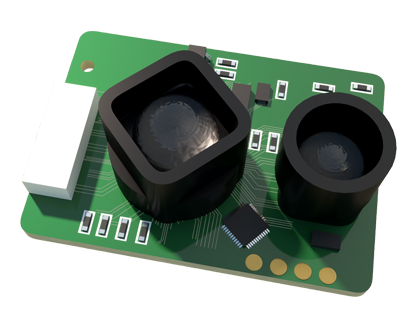
Looking ahead, the future of multi-axis laser sensing is intertwined with advancements in artificial intelligence and edge computing. AI-powered software can learn from vast datasets to identify novel defect patterns and make autonomous pass/fail decisions, reducing engineering setup time. Miniaturization of components is leading to more compact sensor heads, enabling installation in space-constrained environments. Furthermore, the integration of multi-axis data with other sensor inputs, like thermal or spectral data, is paving the way for multi-modal inspection systems that provide a holistic view of product quality.
In conclusion, multi-axis laser sensors represent a significant leap forward in metrology and machine vision. By delivering comprehensive, high-speed, and contactless 3D measurement, they address the growing demands for quality, efficiency, and flexibility in advanced manufacturing. As technology continues to progress, these sensors will become even more intelligent, accessible, and integral to building the agile and data-driven industrial operations of tomorrow. Their role is not merely to measure but to provide the foundational data that informs better decision-making throughout the product lifecycle.