In the realm of industrial automation and smart systems, proximity and position sensors are indispensable components that enable precise detection, measurement, and control without physical contact. These sensors enhance efficiency, safety, and reliability across various applications, from manufacturing lines to automotive systems. This article explores the primary types of proximity and position sensors, their working principles, and key use cases in today's technology-driven landscape.
1. Inductive Proximity Sensors:
Inductive sensors detect metallic objects by generating an electromagnetic field. When a metal target enters this field, it induces eddy currents, causing a change in the sensor's oscillation amplitude. This change triggers an output signal. These sensors are ideal for harsh environments due to their robustness and resistance to dust, moisture, and vibrations. Common applications include metal detection in conveyor systems, position verification in machinery, and part counting in assembly lines. They typically have a sensing range from a few millimeters to several centimeters, depending on the target material and sensor size.
2. Capacitive Proximity Sensors:
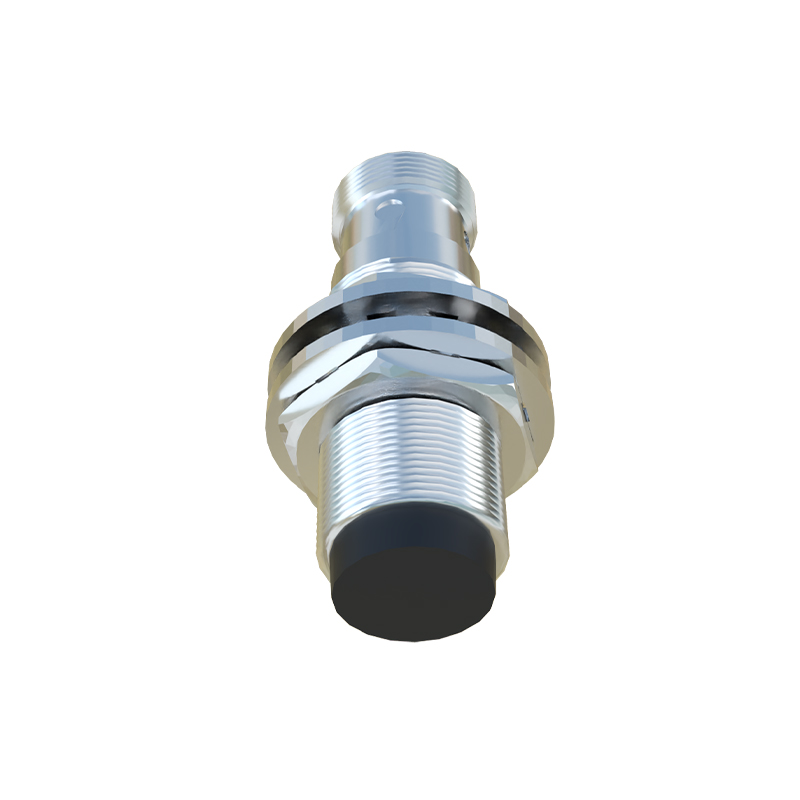
Capacitive sensors can detect both metallic and non-metallic objects, such as plastics, liquids, or wood, by measuring changes in capacitance. The sensor creates an electrostatic field, and when an object with a different dielectric constant enters this field, it alters the capacitance, prompting an output response. These sensors are versatile and used in level detection for liquids or granular materials, object presence sensing in packaging, and touch-sensitive interfaces. They are sensitive to environmental factors like humidity, requiring careful calibration for optimal performance.
3. Ultrasonic Sensors:
Ultrasonic sensors operate by emitting high-frequency sound waves and measuring the time taken for the echo to return after hitting an object. This time-of-flight principle allows for accurate distance measurement and object detection, regardless of material or color. They are effective in challenging conditions, such as detecting transparent or shiny surfaces, and are widely used in automotive parking assistance, liquid level monitoring in tanks, and collision avoidance in robotics. Their sensing range can extend from centimeters to meters, making them suitable for both short- and long-range applications.
4. Photoelectric Sensors:
Photoelectric sensors use light beams (usually infrared, visible, or laser) to detect objects. They come in three main configurations: through-beam (separate emitter and receiver), retro-reflective (with a reflector), and diffuse (reflective). When an object interrupts or reflects the light beam, the sensor outputs a signal. These sensors offer high precision and fast response times, making them popular in packaging, material handling, and safety systems like light curtains. They can detect a wide variety of materials but may be affected by ambient light or dirty environments.
5. Hall Effect Sensors:
Hall effect sensors detect magnetic fields by producing a voltage proportional to the field strength. They are commonly used for position sensing in rotating or linear systems, such as in motor speed control, gear tooth detection, and proximity switching in automotive applications. These sensors are contactless, durable, and provide reliable performance in extreme temperatures, making them essential in automotive, aerospace, and industrial machinery.
6. Magnetic Proximity Sensors:
Similar to Hall effect sensors, magnetic proximity sensors use reed switches or magnetoresistive elements to detect the presence of a magnetic field from a permanent magnet or electromagnet. They are simple, cost-effective, and used in applications like door position sensing, valve position detection, and security systems. Their operation is unaffected by non-magnetic materials, ensuring stability in diverse settings.
7. Laser Distance Sensors:
Laser sensors employ laser beams to measure distance or position with high accuracy, often using triangulation or time-of-flight methods. They provide micron-level precision and are utilized in quality control, dimensional inspection, and alignment tasks in industries like electronics and automotive manufacturing. While offering superior performance, they may require protection from dust and vibrations.
8. Eddy Current Sensors:
Eddy current sensors work on the principle of electromagnetic induction to detect conductive materials, particularly metals. They are highly sensitive and used for precise displacement or position measurement in applications like vibration monitoring, thickness gauging, and metal sorting. Their non-contact nature minimizes wear and tear, extending equipment lifespan.
In summary, proximity and position sensors form the backbone of modern automation, each type offering unique advantages tailored to specific needs. Factors such as target material, environmental conditions, sensing range, and accuracy dictate the choice of sensor. As industries evolve toward Industry 4.0 and IoT integration, these sensors continue to advance, incorporating smart features like connectivity and self-diagnostics to drive innovation and operational excellence. Engineers and system designers must carefully evaluate requirements to select the optimal sensor, ensuring seamless integration and enhanced productivity in their applications.