In the rapidly evolving landscape of industrial automation and electronics, the demand for miniaturization has driven remarkable innovations in sensor technology. Among these, proximity sensors stand out as critical components for detection, positioning, and safety applications. The quest for the smallest proximity sensors represents a fascinating intersection of engineering precision, material science, and advanced manufacturing techniques. These tiny devices, often measuring just a few millimeters in size, are revolutionizing industries by enabling compact designs without compromising performance.
The development of the smallest proximity sensors hinges on several key technological advancements. First, the use of micro-electromechanical systems (MEMS) has allowed for the creation of sensors with extremely small footprints. MEMS-based proximity sensors integrate sensing elements, signal processing circuits, and communication interfaces onto a single silicon chip, reducing size while enhancing reliability. Second, innovations in packaging technology, such as chip-scale packaging (CSP) and wafer-level packaging (WLP), have minimized the overall dimensions of these sensors. For instance, some of the smallest proximity sensors available today feature packages as tiny as 1.0 mm x 0.5 mm x 0.3 mm, making them nearly invisible to the naked eye.
These miniature sensors operate on various principles, including inductive, capacitive, and optical methods. Inductive proximity sensors, commonly used in metal detection, utilize high-frequency oscillation to sense metallic objects. In their smallest forms, they achieve detection ranges of up to 2 mm despite their compact size. Capacitive proximity sensors, ideal for non-metallic materials, rely on changes in capacitance to detect objects. Recent miniaturized versions can sense materials like plastic or glass at distances of a few millimeters. Optical proximity sensors, which use infrared or laser light, have also seen significant size reductions. Some ultra-small optical sensors incorporate micro-lenses and photodiodes to detect objects within a 5 mm range, making them perfect for consumer electronics like smartphones and wearables.
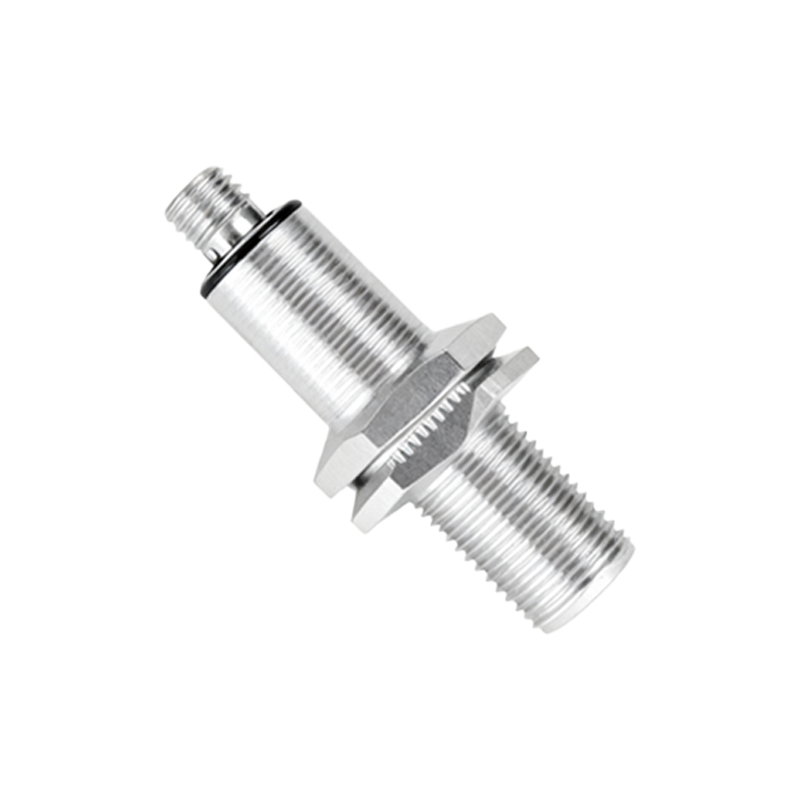
The applications of the smallest proximity sensors are vast and diverse. In consumer electronics, they enable features such as touchless gesture control, screen dimming during calls, and power-saving modes in devices. For example, in modern smartphones, a tiny proximity sensor near the earpiece detects when the phone is held to the user's ear, turning off the display to prevent accidental touches. In industrial settings, these sensors are used in robotics for precise object detection in confined spaces, or in medical devices for non-contact monitoring. The automotive industry benefits from miniaturized sensors in advanced driver-assistance systems (ADAS), where they contribute to parking assistance and collision avoidance.
Despite their advantages, designing the smallest proximity sensors presents challenges. Sensitivity and accuracy can be affected by environmental factors like temperature fluctuations or electromagnetic interference. Engineers address these issues through advanced calibration algorithms and shielding techniques. Additionally, power consumption is a critical concern, especially for battery-operated devices. Low-power designs, often leveraging sleep modes and efficient signal processing, are essential to extend battery life. Future trends point toward even smaller sensors with enhanced capabilities, such as multi-function sensors that combine proximity, light, and motion sensing. The integration of artificial intelligence for adaptive sensing is also on the horizon, promising smarter and more autonomous systems.
In conclusion, the smallest proximity sensors exemplify the incredible progress in micro-engineering. They offer a blend of compactness, efficiency, and versatility, driving innovation across multiple sectors. As technology continues to advance, these tiny devices will play an increasingly vital role in shaping the future of automation and smart devices.