In the realm of industrial automation, precision measurement is paramount, and slot-type laser profile sensors have emerged as a critical tool for achieving high-accuracy, non-contact inspection. These sensors, often referred to as laser line scanners or profile sensors, project a thin, fan-shaped laser beam onto a target object. The reflected light is captured by a high-resolution camera within the sensor, generating a precise two-dimensional cross-sectional profile of the object's surface. This profile data is then analyzed in real-time to extract key dimensional parameters such as height, width, angle, and presence of defects.
The defining feature of a slot-type sensor is its optical design. Unlike point lasers that measure a single spot, the slot-type projects a continuous line of laser light. This "slot" of illumination allows for the simultaneous capture of an entire profile with a single scan, dramatically increasing inspection speed. The sensor housing is typically elongated to accommodate this linear optical path, making it ideal for integration into production lines where objects pass through the sensing area. Common applications include measuring the height and volume of solder paste on PCBs, inspecting sealant bead application in automotive assembly, verifying the dimensional accuracy of extruded plastics or metals, and detecting surface flaws like scratches, dents, or gaps.
The core advantages of these sensors are numerous. First, their non-contact nature eliminates the risk of damaging delicate surfaces and ensures no wear on the sensor itself. Second, they offer exceptional speed, capable of capturing thousands of profiles per second, which is essential for high-throughput manufacturing. Third, they provide high resolution and repeatability, often down to the micron level, enabling the detection of minute variations. Fourth, their robustness allows them to function reliably in harsh industrial environments with vibration, dust, and variable ambient light, especially when equipped with protective housings and filters for the specific laser wavelength.

When selecting a slot-type laser profile sensor, engineers must consider several technical specifications. The measurement range, or stand-off distance, defines the optimal working distance from the sensor to the target. The Z-axis resolution determines the smallest height difference detectable, while the X-axis resolution defines the detail along the laser line. The scanning frequency, measured in Hertz (Hz), dictates how many profiles are captured per second. The laser wavelength, typically in the visible red (e.g., 650nm) or safer blue-violet spectrum, affects visibility and performance under different lighting conditions. Finally, the interface—common options being Ethernet/IP, PROFINET, EtherCAT, or analog outputs—is crucial for seamless integration into the existing control system.
Integration and software are equally vital. Modern sensors come with powerful, user-friendly software suites that simplify setup, calibration, and creation of measurement routines. Users can define measurement windows, set pass/fail thresholds, and output specific data points to a PLC. Advanced models incorporate embedded processors that perform calculations on-board, reducing the load on the central controller and enabling faster, more deterministic response times.

In practice, successful deployment requires careful mechanical alignment. The sensor must be mounted stably, perpendicular to the direction of object travel, with the laser line oriented correctly across the feature of interest. Environmental factors like strong ambient light from factory windows or reflective surfaces must be mitigated, often through the use of optical filters or physical shrouding. Regular maintenance, primarily keeping the protective glass window clean, ensures consistent performance over time.
Looking ahead, the evolution of slot-type laser profile sensors is intertwined with Industry 4.0 trends. Enhanced connectivity for IIoT (Industrial Internet of Things) data streaming, integration with AI for advanced pattern recognition and anomaly detection, and the development of even more compact, power-efficient models are key directions. These advancements will further solidify their role as indispensable eyes on the factory floor, driving quality control, process optimization, and overall operational efficiency to new heights.
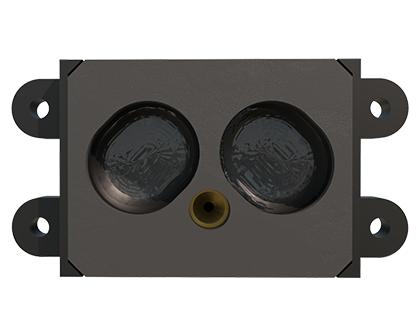
In conclusion, slot-type laser profile sensors represent a mature yet continuously advancing technology. Their ability to deliver fast, accurate, and reliable 3D profile data makes them a cornerstone of modern automated inspection systems. For engineers tasked with ensuring product quality, optimizing processes, and implementing predictive maintenance, a deep understanding of these sensors' capabilities and application principles is essential.