Inductive ring proximity sensors, often referred to as ring sensors or annular sensors, are fundamental components in modern industrial automation and control systems. These non-contact sensing devices are engineered to detect the presence or absence of metallic objects—primarily ferrous metals like iron and steel, though some versions can sense non-ferrous metals—by generating an electromagnetic field. Their distinctive donut-shaped design allows objects to pass through the central aperture, making them exceptionally suitable for applications involving counting, positioning, or monitoring moving parts on assembly lines, conveyor systems, and packaging machinery.
The core operational principle hinges on electromagnetic induction. Within the sensor housing, a coil of wire is wound around the ferrite core in a ring configuration. When energized by an alternating current from the connected control system (typically a PLC or controller), this coil generates a high-frequency oscillating electromagnetic field that radiates from the sensing face and through the central opening. In the absence of a target metal object, the oscillator circuit maintains a stable amplitude of oscillation. However, when a conductive metal object enters this active field region, eddy currents are induced on the surface of the target. These eddy currents draw energy from the oscillator, resulting in a measurable loss of amplitude or a change in the oscillation pattern. The sensor's integrated evaluation electronics continuously monitor this energy dissipation. Once the amplitude drop surpasses a predefined threshold—indicating the target is within the specified sensing range—the output state of the sensor switches. This output is usually in the form of a digital signal (e.g., PNP/NPN transistor switch) that signals the connected machinery to trigger a subsequent action, such as stopping a conveyor, incrementing a counter, or activating a sorting mechanism.
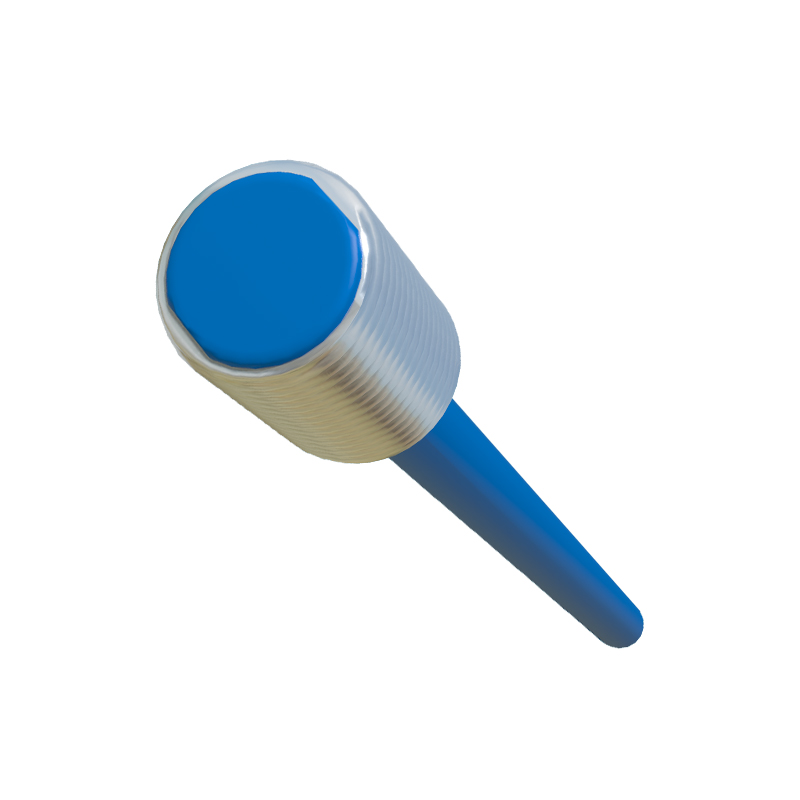
A critical technical aspect is the sensor's nominal sensing distance, which is defined under standardized conditions using a reference target (typically a square of mild steel). This distance is relatively short for ring sensors, often just a few millimeters, due to the focused field in the aperture. Factors like target material, size, shape, and orientation significantly influence actual performance. For instance, ferrous metals generate a stronger effect and are detected at longer ranges compared to non-ferrous metals like aluminum or copper. The sensor must be precisely sized: the inner diameter of the ring must be sufficiently larger than the object to be detected to avoid false triggers from the object merely grazing the sensor body, yet not so large as to weaken the field density and reduce sensitivity.
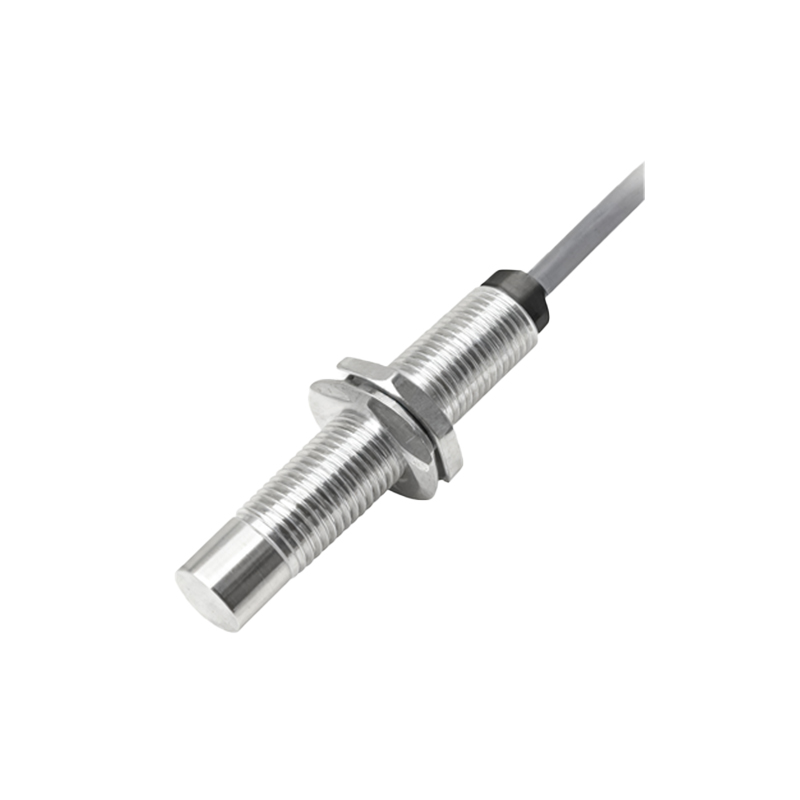
Installation and environmental considerations are paramount for reliable operation. Ring sensors are commonly mounted in fixed frames or brackets, ensuring precise alignment so that objects pass cleanly through the center without physical contact. They must be positioned away from other large metal structures or adjacent sensors to prevent mutual interference of their electromagnetic fields—a phenomenon known as flanking. Industrial environments often present challenges like vibration, temperature fluctuations, dust, and coolant exposure. Modern inductive ring sensors are therefore built to robust ingress protection (IP) ratings (e.g., IP67) and are designed to withstand electrical noise and voltage spikes common in plant settings. Some advanced models feature embedded diagnostics, temperature compensation, and teach-in functionality for easy adjustment of the switching point.
Applications are diverse and vital. In automotive manufacturing, they verify the passage of engine components on a transfer line. In food and beverage packaging, they count bottles or cans moving at high speed. In the pharmaceutical industry, they ensure precise positioning of vials for labeling or capping. Their non-contact nature guarantees no wear and tear on either the sensor or the target, enabling high-speed operation, long service life, and minimal maintenance—a clear advantage over mechanical limit switches.
In summary, the inductive ring proximity sensor is a sophisticated yet rugged device that translates a physical phenomenon—electromagnetic disturbance by a metal target—into a reliable control signal. Its design and operating principle make it an indispensable tool for automation engineers seeking efficient, accurate, and maintenance-free object detection in demanding industrial landscapes. Continuous advancements in miniaturization, sensing range, and connectivity (e.g., IO-Link) are further expanding its capabilities and integration within the Industrial Internet of Things (IIoT) ecosystem.