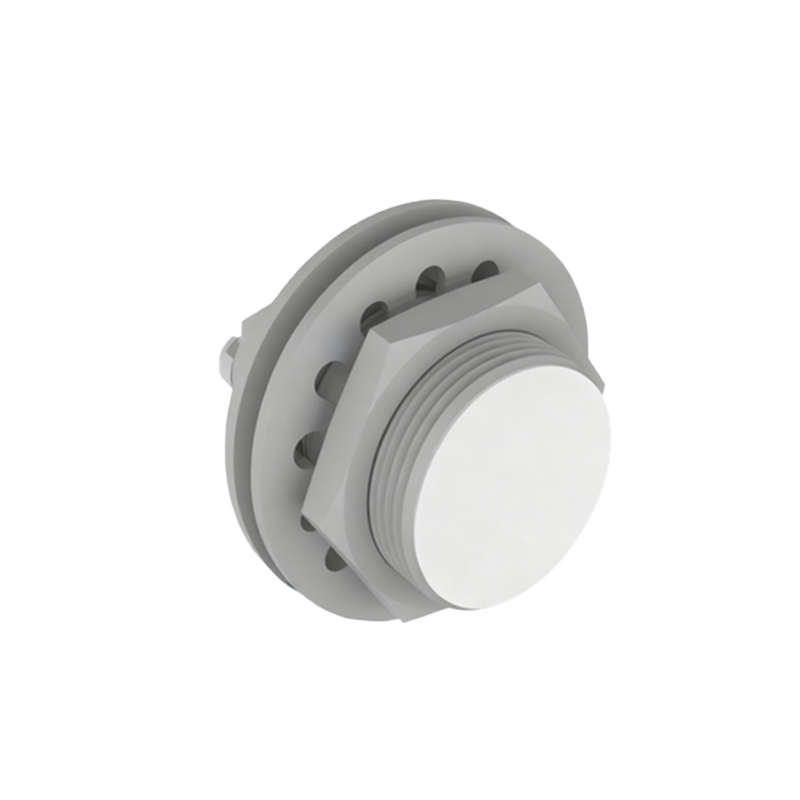
In the realm of industrial automation, proximity sensor pressure roller switches represent a critical fusion of mechanical actuation and electronic sensing, designed to deliver reliable performance in demanding environments. These devices are engineered to detect the presence or absence of an object—typically a moving web, sheet, or material roll—through physical contact initiated by a roller, which then triggers an integrated proximity sensor. Unlike purely non-contact proximity sensors, the pressure roller mechanism provides a tangible interface, making these switches particularly suited for applications where direct material engagement is necessary for accurate detection, such as in printing presses, packaging machinery, textile manufacturing, and paper converting lines.
The operational principle hinges on a spring-loaded roller that maintains consistent contact with the material surface. As material tension or position changes—for instance, if a web breaks or slackens—the roller displaces, actuating the internal sensor. Commonly, this sensor is an inductive or magnetic proximity type, generating an output signal when the roller's movement brings a target (like a metallic actuator) within its detection range. This dual-component design ensures high precision, as the mechanical roller translates minute positional variations into detectable electronic signals, enabling real-time monitoring and control. Key advantages include robust construction, often featuring stainless steel or hardened polymer rollers and IP67-rated housings for resistance to dust, moisture, and mechanical wear. Additionally, they offer adjustable activation points, allowing fine-tuning for specific material thicknesses or tension thresholds.
Installation and integration require careful consideration of mounting orientation, roller alignment, and material compatibility to prevent false triggers or premature wear. Regular maintenance, such as cleaning the roller surface and checking spring tension, is essential to sustain accuracy. In practice, these switches serve multiple functions: they can halt machinery upon detecting web breaks, control tension by signaling drive systems, or register material edge positions for guiding systems. Their versatility is enhanced by output options, including PNP/NPN transistor configurations or relay contacts, facilitating seamless connectivity with PLCs (Programmable Logic Controllers) and other industrial control systems.
Despite the rise of fully non-contact alternatives like ultrasonic or optical sensors, pressure roller switches remain indispensable in scenarios where physical contact is unavoidable or beneficial for damping vibrations or handling opaque, non-metallic materials. Innovations in this field focus on enhancing durability with self-lubricating components, integrating IO-Link for digital communication, and reducing maintenance needs through sealed bearings. For engineers, selecting the appropriate model involves evaluating factors such as roller diameter (to match material speed and pressure), operating force, repeatability accuracy, and environmental ratings. Ultimately, proximity sensor pressure roller switches exemplify how electromechanical synergy can solve complex automation challenges, ensuring safety, efficiency, and continuity in industrial processes. Their continued evolution aligns with industry trends toward smarter, more resilient sensing solutions that minimize downtime and optimize productivity.