In the realm of industrial automation and precision measurement, laser distance sensors have become indispensable tools, offering high accuracy, rapid response, and non-contact operation. A critical component that significantly enhances the performance of these sensors is optical fiber technology. By integrating optical fibers into laser distance sensing systems, engineers can achieve superior signal transmission, improved environmental resilience, and greater design flexibility. This article delves into the principles, advantages, and applications of optical fiber-based laser distance sensors, providing insights for professionals in the electrical and automation industries.
Optical fibers, typically made of glass or plastic, guide light through total internal reflection. In laser distance sensors, these fibers serve as conduits for transmitting laser beams from the source to the target and back to the detector. This setup allows the sensor's electronic components to be physically separated from the measurement point, which is particularly beneficial in harsh or confined environments. For instance, in high-temperature settings or areas with strong electromagnetic interference (EMI), placing sensitive electronics remotely via fiber optics minimizes damage risks and ensures stable operation. The core principle involves emitting a laser pulse through the fiber, which reflects off the target and returns through the same or a separate fiber. The time-of-flight (ToF) or phase-shift method is then used to calculate distance with micron-level precision.
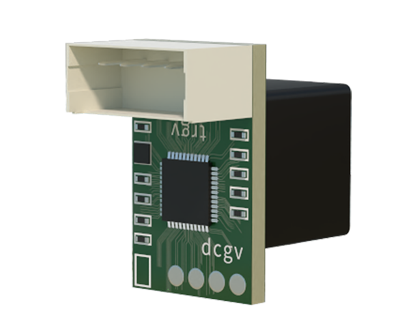
The integration of optical fibers offers several key advantages. First, it enhances signal integrity by reducing attenuation and dispersion, even over long distances. Unlike electrical cables, fibers are immune to EMI, making them ideal for noisy industrial environments like manufacturing floors or power plants. Second, fibers enable miniaturization of sensor heads, allowing access to tight spaces where traditional sensors cannot fit. This is crucial in applications such as robotic assembly, semiconductor fabrication, or medical device inspection. Third, optical fibers support multiplexing, where multiple sensors can share a single fiber line, reducing wiring complexity and cost in large-scale systems. Additionally, fibers are durable and resistant to corrosion, chemicals, and temperature extremes, extending the sensor's lifespan in demanding conditions.
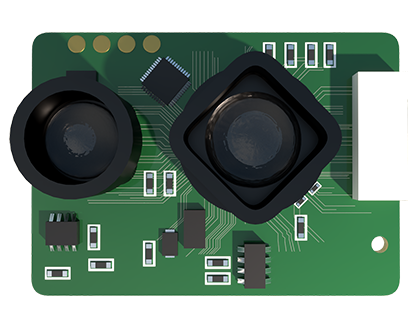
Applications of fiber-based laser distance sensors span various industries. In automotive manufacturing, they ensure precise alignment of components and monitor robotic weld seams. In aerospace, they measure turbine blade clearances and structural deformations with high accuracy. The energy sector utilizes them for monitoring pipeline integrity and tank levels, while in logistics, they facilitate automated sorting and inventory management. Furthermore, in research and development, these sensors aid in 3D scanning and prototyping. A case study from a steel plant illustrates their value: by deploying fiber-optic laser sensors, the plant achieved real-time thickness measurement of rolling sheets, reducing material waste and improving quality control without interference from heat and dust.
Despite their benefits, challenges exist in implementing optical fiber technology. Initial costs can be higher than conventional systems, and installation requires expertise in fiber handling and splicing. However, advancements in fiber manufacturing and connector design are lowering barriers. Future trends include the adoption of single-mode fibers for longer-range measurements and smart sensors with integrated IoT capabilities for predictive maintenance. As Industry 4.0 evolves, the synergy between optical fibers and laser sensing will drive innovations in automation, enhancing efficiency and reliability across sectors.
For electrical engineers and industry professionals, understanding optical fiber integration is key to optimizing measurement systems. By leveraging its strengths, businesses can achieve greater precision, reduce downtime, and adapt to complex operational environments. As technology progresses, fiber-based laser distance sensors are poised to become even more integral to industrial advancement, offering scalable solutions for tomorrow's challenges.
