In the intricate world of industrial automation, where precision and reliability are paramount, rotary proximity sensors stand as critical components for motion detection and control. Unlike their linear counterparts, these sensors are specifically engineered to monitor the presence, absence, or position of rotating components such as shafts, gears, and cams. Their non-contact operation ensures minimal wear and tear, leading to enhanced system longevity and reduced maintenance costs.
The fundamental operating principle of a rotary proximity sensor revolves around detecting the passage of a metallic or ferromagnetic target attached to a rotating element. The most common technologies employed are inductive and magnetic sensing. Inductive sensors generate an electromagnetic field; when a metallic target (often called an actuator or flag) passes through this field, it induces eddy currents, causing a change in the sensor's oscillation amplitude. This change is processed by the internal circuitry to produce a clean, digital output signal—typically a pulse. Magnetic sensors, on the other hand, utilize Hall-effect or magnetoresistive elements to detect the presence of a permanent magnet mounted on the rotating part. Each technology offers distinct advantages: inductive sensors are robust against environmental contaminants like oil and dust, while magnetic sensors can detect through non-metallic materials and often provide greater sensing distances.
The applications for rotary proximity sensors are vast and varied across numerous industries. In automotive manufacturing, they are indispensable for monitoring engine crankshaft and camshaft speed and position, enabling precise fuel injection and ignition timing. Within packaging machinery, these sensors count rotations to control the precise cutting or filling of products. On conveyor systems, they serve as rotary encoders or tachometers to monitor belt speed and position, facilitating synchronization and process control. Furthermore, in wind turbines, they monitor the low-speed rotation of the main shaft for condition monitoring and safety systems. The ability to provide real-time feedback on rotational speed, direction, and angular position makes them a cornerstone for closed-loop control systems.
Selecting the appropriate rotary proximity sensor requires careful consideration of several key parameters. First, the required sensing technology must be chosen based on the target material and the operating environment. Next, the mechanical design is crucial: the sensor's housing must withstand the specific environmental conditions, including temperature extremes, humidity, vibration, and potential exposure to coolants or washdowns. Common housing materials include stainless steel, nickel-plated brass, or engineered plastics like PBT. The electrical output type is another critical decision point. Options include NPN (sinking) or PNP (sourcing) transistor outputs, which are standard for programmable logic controller (PLC) inputs, or analog outputs (4-20 mA or 0-10 V) for proportional speed feedback. The operating voltage range, typically 10-30 V DC, must match the control system's supply.
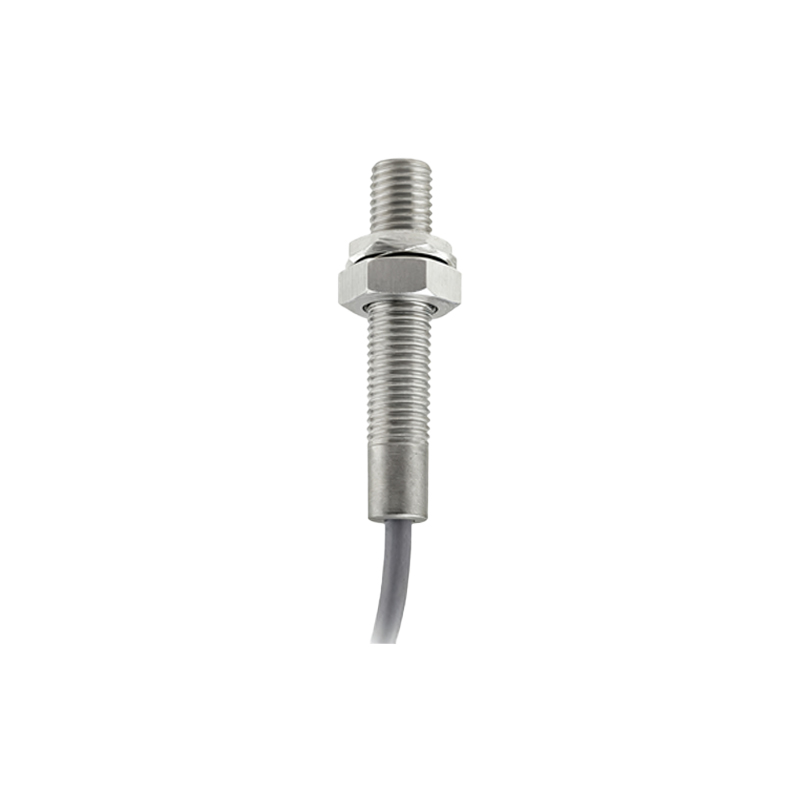
Installation and alignment are also vital for optimal performance. The sensor must be mounted securely to prevent vibration-induced errors, and the air gap between the sensor face and the target must be maintained within the specified limits. The target itself—its size, shape, and material—directly affects the sensor's switching characteristics. Manufacturers often provide detailed specifications for the minimum target size and the recommended gap. For high-speed applications, the sensor's switching frequency, measured in Hertz (Hz), must be sufficiently high to accurately resolve each passing target without missing pulses.

Modern advancements continue to push the boundaries of rotary proximity sensor capabilities. Integrated diagnostics, such as short-circuit and overload protection, enhance system robustness. Some models now feature IO-Link communication, enabling digital parameter setting, advanced diagnostics, and process data transmission directly to the controller, paving the way for Industry 4.0 predictive maintenance strategies. Additionally, designs with increased resistance to electromagnetic interference (EMI) ensure reliable operation in electrically noisy industrial environments.
In conclusion, the rotary proximity sensor is a deceptively simple yet profoundly important device in automation. Its role in translating physical rotation into actionable electronic signals is fundamental to the efficiency, safety, and intelligence of modern industrial machinery. By understanding their operating principles, diverse applications, and key selection criteria, engineers and technicians can effectively integrate these sensors to create more responsive, reliable, and productive automated systems.