In the rapidly evolving landscape of industrial automation and smart manufacturing, high-precision proximity sensors stand as critical components, enabling machines to perceive their environment with remarkable accuracy and reliability. These non-contact devices detect the presence or absence of objects within a defined sensing range, triggering essential control functions. The demand for higher precision, faster response times, and greater durability has driven significant innovation, positioning several key companies at the forefront of this specialized market. This article explores the leading manufacturers, their core technologies, and the transformative applications they enable across various sectors.
A primary leader in this field is Sick AG, a German sensor giant renowned for its engineering excellence. Sick's portfolio includes inductive, capacitive, and photoelectric proximity sensors designed for extreme conditions. Their sensors often feature integrated intelligence, such as IO-Link communication, which allows for parameter setting, process data monitoring, and advanced diagnostics. This connectivity is pivotal for Industry 4.0 applications, facilitating predictive maintenance and reducing downtime. Sick's sensors are ubiquitous in automotive assembly lines, packaging machinery, and material handling systems where millimeter-level precision is non-negotiable.
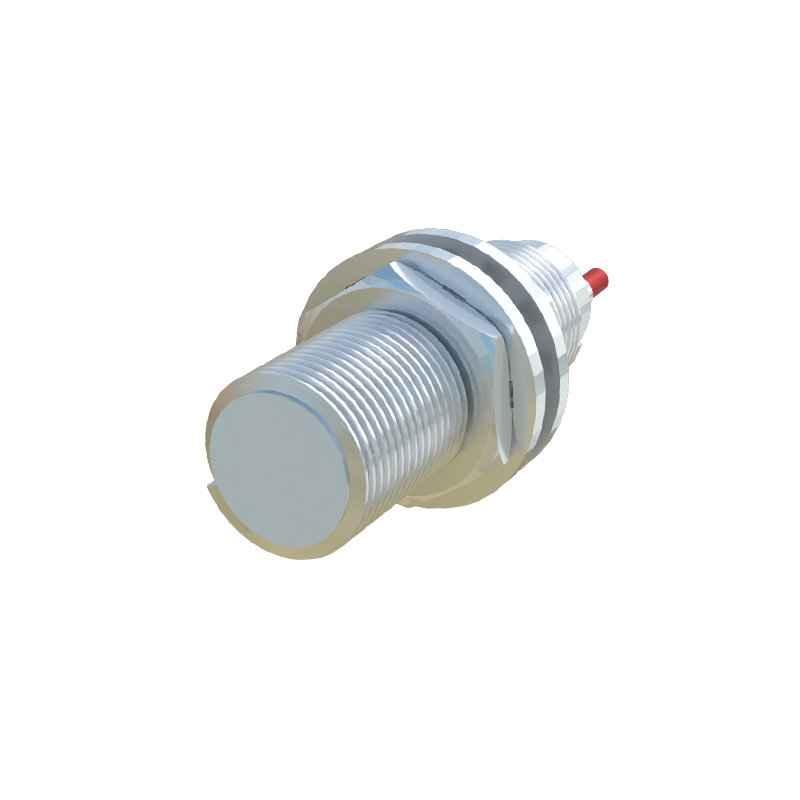
Another major player, Omron Corporation from Japan, has consistently pushed the boundaries of miniaturization and performance. Omron's E2E ultra-small inductive proximity sensors are legendary for their ability to detect tiny metal components in cramped spaces. Furthermore, Omron excels in developing specialized sensors, such as those with enhanced resistance to welding spatter or chemicals, making them ideal for harsh environments like robotic welding cells. Their focus on creating complete sensing solutions, often bundled with their programmable logic controllers (PLCs), provides seamless integration for system builders.
Pepperl+Fuchs, also headquartered in Germany, is synonymous with intrinsic safety and robust design, particularly for hazardous areas. Their expertise in both inductive and capacitive sensing is extensive. Capacitive sensors from Pepperl+Fuchs can detect non-metallic materials like glass, wood, or liquids through container walls, opening applications in food & beverage and pharmaceutical industries for level detection. The company's commitment to standardization and modular design allows for flexible customization, catering to highly specific customer requirements in sectors like oil & gas and chemical processing.
From the United States, Balluff Inc. has made a significant mark with its innovative approach to sensor networking and identification. Beyond standard proximity sensors, Balluff is a pioneer in RFID systems and sensor hubs that consolidate multiple sensor inputs. Their products emphasize easy integration and tool-free configuration, significantly reducing installation time. Balluff's high-precision sensors are crucial in automated guided vehicle (AGV) systems for position feedback and in CNC machining centers for tool presence detection, where a single missed signal can lead to costly damage.
IFM Electronic GmbH, another German powerhouse, emphasizes simplicity and efficiency. IFM's "one-touch" teaching method for setting sensing ranges exemplifies user-centric design. Their sensors are built with robust housing (often in stainless steel) and offer high ingress protection ratings, ensuring longevity in environments with dust, moisture, or high-pressure washdowns. This makes them a preferred choice in the food processing and agricultural machinery industries. IFM's comprehensive ecosystem, which includes condition monitoring software, adds substantial value by turning raw sensor data into actionable insights.
The technological advancements from these companies converge on several key trends. First, the integration of Industrial Internet of Things (IIoT) capabilities is now standard. Modern high-precision sensors are not just output switches; they are data points on the network, reporting their health, temperature, and signal strength. Second, there is a relentless drive for miniaturization without sacrificing sensing distance or robustness, enabling more compact machine designs. Third, enhanced immunity to electromagnetic interference (EMI) ensures stable operation in electrically noisy industrial environments.
The applications are vast and critical. In robotics, high-precision proximity sensors provide end-of-arm tooling with the "touch" needed for delicate pick-and-place operations. In semiconductor manufacturing, they ensure wafer handling robots position substrates with micron-level accuracy. In automotive production, they verify the correct seating of components like airbags or engine valves. Even in renewable energy, these sensors monitor the position of solar panels or the blade pitch in wind turbines.
Choosing the right supplier depends on the application's specific demands: the target material, required sensing distance, environmental challenges, needed output type, and connectivity requirements. The companies highlighted lead the market not just by providing a component, but by delivering a reliable, intelligent, and integrated sensing solution. As automation becomes more sophisticated and pervasive, the role of high-precision proximity sensors and the companies that master their design will only grow in importance, forming the essential sensory layer of the intelligent factory.