In the realm of industrial automation and control systems, the reliable detection of object presence and precise measurement of position is paramount. Two fundamental components that serve as the "eyes" of a machine are proximity switches and position sensors. While these terms are sometimes used interchangeably, they represent distinct technologies with specific operational principles and application niches. Understanding their differences, capabilities, and optimal use cases is crucial for engineers and system designers aiming to build robust, efficient, and safe automated processes.
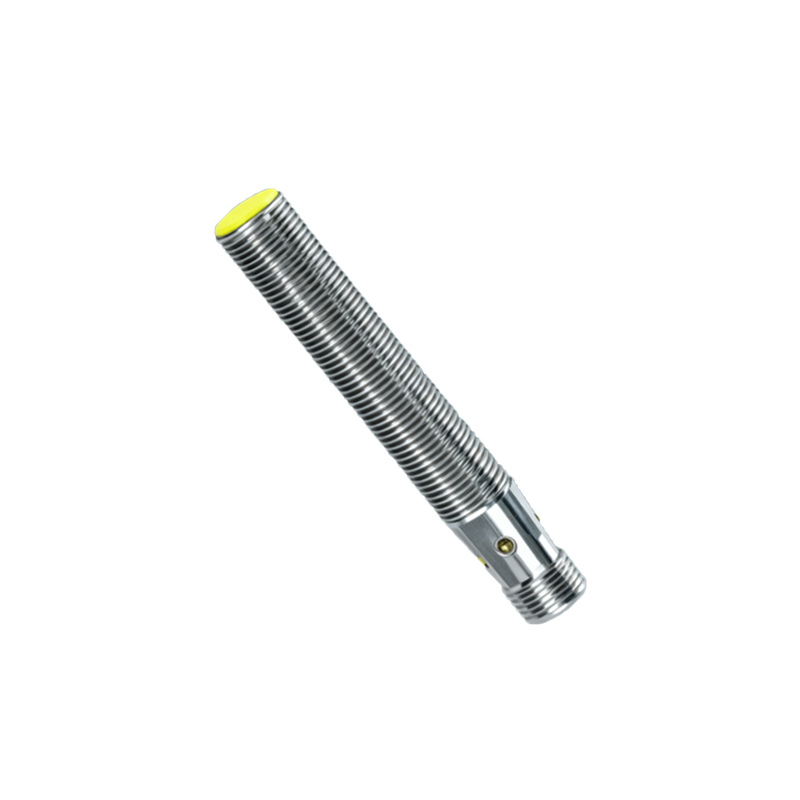
Proximity switches, often simply called proximity sensors, are non-contact devices designed to detect the presence or absence of a target object within a defined sensing range without any physical contact. Their primary function is to provide a discrete on/off signal. The most common types are inductive, capacitive, and magnetic.
Inductive proximity switches are the workhorses of metal detection. They generate an electromagnetic field. When a metallic target enters this field, it induces eddy currents within the target, causing a change in the sensor's oscillation amplitude. This change is detected and triggers a solid-state output switch. They are exceptionally reliable, resistant to environmental contaminants like dust, oil, and moisture, and are ideal for detecting ferrous and non-ferrous metals in harsh industrial environments—think of counting metal parts on a conveyor or confirming the position of a robotic arm.
Capacitive proximity switches, on the other hand, can detect both metallic and non-metallic materials (plastics, wood, liquids, granules) by sensing changes in capacitance. They generate an electrostatic field. Any object with a dielectric constant different from air will alter this field when it approaches the active face. This makes them versatile for applications like monitoring fill levels in non-metallic containers, detecting wood or glass panels, or sensing the presence of a material through a thin non-metallic barrier.
Magnetic proximity switches, often called reed switches or sensors, react to the presence of a permanent magnet. They are simple, cost-effective, and commonly used for detecting the open/closed status of doors or valves, or in conjunction with a magnet attached to a moving piston in pneumatic cylinders.
Position sensors, while they can also detect presence, are primarily focused on providing continuous, analog feedback about the exact location or displacement of an object. They translate linear or angular movement into an electrical signal that is proportional to the position. This signal is typically analog (e.g., 4-20 mA, 0-10V) or digital (e.g., SSI, IO-Link, PROFINET). Key technologies include Linear Variable Differential Transformers (LVDTs), magnetostrictive sensors, potentiometric sensors, and ultrasonic or laser distance sensors.
LVDTs are renowned for their high accuracy, infinite resolution, and robustness. They consist of a movable ferromagnetic core inside a cylindrical transformer. The position of the core determines the voltage induced in secondary windings, providing an extremely precise linear position measurement, often used in metrology, valve positioning, and aircraft control surfaces.
Magnetostrictive position sensors offer excellent precision for longer strokes. A position magnet moves along a waveguide. A current pulse sent down the waveguide creates a torsional strain wave at the magnet's location, which is detected to calculate the exact position. They are common in hydraulic cylinder positioning for heavy machinery and industrial presses.
Potentiometric sensors use a resistive track and a sliding wiper. As the wiper moves, the resistance changes, providing a direct voltage output proportional to position. They are simple and low-cost but may suffer from wear over time due to mechanical contact.
Ultrasonic and laser sensors measure distance by calculating the time-of-flight of a sound wave or light pulse. They are excellent for non-contact, longer-range position sensing, such as monitoring roll diameter in paper mills or controlling the loop of material in a processing line.
The choice between a proximity switch and a position sensor hinges on the application requirement. Use a proximity switch when you need a simple, reliable, and cost-effective answer to a binary question: "Is the object here or not?" Use a position sensor when you need to answer a more complex question: "Exactly where is the object, and how far has it moved?"
Integration into modern industrial networks (IO-Link, PROFIBUS, Ethernet/IP) is now a standard expectation for both device types. This connectivity allows for remote configuration, diagnostics, and the transmission of valuable process data, enabling predictive maintenance and higher-level system optimization.
In conclusion, both proximity switches and position sensors are indispensable in modern automation. Selecting the correct technology—considering factors like target material, required sensing distance, environmental conditions, output signal type, and required precision—is a critical engineering decision that directly impacts system performance, reliability, and total cost of ownership. A thorough understanding of their operational principles ensures the creation of smarter