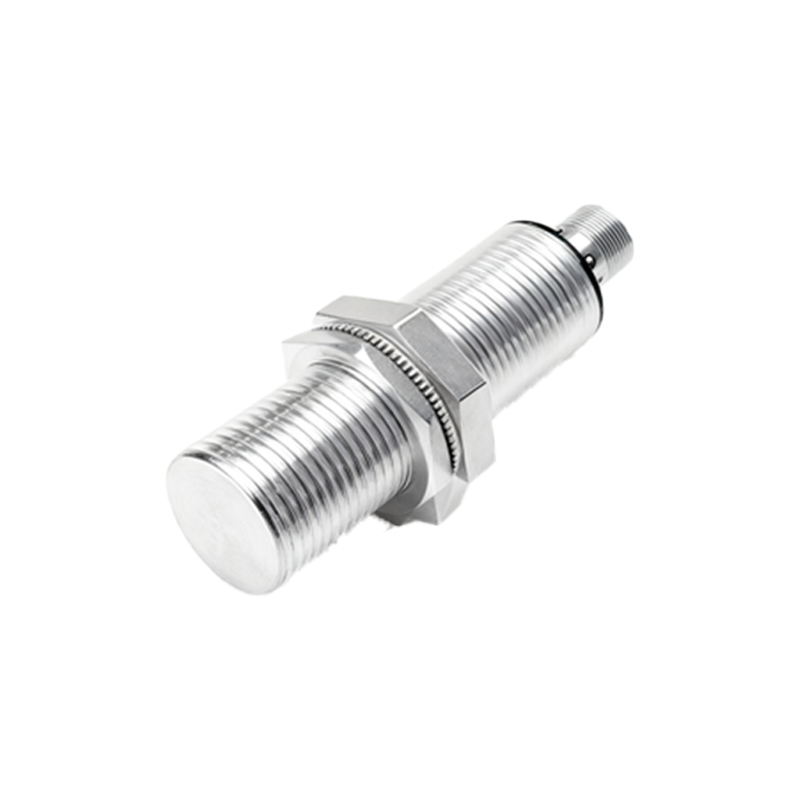
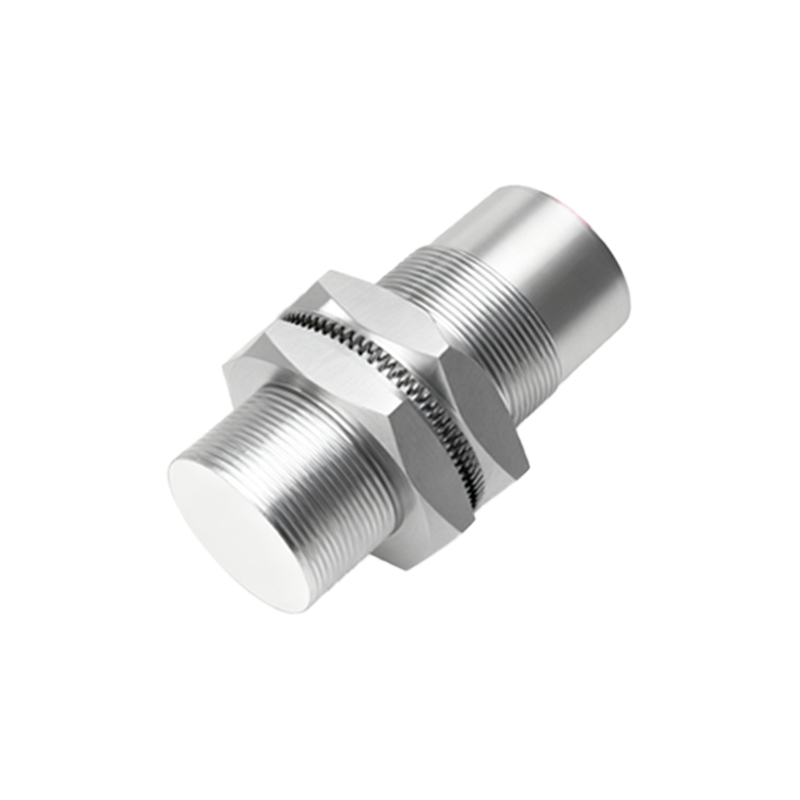
M6 proximity sensors represent a critical component in modern industrial automation, offering reliable non-contact detection capabilities for a wide range of applications. These sensors, characterized by their compact cylindrical design with an M6 thread (6mm diameter), are engineered to detect the presence or absence of metallic objects without physical contact. Operating primarily on inductive principles, M6 sensors generate an electromagnetic field from their sensing face. When a ferrous or non-ferrous metal target enters this field, it causes a change in oscillation amplitude or frequency, which the sensor's internal circuitry detects and converts into a switching signal. This fundamental operation ensures high durability, as the absence of mechanical contact eliminates wear and tear, significantly extending operational lifespan compared to mechanical limit switches.
One of the defining features of M6 proximity sensors is their robust construction, typically featuring stainless steel, nickel-plated brass, or PBT sensing faces and housings rated for IP67 or higher. This makes them resistant to dust, moisture, oils, and coolants commonly found in harsh industrial environments like machining centers, assembly lines, and robotic cells. The sensing distance, or "switching distance," for a standard M6 inductive sensor is typically up to 2mm, though this can vary based on the target material's properties and the sensor's specific technology. Shielding (or embeddable) designs allow for flush mounting in metal, reducing installation space, while unshielded (non-embeddable) types offer slightly longer sensing ranges but require clearance from surrounding metal.
The electrical output configurations are versatile, including NPN (sinking) and PNP (sourcing) transistor outputs in normally-open (NO) or normally-closed (NC) logic, alongside 2-wire AC/DC and analog (4-20mA, 0-10V) variants. This flexibility allows for seamless integration with Programmable Logic Controllers (PLCs), motor drives, and other control systems across different voltage standards (commonly 10-30V DC or 20-250V AC). Key performance parameters include repeat accuracy, often within 5% of the nominal sensing distance, high switching frequencies (up to 5 kHz for DC models), and minimal hysteresis to ensure precise and rapid detection even for small or fast-moving parts like screws, pistons, or conveyor pallets.
In practical applications, M6 proximity sensors are indispensable for position verification, end-of-travel detection, counting, and jam detection. For instance, in automated packaging machinery, they confirm the presence of a metal cap on a bottle before filling. In CNC lathes, they serve as tool touch-off probes or detect the position of the turret. Automotive manufacturing relies on them to verify component placement in welding robots or check for closed doors on assembly lines. Their small size is particularly advantageous in space-constrained applications, such as inside grippers of collaborative robots or on miniature linear actuators.
When selecting an M6 proximity sensor, engineers must consider several factors beyond just size and sensing range. The target material is paramount: standard inductive sensors detect all metals, but sensing distance reduces for non-ferrous metals like aluminum or copper. For applications requiring detection of non-metallic objects, capacitive M6 sensors are available, though with different performance characteristics. Environmental conditions such as temperature extremes, presence of strong electromagnetic interference (EMI), or washdown requirements (e.g., in food & beverage) may necessitate specialized models with extended temperature ranges (-25°C to 85°C), weld-field immunity, or FDA-compliant materials.
Installation and wiring practices significantly impact reliability. Proper mounting with the correct torque (usually specified by the manufacturer) prevents housing damage and ensures alignment. Maintaining the recommended lateral and axial clearance from adjacent metal surfaces is crucial for shielded sensors to avoid false triggering. Cable choices, whether integrated or connector-based, must match the mechanical stress and flexing requirements. Regular maintenance, though minimal, involves periodic cleaning of the sensing face to remove debris like metal chips or grease that could attenuate the sensing field.
Advancements in M6 sensor technology continue to enhance their capabilities. Modern iterations incorporate IO-Link digital communication, enabling parameter configuration, real-time diagnostics, and process data monitoring directly from the sensor to the control system. This facilitates predictive maintenance by alerting operators to issues like mounting misalignment or degrading performance before a failure occurs. Furthermore, the development of all-metal-housing M6 sensors with increased resistance to mechanical impact and cutting fluids addresses the demands of heavy-duty machining.
In conclusion, the M6 proximity sensor is a versatile, rugged, and precise workhorse in industrial automation. Its compact form factor, coupled with robust performance in challenging conditions, makes it a preferred choice for engineers designing efficient and reliable automated systems. By understanding their operating principles, key specifications, and application considerations, professionals can effectively select and deploy these