In the realm of industrial automation, proximity sensors are indispensable components, providing non-contact detection of objects for countless applications from assembly lines to robotic systems. The global market offers a vast array of models from leading manufacturers, primarily clustered in regions like Europe, North America, and Asia. This technical analysis compares prominent proximity sensor models across these key markets, focusing on inductive and capacitive types, to aid engineers in specification and selection.
European Engineering: Precision and Robustness
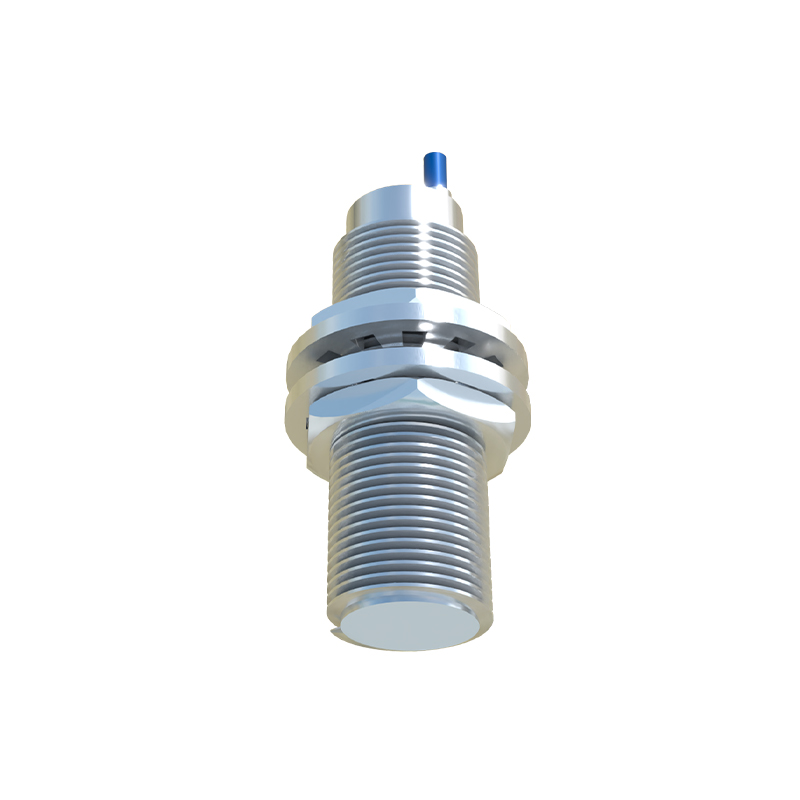
European manufacturers, notably Siemens (Germany) and Sick AG (Germany), set a high standard for precision and durability. The Siemens SIMATIC series, particularly the 3RG series inductive sensors, are renowned for their exceptional noise immunity, extended sensing ranges, and robust housing (often in stainless steel) suitable for harsh environments. They frequently feature advanced diagnostics via IO-Link. Sick's IM series offers similar ruggedness with a focus on high switching frequencies and precise detection, even for small metallic targets. European models typically emphasize comprehensive certifications (e.g., ATEX, IECEx for hazardous areas) and seamless integration into larger automation architectures like PROFINET or PROFIBUS. The trade-off is a generally higher price point, justified for critical applications demanding maximum reliability.
North American Innovation: Versatility and Integration
Key players like Rockwell Automation (Allen-Bradley) and Banner Engineering in the US prioritize versatility and ease of integration into common control systems. The Allen-Bradley 871TM series inductive sensors are known for their compact design, wide voltage range operation (10-30V DC), and excellent resistance to welding fields and electrical noise common in manufacturing. Banner's Q5X series exemplifies innovation with laser-teach functionality for precise range setting and a unique, highly visible status indicator. North American models often excel in providing clear, detailed documentation, extensive accessory kits (cables, brackets), and strong support for networks like EtherNet/IP. Their design philosophy balances performance with cost-effectiveness for high-volume industrial applications.
Asian Market: Cost-Effectiveness and Compact Design
Japanese companies like Omron and Keyence lead in offering highly compact, reliable, and cost-optimized sensors. Omron's E2E series inductive proximity sensors are a global benchmark for miniaturization and longevity, offering incredibly small barrel sizes (e.g., M3, M4) with stable detection. Their E2K series capacitive sensors are praised for precise level detection of non-metals. Keyence pushes the envelope with advanced features in compact form factors; their PX series offers ultra-high-speed response and unique technologies to eliminate background interference. Panasonic (also Japan) and numerous Korean manufacturers provide robust, value-oriented options. Asian models often achieve impressive performance-to-size and performance-to-cost ratios, making them dominant in consumer electronics manufacturing and applications with space constraints.
Critical Comparison Parameters:
When evaluating models across regions, engineers must scrutinize key specifications:
Sensing Distance: European models may offer slightly more generous rated operating distances for a given housing size. Asian models are achieving parity in latest generations.
Housing Material & Protection Class: European sensors frequently use higher-grade stainless steel (V4A/AISI 316). IP67 and IP69K ratings are now standard across top-tier models globally.
Output Configuration: PNP/NPN, NO/NC configurations are universal. However, European and North American models more commonly offer analog or IO-Link outputs as standard options in broader ranges.
Environmental Robustness: Resistance to cutting fluids, chemicals, and temperature extremes is a strong suit of European and high-end North American models. Asian models have dramatically improved in this area.
Supply Voltage Range: A wider range (e.g., 10-65V DC) is more common in European designs, enhancing flexibility in unstable power networks.
Price & Lead Time: Asian models generally hold an advantage in list price and often shorter lead times. European and North American sensors may involve higher initial cost but lower lifecycle cost in demanding settings.
Conclusion and Selection Guidance
There is no single "best" region. The optimal choice hinges on the application's specific demands.
Choose European models (Siemens, Sick) for extreme environments, hazardous areas, or when integration into a European-centric automation system is paramount. Prioritize longevity and absolute precision over cost.
Select North American models (Allen-Bradley, Banner) for seamless integration with Rockwell or similar PLC platforms, where strong local technical support and a balance of performance and value are required.
Opt for Asian models (Omron, Keyence) for space-constrained applications, high-volume production lines where cost-per-unit is critical, or when cutting-edge miniaturization and speed are the primary drivers