Capacitive proximity sensors are versatile and essential components in modern industrial automation and control systems. Unlike their inductive counterparts which detect only metallic objects, capacitive sensors can detect a wide range of materials, including liquids, plastics, glass, wood, and granular substances, by measuring changes in capacitance. This capability makes them indispensable for diverse applications, from level detection in silos to presence sensing of non-metallic products on conveyor lines.
The fundamental operating principle is based on the concept of capacitance, which is the ability of a system to store an electric charge. A capacitive sensor typically consists of an oscillator circuit, a sensing electrode (often the face of the sensor itself), and a detection circuit. The sensor generates an electrostatic field from the oscillator circuit to the sensing electrode. When a target object enters this electrostatic field, it causes a change in the capacitance of the system. The internal circuitry detects this change, triggers a signal conditioning stage, and ultimately switches the sensor's output state (e.g., from OFF to ON). The sensing distance is influenced by the dielectric constant (εr) of the target material; materials with a higher dielectric constant, like water, are detected at greater distances than those with a lower constant, such as plastics.
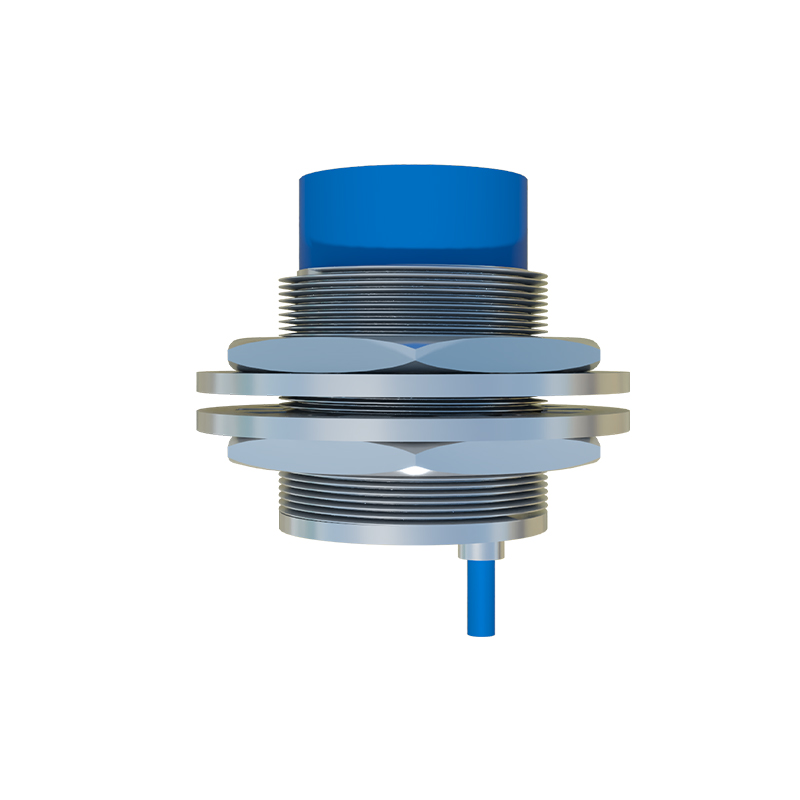
Key advantages of capacitive sensors include their material versatility and ability to sense through certain non-metallic barriers. For instance, they can detect the level of a liquid inside a plastic or glass tank without direct contact with the medium. This non-contact nature prevents contamination and wear, ensuring long operational life. They are also relatively immune to environmental factors like dust, dirt, and moisture when properly selected and installed, though conductive contaminants can affect performance.
In industrial settings, capacitive sensors find widespread use. Common applications include:
Level Detection: Monitoring powder, granulate, or liquid levels in containers, bins, and hoppers. They provide reliable point-level control for high or low-level alarms.
Presence Sensing: Detecting the presence or absence of non-metallic objects, such as bottles, cardboard boxes, or wooden panels, on production and packaging lines.
Liquid Interface Detection: Differentiating between two immiscible liquids based on their dielectric constants.
Fill Level Control: Ensuring proper fill levels in bottles or containers, often by detecting the liquid through the container wall.
Selecting the right capacitive proximity sensor requires careful consideration of several parameters:
1. Sensing Range: The nominal sensing distance (Sn) specified for a standard target. Always account for reduction factors based on the actual target material.
2. Target Material: Determine the dielectric constant. For difficult-to-sense materials, a sensor with a potentiometer for sensitivity adjustment is crucial.
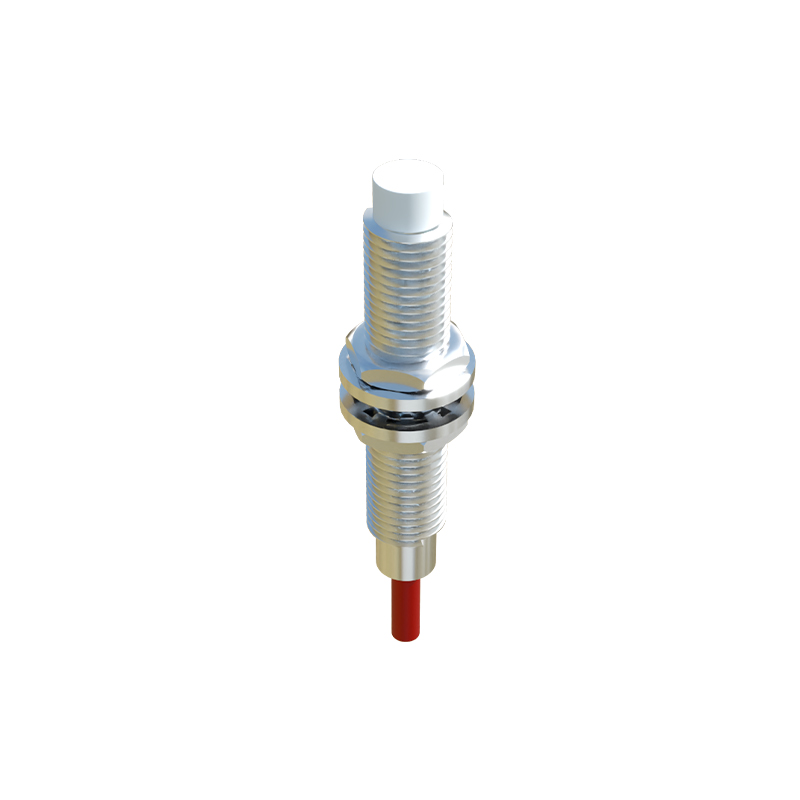
3. Housing and Size: Cylindrical (threaded barrel) or rectangular housings are common. Size constraints in the application dictate the form factor.
4. Output Type: Choose between digital outputs (PNP/NPN, NO/NC) or analog outputs (0-10V, 4-20mA) for continuous measurement.
5. Environmental Rating: For harsh environments, select sensors with high IP (Ingress Protection) ratings (e.g., IP67, IP69K) and suitable temperature ranges.
6. Shielded vs. Unshielded: Shielded sensors have a focused field, ideal for flush mounting in metal. Unshielded sensors have a larger field for longer ranges but cannot be flush-mounted in metal.
Installation and calibration are critical for optimal performance. Ensure the sensor is mounted securely, and for adjustable models, use the potentiometer to set the sensitivity in the actual application with the target present. Avoid mounting near large metal objects or other sensors that could cause interference. Regular maintenance involves cleaning the sensing face from accumulated material that could cause false triggering.
In conclusion, capacitive proximity sensors offer a unique and flexible sensing solution for challenging industrial automation tasks involving non-metallic materials. By understanding their operating principles, key features, and selection criteria, engineers and technicians can effectively integrate these robust devices to enhance process reliability, efficiency, and automation system intelligence. Their ability to perform reliably in demanding conditions solidifies their role as a cornerstone of modern industrial sensing technology.