In the realm of industrial automation, rotary indexing stations are pivotal for achieving high-speed, precise positioning in assembly, machining, and packaging lines. These systems rely on the seamless coordination of mechanical movement and electronic control, where proximity sensors play an indispensable role in ensuring operational accuracy and reliability. Specifically, proximity sensors designed for detecting rotary table positions—often referred to as station or position sensors—are critical components that monitor the angular orientation of indexing mechanisms, enabling synchronized operations across multiple workstations.
Proximity sensors used in rotary indexing applications are typically non-contact devices, such as inductive or capacitive sensors, which detect the presence of metallic or non-metallic targets without physical interaction. Inductive sensors are commonly employed due to their robustness in detecting metal flags or cams mounted on the rotating table. As the table indexes to a predetermined position, the sensor generates a signal when the target enters its sensing range, confirming that the station is correctly aligned for the next process step. This real-time feedback is essential for preventing misalignment, which could lead to product defects, machine jams, or even equipment damage.
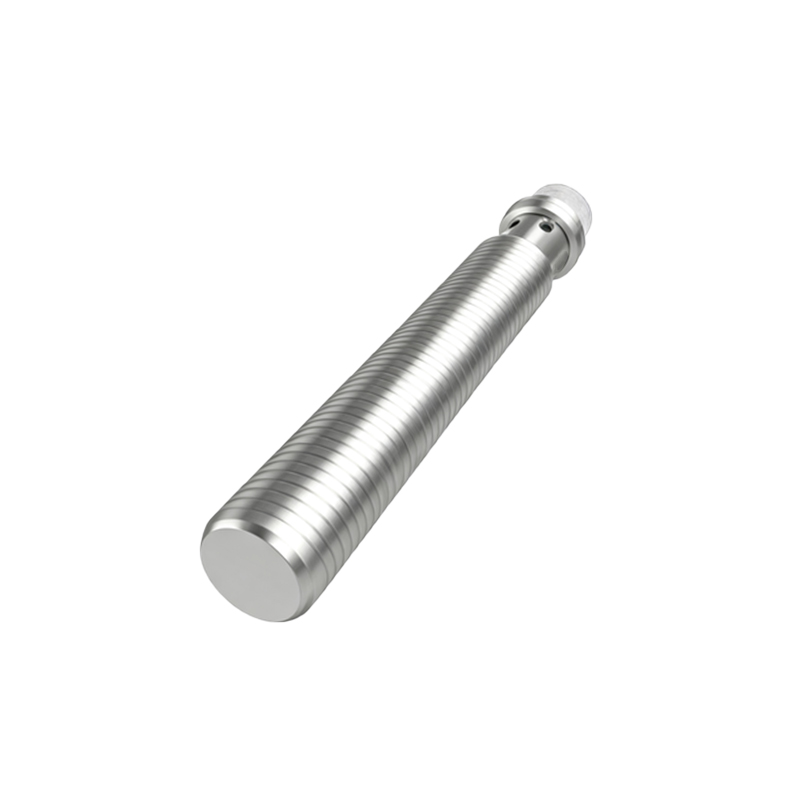
The selection of an appropriate proximity sensor for a rotary indexing station involves several technical considerations. Sensing range, response time, and environmental durability are paramount. In high-speed indexing systems, sensors with fast response times—often in the microsecond range—are necessary to keep pace with rapid cycle times. Additionally, sensors must withstand harsh industrial conditions, including exposure to oil, coolant, vibration, and temperature fluctuations. Enclosures rated IP67 or higher are standard to ensure longevity in demanding environments.
Installation and alignment are also critical factors. Sensors must be precisely mounted to detect targets consistently across all indexing positions. Misalignment can result in false triggers or missed signals, compromising system integrity. Many modern sensors feature adjustable sensing distances or built-in alignment aids, simplifying setup and maintenance. Furthermore, the integration of these sensors with programmable logic controllers (PLCs) or motion controllers allows for sophisticated control strategies, such as error-proofing and predictive maintenance. For instance, if a sensor fails to detect a target within an expected time window, the system can halt operation and alert operators, minimizing downtime.
Advancements in sensor technology continue to enhance the capabilities of rotary indexing systems. Smart sensors with IO-Link communication provide diagnostic data, such as operating status and wear indicators, enabling condition-based monitoring and reducing unplanned outages. Additionally, the development of compact, high-precision sensors allows for more flexible designs in space-constrained applications. In industries like automotive manufacturing or electronics assembly, where precision is non-negotiable, these innovations contribute to higher throughput and improved product quality.
Despite their reliability, challenges persist. Electrical noise from motors or drives can interfere with sensor signals, necessitating proper shielding and grounding practices. Regular calibration and maintenance are also advised to account for mechanical wear over time. Engineers must conduct thorough testing during system commissioning to validate sensor performance under actual operating conditions.
In summary, proximity sensors for rotary indexing stations are fundamental to modern automation, offering a blend of precision, speed, and durability. By providing accurate position feedback, they enable complex manufacturing processes to run smoothly and efficiently. As automation evolves toward greater connectivity and intelligence, these sensors will remain at the forefront, driving improvements in productivity and reliability across diverse industrial sectors.