In the realm of modern industrial manufacturing, precision is not merely a goal; it is an absolute prerequisite. Among the myriad technologies enabling this high-precision environment, laser cutting stands out for its speed, versatility, and accuracy. However, the true guardian of this precision is often an unsung hero: the laser cutting sensor. This article delves into the critical role these sensors play, exploring their types, functionalities, and integration within automated systems, providing a technical overview for engineers and industry professionals.
Fundamentally, a laser cutting sensor is a device designed to monitor and control the distance between the laser cutting head and the workpiece. This standoff distance is paramount. If the cutting head is too close, there is a risk of collision, nozzle damage, and poor cut quality due to back reflections. If it is too far, the laser beam defocuses, leading to wider kerfs, reduced cutting speed, and increased energy consumption. Sensors provide real-time, closed-loop feedback to a height control system (often a Z-axis actuator), dynamically adjusting the head position to maintain the optimal focal point regardless of material warping, uneven surfaces, or thermal distortion during the cutting process.
The most prevalent technology in this domain is the capacitive sensor. Operating on the principle of capacitance change between the sensor nozzle (one plate of a capacitor) and the conductive workpiece (the other plate), it measures distance without physical contact. As the distance changes, the capacitance varies, and this change is converted into a precise distance measurement. Capacitive sensors are renowned for their high resolution, fast response time, and robustness against ambient light, dust, and plasma from the cutting process. They are exceptionally effective for cutting conductive materials like steel, aluminum, and copper. However, their performance can be influenced by material conductivity and require calibration for different materials.
For non-conductive materials such as plastics, wood, or certain composites, or in applications where material conductivity is variable, eddy current sensors are frequently employed. These sensors generate a high-frequency magnetic field from a coil in the nozzle. When this field interacts with a conductive material, it induces eddy currents. The interaction between the sensor's magnetic field and the eddy currents affects the sensor's coil impedance, which is correlated to the distance. While also contactless and fast, their effective range is typically shorter than capacitive sensors, and they are primarily used for conductive targets.

A third, increasingly important category is optical sensors, which include laser triangulation and confocal chromatic sensors. These emit a light beam (often a secondary, low-power laser) onto the workpiece and use a receiver to detect the reflected beam's position. By calculating the angle of reflection, the distance is determined with extremely high accuracy. Optical sensors are material-independent and can measure both conductive and non-conductive surfaces. They are invaluable for applications involving pre-cut contours, detecting material edges, or performing 3D scanning of complex parts before cutting. Their main challenges include sensitivity to surface reflectivity, color, and contamination from cutting debris, though advanced models incorporate filtering to mitigate these issues.
Integration of these sensors into a laser cutting machine's CNC (Computer Numerical Control) system transforms a static machine into an adaptive manufacturing cell. The sensor continuously feeds distance data to the controller, which commands servo motors or piezoelectric actuators to adjust the cutting head height in milliseconds. This is crucial for processing materials with inherent imperfections, such as rolled metal with slight curvature or thermally warped plates during high-speed cutting. Modern systems often feature "seam tracking" capabilities, where sensors not only control height but can also adjust the cutting path laterally to compensate for irregularities in the workpiece or inaccuracies in initial positioning.
The benefits of implementing a robust laser cutting sensor system are substantial. Primarily, they ensure consistent, high-quality cuts by maintaining the laser's focal spot at the correct position, leading to smooth edges, minimal dross, and precise dimensional accuracy. Secondly, they dramatically enhance process reliability and machine uptime by preventing catastrophic collisions. Thirdly, they enable higher processing speeds and automation, as the machine can safely and accurately handle variable material conditions without manual intervention. This translates directly to increased productivity, reduced scrap rates, and lower operational costs.
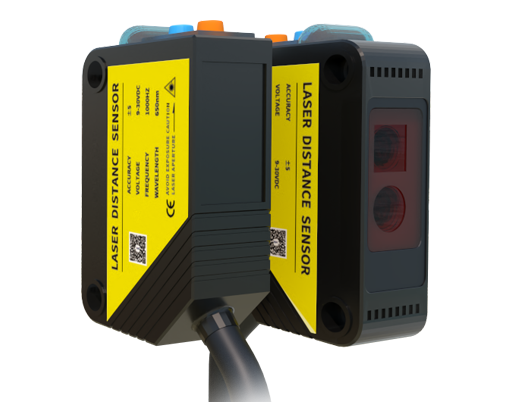
Looking forward, the evolution of laser cutting sensors is intertwined with Industry 4.0 trends. Smart sensors with integrated diagnostics, predictive maintenance features, and the ability to communicate via industrial IoT (Internet of Things) protocols are emerging. They can provide data not just for real-time control but also for process optimization and analytics, feeding information into Manufacturing Execution Systems (MES) for full traceability and quality assurance. Furthermore, sensor fusion—combining data from capacitive, optical, and even thermal sensors—is a frontier for achieving unprecedented levels of process control and adaptability in cutting complex, multi-material components.
In conclusion, laser cutting sensors are far from auxiliary components; they are fundamental enablers of precision, efficiency, and automation in contemporary fabrication. Selecting the appropriate sensor technology—capacitive, eddy current, or optical—requires a careful analysis of the target materials, desired tolerances, and specific application challenges. As laser cutting technology continues to advance towards higher powers and more intricate applications, the role of intelligent, adaptive sensor systems will only become more critical, solidifying their status as the indispensable eyes and guardians of the laser cutting process.