In the realm of industrial automation, precise displacement measurement is a cornerstone for ensuring operational accuracy, safety, and efficiency. While dedicated displacement sensors like LVDTs or laser sensors are prevalent, a cost-effective and robust alternative often lies in repurposing standard proximity switches. These ubiquitous devices, primarily designed for object detection, can be ingeniously adapted to function as linear or rotary displacement sensors, offering a pragmatic solution for many applications.
Proximity switches, including inductive, capacitive, and photoelectric types, operate on the principle of detecting the presence or absence of a target object without physical contact. Inductive sensors, for instance, generate an electromagnetic field and react to the eddy current losses caused by metallic targets. The key to their use as displacement sensors is the relationship between the distance of the target (the measurand) and the change in the sensor's output signal. Typically, the amplitude of the oscillation or the current in the sensing coil varies proportionally with the gap distance within a defined range. This analog relationship, often detailed in the sensor's characteristic curve, is the foundation for displacement measurement.
The implementation involves several critical engineering considerations. First, sensor selection is paramount. For measuring the position of a metal component, an inductive proximity switch with a suitable sensing range and a pronounced analog characteristic is ideal. The sensor must be operated within its linear range, as specified by the manufacturer, to ensure a reliable and repeatable output signal versus distance correlation. Calibration becomes an essential step. By moving a known target through precise increments (using a micrometer stage or gauge blocks) and recording the corresponding output voltage or current, a calibration curve is established. This curve is then used to translate the sensor's real-time output into an accurate distance reading.

Signal conditioning is the next crucial phase. The raw output from a standard proximity switch is often a switching signal or a weak analog variation. To harness it for analog measurement, external circuitry or a programmable logic controller (PLC) with analog input capabilities is required. For switches with a built-in analog output (0-10V DC or 4-20mA), the process is more straightforward. Otherwise, additional components like operational amplifiers may be needed to scale, filter, and linearize the signal, reducing noise and compensating for any non-linearity in the sensor's response. The conditioned signal is then fed into a data acquisition system, PLC, or microcontroller for processing and display.
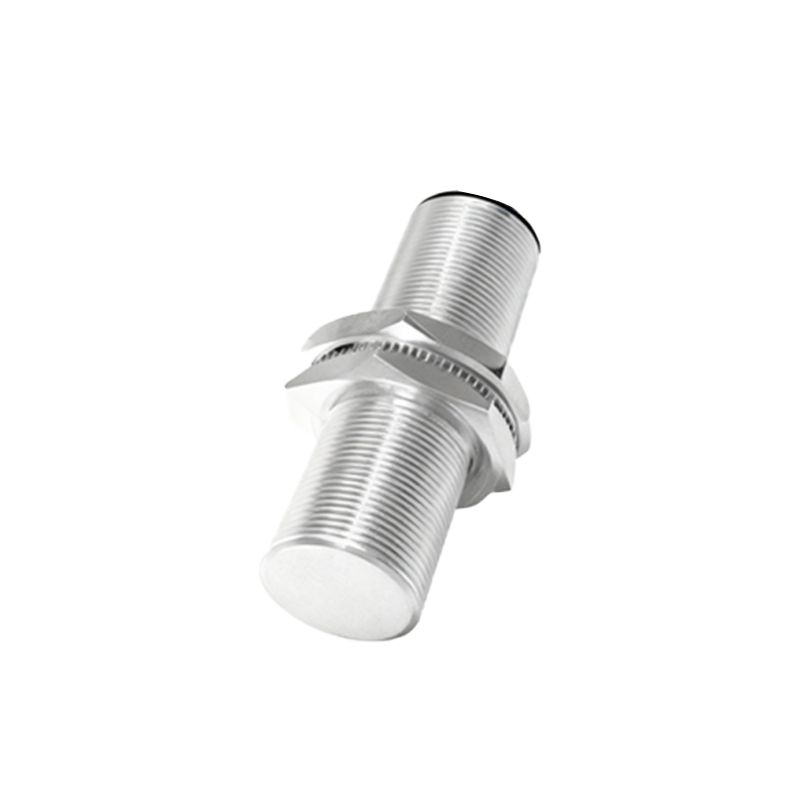
Practical applications of this technique are abundant. It is effectively used for monitoring valve stem position, checking workpiece clamping force by measuring fixture deflection, controlling the gap in roller assemblies, or as an end-of-travel limit with analog feedback in hydraulic cylinders. In rotary applications, a cam or an eccentric metal target attached to a shaft can be used with a fixed proximity sensor to measure angular displacement or rotational speed.
However, engineers must acknowledge the limitations. The measurement range is confined, typically from a few millimeters to about 30 mm for standard inductive sensors, making it unsuitable for long-stroke applications. Accuracy is influenced by factors like target material, size, shape, temperature drift, and electrical noise. It generally offers lower precision and resolution compared to purpose-built displacement transducers. Therefore, this method is best suited for applications where moderate accuracy (e.g., ±0.1 mm) is acceptable, environmental conditions are controlled, and cost constraints are significant.
In conclusion, leveraging a proximity switch as a displacement sensor is a testament to practical engineering ingenuity. It provides a highly reliable, durable, and economical sensing solution for numerous industrial positioning and monitoring tasks. By thoroughly understanding the sensor's operating principles, meticulously executing calibration, and implementing proper signal conditioning, automation engineers can successfully deploy this versatile approach to enhance machine functionality and process control without incurring the expense of specialized sensor systems.