In the rapidly evolving landscape of industrial automation, laser pin sensors have emerged as critical components for precision measurement, alignment, and detection tasks. These sophisticated devices, often supplied by specialized laser pin sensor manufacturers, utilize focused laser beams to achieve micron-level accuracy in diverse applications, from semiconductor fabrication to automotive assembly lines. This guide delves into the technology, key selection criteria, and profiles of leading manufacturers driving innovation in this niche yet vital sector.
Laser pin sensors, fundamentally, are optoelectronic devices that project a precise laser point or line onto a target. A receiver, either integrated or separate, detects the reflected or diffused light. By analyzing the properties of this returned light—such as intensity, position, or time-of-flight—the sensor can determine an object's presence, absence, distance, height, or edge position with exceptional speed and reliability. Unlike traditional mechanical probes or diffuse reflection sensors, laser pin sensors offer non-contact measurement, eliminating wear and tear and enabling inspection of delicate or hot surfaces. Their pinpoint accuracy makes them indispensable for tasks like verifying component placement on PCBs, guiding robotic arms for precise dispensing, or ensuring the correct seating of connectors.
When sourcing from laser pin sensor manufacturers, engineers must evaluate several technical parameters to ensure optimal system integration. First is the sensing principle: triangulation-based sensors are excellent for high-resolution distance and profile measurements at short to medium ranges, while time-of-flight variants are suited for longer distances. Key specifications include measurement range, repeatability (often in the single-digit micron range), spot size, response time, and environmental ratings (IP67/IP69K for washdown environments is common). The choice of laser class (typically Class 1 or 2, indicating eye-safe operation) is also crucial for workplace safety. Furthermore, output options (analog, digital IO, Ethernet-based protocols like EtherCAT or PROFINET) and software configurability are vital for seamless communication with PLCs and control systems.

The market for these precision sensors is led by several established and innovative laser pin sensor manufacturers. Companies like KEYENCE and Omron have extensive portfolios, offering robust sensors renowned for their user-friendly setup and exceptional stability in harsh conditions. SICK AG and Banner Engineering provide highly versatile solutions, with models designed for specific challenges like detecting transparent objects or operating in high-ambient-light environments. For applications demanding the utmost precision, specialists like Micro-Epsilon focus on high-end triangulation sensors with sub-micron capabilities. Meanwhile, emerging players and regional manufacturers often compete on providing cost-effective solutions for standard applications without compromising core reliability.
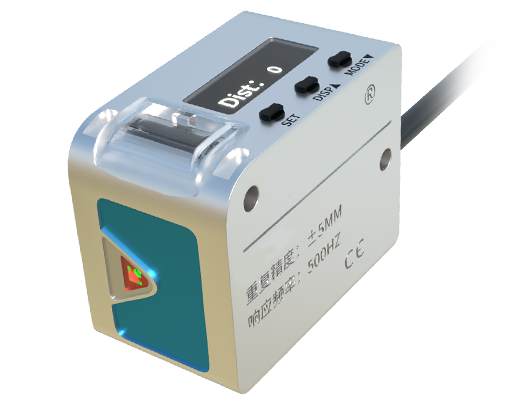
Selecting the right manufacturer extends beyond product datasheets. It involves assessing the supplier's technical support, application engineering expertise, and ability to provide custom solutions. Leading manufacturers invest heavily in R&D to push the boundaries of miniaturization, speed, and smart features, such as integrated IO-Link for predictive maintenance data exchange. The future trajectory points toward smarter, more interconnected sensors that contribute directly to Industry 4.0 data streams, enabling real-time process optimization and quality analytics.
In conclusion, partnering with a competent laser pin sensor manufacturer is a strategic decision that impacts production quality, efficiency, and flexibility. By thoroughly understanding the operational principles, key performance indicators, and the strengths of various market leaders, automation engineers and system integrators can specify the ideal sensor. This ensures their automated systems achieve the pinnacle of precision, reliability, and long-term value in an increasingly competitive manufacturing world.