In the rapidly evolving landscape of mobile technology, the integration of sophisticated sensors has been pivotal in enhancing user experience and device functionality. Among these, the infrared (IR) proximity sensor stands as a critical, yet often underappreciated, component. This article delves into the engineering principles, design considerations, and practical applications of IR proximity sensors in modern smartphones, offering a technical perspective for industry professionals.
At its core, an IR proximity sensor operates on the principle of active infrared detection. The system typically comprises an IR light-emitting diode (LED) and a photodiode or phototransistor receiver. The IR LED emits a beam of infrared light, which is invisible to the human eye. When an object, such as a user's face during a call, approaches the phone's earpiece area, this light is reflected back towards the device. The photodiode receiver detects the reflected IR signal. The sensor's integrated circuit (IC) then processes the intensity of the returned signal. By measuring the time-of-flight (ToF) or the signal strength, the IC can accurately calculate the distance to the object. This data is relayed to the phone's central processor, which triggers predefined actions.
The primary and most ubiquitous application is during voice calls. When the sensor detects an object (typically the user's ear) within a close range—usually 2 to 5 centimeters—it signals the touchscreen controller to disable the display. This serves multiple engineering purposes: it prevents accidental screen touches (e.g., muting the call or pressing dial pad buttons with the cheek), conserves battery power by turning off the backlight, and reduces unnecessary processor load. Post-call, as the object moves away, the sensor detects the change and promptly reactivates the display.
Beyond call management, IR proximity sensors enable advanced features. They are integral to "Always-On Display" functionalities, allowing the screen to wake up when a hand is waved over it. In some implementations, they assist in automatic brightness adjustment by gauging the phone's proximity to the user's pocket or bag, further optimizing power consumption. Furthermore, they play a supporting role in camera systems, aiding in focus calculations and preventing lens obstruction notifications.
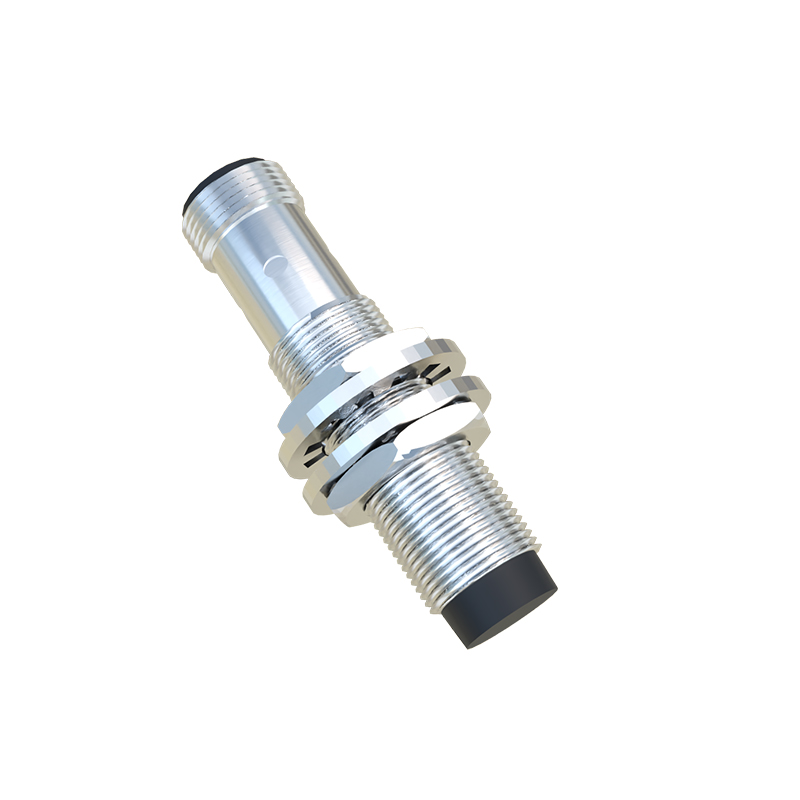
From a design and manufacturing standpoint, integrating an IR sensor presents specific challenges. Precise placement is paramount; it is usually located near the earpiece speaker grill. The sensor window must be meticulously designed to allow optimal IR transmission while being resistant to scratches and dust ingress, which can severely attenuate the signal. Materials like polycarbonate with specific IR-transmissive coatings are commonly used. Another critical consideration is interference. Ambient infrared light from sources like sunlight or incandescent bulbs can flood the photodiode, causing false readings. Advanced sensors employ modulation techniques, where the IR LED emits a pulsed signal at a specific frequency. The receiver circuit is then tuned to detect only that frequency, effectively filtering out background IR noise—a process akin to optical filtering.
Power efficiency is a constant driver in mobile design. Modern IR sensor ICs are engineered for ultra-low power consumption, often operating in a duty-cycled mode where they pulse intermittently to check for proximity, thus minimizing their impact on the device's overall battery life. Calibration during assembly is also crucial. Each sensor module must be calibrated to account for variations in the IR LED output, photodiode sensitivity, and the optical properties of the cover material to ensure consistent and accurate performance across millions of units.
Looking forward, the role of IR proximity sensing is evolving with the advent of 3D sensing and Time-of-Flight (ToF) cameras. While these systems are more complex and serve broader purposes like facial recognition and augmented reality, the fundamental IR proximity sensor remains a cost-effective, reliable, and power-efficient solution for basic presence detection. Its simplicity and robustness ensure its continued relevance in smartphone architecture.
In conclusion, the infrared proximity sensor is a masterpiece of miniaturized optoelectronics. Its seamless operation, governed by well-understood physical principles and sophisticated signal processing, is a testament to the hidden engineering excellence within everyday devices. For electrical engineers, it represents a perfect case study in integrating analog sensing, digital processing, and mechanical design to solve a practical user-interface problem efficiently and reliably.