In the rapidly evolving landscape of industrial automation, environmental monitoring, and security systems, the demand for precise, long-distance measurement solutions has never been greater. Among the various technologies available, laser sensors capable of operating effectively at ranges of up to 1000 meters have emerged as a critical tool. These devices leverage the fundamental principles of laser time-of-flight (ToF) or phase-shift measurement to deliver accurate distance data, even under challenging conditions.
The core technology behind a 1000-meter laser sensor typically involves a pulsed laser diode. The sensor emits a short, focused pulse of laser light toward a target. A high-speed receiver then detects the reflected signal. By precisely calculating the time difference between the emission and reception of the pulse, the sensor computes the distance to the target using the constant speed of light. For applications requiring extreme precision over shorter distances within this range, some models may employ a continuous-wave (CW) laser with phase-shift analysis, though pulsed ToF remains dominant for very long ranges due to its superior signal-to-noise ratio management.

Achieving reliable performance at a 1000-meter distance presents significant engineering challenges. First, laser beam divergence must be meticulously controlled. A highly collimated beam ensures that the energy remains concentrated over long distances, increasing the likelihood of a detectable reflection from the target. Second, the choice of laser wavelength is paramount. Sensors operating at 905nm or 1550nm are common. The 1550nm wavelength is often preferred for very long-range, eye-safe applications, as it is absorbed by the eye's cornea and lens before reaching the retina, allowing for higher permissible exposure levels and thus more powerful, longer-range pulses.
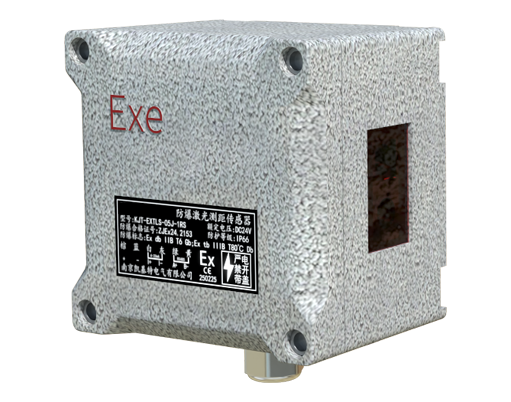
The receiver sensitivity and noise filtering capabilities are equally crucial. Advanced optical filters are used to block ambient light, such as sunlight, which can easily swamp the weak returning signal. Sophisticated digital signal processing (DSP) algorithms are implemented to distinguish the true laser pulse from background noise, enabling operation in various lighting conditions. Furthermore, the optical components, including lenses and windows, require high-quality coatings to minimize signal loss due to reflection or absorption.
Applications for 1000-meter laser sensors are diverse and demanding. In the realm of industrial automation, they are deployed for monitoring large-scale infrastructure like stockpiles in mining, measuring liquid levels in vast tanks, or guiding automated cranes in shipyards. For environmental and geographical surveying, these sensors are integral to LiDAR systems mounted on aircraft or drones, creating high-resolution topographic maps, monitoring forest canopy heights, or assessing coastal erosion. Security and perimeter protection systems utilize them to create invisible intrusion detection fences over vast areas, such as around airports, borders, or critical facilities. Their ability to provide exact coordinates makes them invaluable for these large-scale surveillance tasks.
When selecting a 1000-meter laser sensor for a specific application, several key specifications must be evaluated beyond just the maximum range. The accuracy (often within a few centimeters) and repeatability of measurements are critical for process control. The measurement rate or frequency determines how quickly the sensor can update its readings, which is vital for tracking moving objects. Environmental sealing (IP rating) is essential for outdoor use to protect against dust and moisture. Operating temperature range ensures functionality in harsh climates. Finally, interfaces like Ethernet, RS-485, or analog outputs must be compatible with the existing control or data acquisition systems.
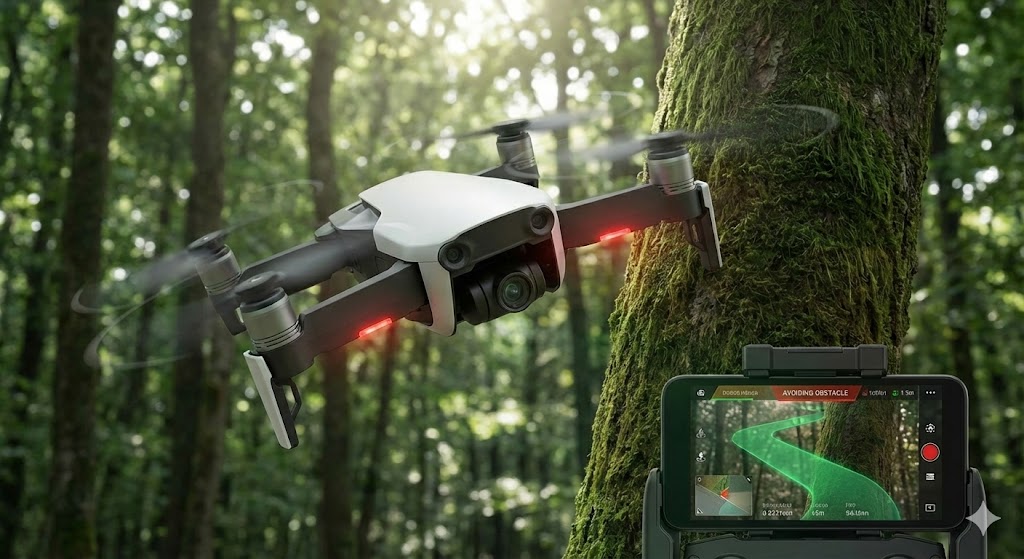
Deployment best practices significantly impact performance. Proper alignment is fundamental; even a slight misalignment can cause the beam to miss the intended target at such distances. Using retro-reflectors on cooperative targets can dramatically enhance the signal strength, allowing for operation at the maximum rated range or even beyond under optimal conditions. For non-cooperative targets (natural surfaces), the reflectivity of the target material—known as the target's albedo—plays a major role. A dark, absorptive surface will return a much weaker signal than a bright, reflective one, potentially reducing the effective operational range. Regular maintenance of the optical window to remove dirt, snow, or condensation is also necessary to prevent signal attenuation.
In conclusion, 1000-meter laser sensors represent a pinnacle of optoelectronic engineering, transforming how we measure and interact with large-scale environments. Their integration of advanced laser sources, sensitive detectors, and intelligent signal processing enables reliable data acquisition where other technologies fall short. As the technology continues to advance, we can anticipate sensors with even greater ranges, higher accuracy, lower power consumption, and more robust designs, further expanding their role in shaping a more automated, monitored, and efficient world. Engineers and system integrators must carefully match the sensor's sophisticated capabilities to the specific demands of their application to fully harness its potential.