In the rapidly evolving landscape of industrial automation and precision measurement, laser sensors have emerged as indispensable tools. These devices, which utilize laser technology to detect, measure, or profile objects with exceptional accuracy, are revolutionizing processes across manufacturing, robotics, logistics, and quality control. The "best" laser sensor is not a one-size-fits-all designation; rather, it depends on specific application requirements such as measurement range, resolution, response time, and environmental robustness. This guide delves into the key technologies and top contenders in the market to help engineers and procurement specialists make informed decisions.
The core principle of a laser sensor involves emitting a focused beam of light—typically from a laser diode—towards a target. The sensor then analyzes the reflected light. Different technologies interpret this reflection in distinct ways. Triangulation sensors are renowned for high-resolution displacement and profile measurements at short to medium ranges. By calculating the angle of the reflected beam on a position-sensitive detector (PSD or CMOS), they can determine the exact position of a target with micron-level precision. They are ideal for tasks like thickness gauging, vibration analysis, and inspecting surface contours. Time-of-Flight (ToF) sensors, on the other hand, measure the time it takes for a laser pulse to travel to the target and back. This technology excels in longer-range applications, such as level monitoring in silos, vehicle detection, and bulk material handling, offering good accuracy over distances of several meters. Laser contrast sensors are optimized for detecting marks, colors, or subtle differences in surface finish, even on challenging materials, making them perfect for printing, packaging, and electronics assembly. Lastly, laser distance sensors often use phase-shift analysis of modulated laser light for very precise distance measurement over set ranges.
When evaluating the best laser sensors, several critical performance parameters must be considered. Resolution defines the smallest detectable change in measurement. For ultra-precise tasks like semiconductor wafer inspection, sub-micron resolution is paramount. Repeatability indicates the sensor's consistency in returning the same value for an unchanged target under identical conditions—a non-negotiable trait for quality assurance. Response Time or sampling rate determines how quickly the sensor can update its output, which is crucial for high-speed production lines or dynamic robotic guidance. Environmental Durability is another key factor. The best industrial sensors feature robust housings (often IP67 or higher), resist interference from ambient light, and maintain stability across wide temperature ranges and in the presence of dust, oil, or vibrations.

Leading manufacturers have developed exemplary models that set industry standards. For high-precision triangulation, the Keyence IL Series and Micro-Epsilon scanCONTROL sensors are frequently cited for their outstanding resolution, speed, and integrated evaluation capabilities. In the realm of long-range ToF measurement, SICK DT50 and Banner Q4X series offer remarkable reliability and ease of integration in harsh environments. For versatile and rugged distance sensing, the Omron ZX-L and Panasonic HG-C series provide excellent accuracy with advanced filtering algorithms to ignore background interference. Meanwhile, for specialized contrast detection, the ifm OMD and Pepperl+Fuchs MLV series deliver superior performance in detecting low-contrast marks on various substrates.
Selecting the best laser sensor ultimately hinges on a clear understanding of the application. Engineers must ask: What is the exact measurement task (distance, presence, profile, contrast)? What are the required range, accuracy, and speed? What are the environmental conditions (temperature, contaminants, shock)? What output signal and interface are needed (analog, digital, IO-Link, Ethernet)? A sensor perfect for measuring the precise gap in a clean-room assembly robot would be ill-suited for monitoring the fill level of a dusty gravel bin. Therefore, collaboration with technical specialists from sensor suppliers during the specification phase is highly recommended to prototype and validate the chosen solution.
The future of laser sensing points toward greater intelligence and connectivity. The integration of IO-Link communication allows for detailed parameter setting, real-time diagnostics, and condition monitoring directly from the PLC. Furthermore, sensors with built-in AI chips are beginning to appear, enabling on-the-edge decision-making for complex classification tasks without a central computer. As Industry 4.0 advances, the best laser sensors will not only be precise and robust but also smart, communicative nodes in a fully integrated digital ecosystem, driving unprecedented levels of efficiency, quality, and flexibility in industrial operations.
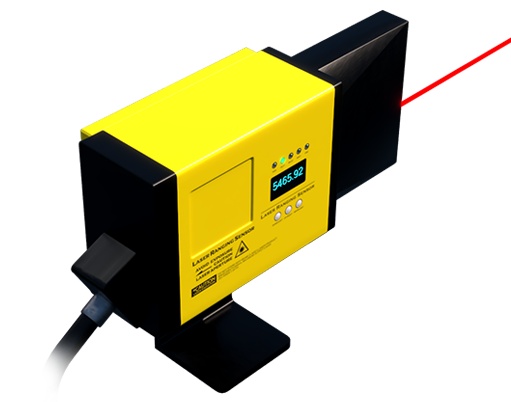
Investing in the right laser sensor technology is a strategic decision that directly impacts productivity, product quality, and operational costs. By carefully matching the sensor's capabilities to the application's demands, industries can unlock significant competitive advantages in today's automated world.