In the rapidly evolving landscape of industrial automation, the role of sensing technology has transitioned from a basic input function to a cornerstone of intelligent system design. Among these critical components, intelligent proximity sensors stand out as a transformative force. These are not merely devices that detect the presence or absence of an object; they are sophisticated data nodes that integrate sensing, processing, and communication capabilities to deliver actionable insights, enhance operational efficiency, and fortify safety protocols.
Traditional inductive, capacitive, or photoelectric proximity sensors have served industries reliably for decades, providing binary on/off signals. The advent of "intelligence" in these sensors marks a paradigm shift. An intelligent proximity sensor embeds a microprocessor and often incorporates advanced sensing elements like time-of-flight (ToF) or advanced inductive coils. This allows it to perform complex tasks directly at the point of detection. Key functionalities now include precise distance measurement (not just presence detection), condition monitoring of the sensor itself, and advanced diagnostics of the target or process.
For instance, an intelligent inductive sensor can continuously monitor the distance to a metal target on a robotic arm. It doesn't just signal when the arm is in position; it provides a continuous analog or digital data stream of the exact gap. This enables predictive maintenance by detecting minute deviations in alignment or wear on mechanical components before a failure occurs. Similarly, intelligent photoelectric sensors can differentiate between object colors or materials, adding a layer of quality control directly on the production line.
Communication is the lifeblood of Industry 4.0, and intelligent proximity sensors are fully integrated citizens of this connected ecosystem. They support industrial networking protocols such as IO-Link, PROFINET, EtherNet/IP, and others. IO-Link, in particular, has been a game-changer for sensor-level intelligence. It allows for bidirectional communication, enabling not only the transmission of rich process data (e.g., measured distance, signal strength, temperature) but also the remote configuration and parameterization of the sensor. An engineer can change the sensing range, output mode, or switching hysteresis from a control room HMI, drastically reducing downtime for adjustments.
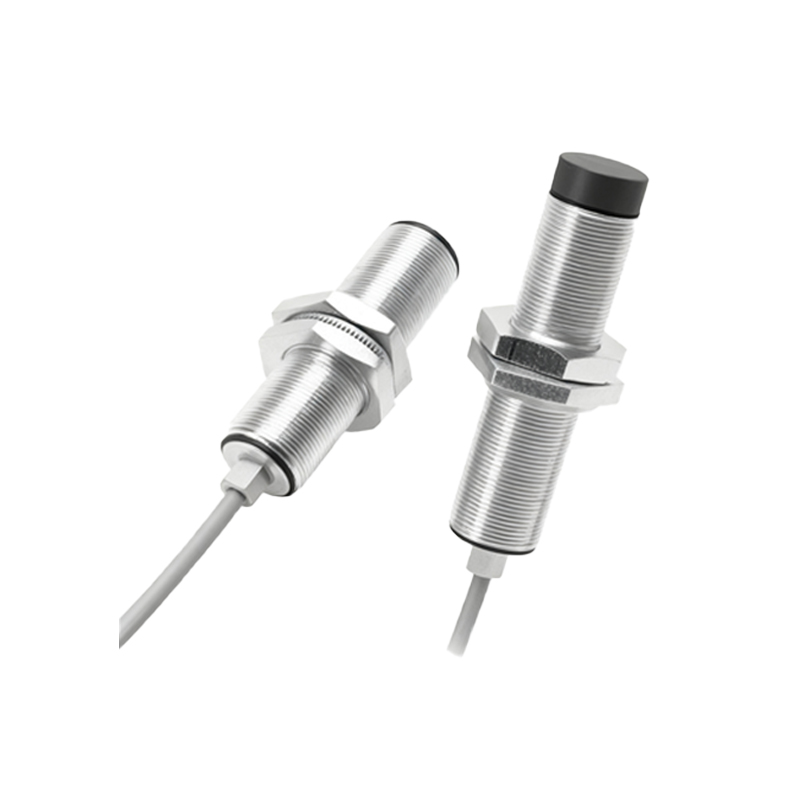
The benefits for operational efficiency are substantial. With real-time data on machine cycles, part counts, and equipment health, production processes become more transparent and optimized. Predictive maintenance, driven by sensor data on vibration, temperature, or gradual signal decay, prevents unplanned stoppages and extends machinery life. Furthermore, the self-diagnostic capabilities of these sensors alert operators to issues like contamination, misalignment, or electrical faults, often specifying the exact nature of the problem for swift resolution.
Safety receives a significant upgrade with intelligent sensing. In safety-critical applications, these sensors can be part of networked safety systems. They provide not just a switching signal but also detailed diagnostic data to a safety PLC, confirming their own functional integrity. This supports the implementation of higher Safety Integrity Levels (SIL) or Performance Levels (PL). For example, in a collaborative robot (cobot) cell, intelligent laser-based proximity sensors can create dynamic safety fields, slowing or stopping the cobot based on the precise distance and speed of an approaching human worker.
The application spectrum is vast. In automotive manufacturing, they ensure precise welding gun positioning and verify component assembly. In packaging, they monitor fill levels and check label placement with color detection. In material handling, they guide AGVs (Automated Guided Vehicles) and manage palletizing sequences. The integration of intelligence also simplifies inventory management, as sensors can count, track, and identify items on a conveyor.
Looking ahead, the convergence of intelligent proximity sensing with Artificial Intelligence (AI) and edge computing promises even greater autonomy. Sensors will not only collect data but also analyze patterns locally, making immediate decisions—such as rejecting a defective part—without upstream controller latency. The development of sensors with integrated energy harvesting capabilities will also enhance deployment flexibility in wireless and remote applications.
In conclusion, intelligent proximity sensors represent a critical evolution from simple switches to smart, connected devices. They are fundamental enablers of smarter, safer, and more efficient industrial operations. By providing rich data and seamless connectivity, they empower engineers to build more responsive, predictive, and resilient automation systems, solidifying their status as indispensable components in the factory of the future.