In the critical landscape of industrial safety and environmental monitoring, the evolution of gas detection technology represents a cornerstone of operational integrity. Among the most significant advancements in recent years is the development and widespread adoption of laser methane sensors. These sophisticated devices are redefining standards for accuracy, reliability, and efficiency in detecting methane leaks—a paramount concern across sectors such as oil and gas, utilities, wastewater management, and mining. Unlike traditional catalytic bead or infrared point sensors, laser methane sensors employ Tunable Diode Laser Absorption Spectroscopy (TDLAS) technology. This method involves directing a highly focused laser beam at a specific wavelength that is absorbed by methane molecules. By measuring the degree of absorption, the sensor can precisely quantify methane concentration, even at remarkably low levels, with minimal interference from other gases.
The operational superiority of laser methane sensors is multifaceted. First and foremost is their exceptional sensitivity and selectivity. The laser is tuned to a spectral line unique to methane, virtually eliminating false positives caused by background gases like water vapor or volatile organic compounds. This precision is crucial for early leak detection, allowing for preventative maintenance before minor issues escalate into major safety hazards or regulatory non-compliance events. Furthermore, these sensors offer non-contact, remote detection capabilities. They can be deployed for open-path monitoring over distances of hundreds of meters, scanning vast areas like well pads, pipeline routes, or perimeter fences from a single, strategically placed unit. This not only enhances coverage but also significantly reduces the need for personnel to enter potentially hazardous zones for manual readings, thereby bolstering worker safety.
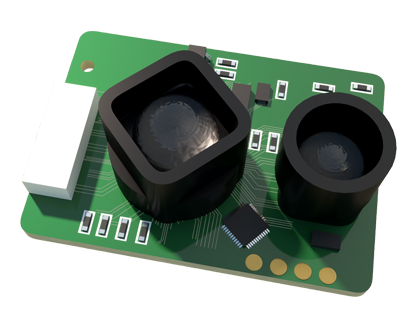
Durability and low maintenance are other compelling advantages. With no consumable parts or elements that can be "poisoned" by exposure to certain chemicals—a common drawback of catalytic sensors—laser methane sensors boast a long operational lifespan. Their solid-state design is inherently robust, capable of withstanding harsh environmental conditions including extreme temperatures, vibration, and corrosive atmospheres. This translates to reduced total cost of ownership over time, despite a potentially higher initial investment compared to conventional sensors. The economic argument is strengthened by the integration of these sensors with modern Industrial Internet of Things (IIoT) platforms. Real-time data from laser sensors can be fed into centralized control systems, enabling continuous monitoring, predictive analytics, automated alarms, and detailed historical reporting for regulatory audits.
The application scope for laser methane sensors is expansive and growing. In the oil and gas industry, they are indispensable for upstream fugitive emission monitoring, midstream pipeline integrity management, and downstream facility safety. Utility companies leverage them to survey natural gas distribution networks, quickly pinpointing leaks in urban infrastructures. Landfill operators use them to monitor methane generation and migration, aiding in both emission control and gas capture for energy recovery. In coal mines, they provide a critical layer of protection against explosive gas accumulations. The drive towards net-zero emissions and stricter environmental, social, and governance (ESG) reporting standards is further accelerating their adoption. Regulatory bodies worldwide are increasingly mandating the use of best available technology for leak detection and repair (LDAR) programs, for which laser-based solutions are often the preferred choice.
In conclusion, the transition to laser methane sensor technology is not merely an upgrade but a strategic imperative for industries handling methane. It embodies a proactive approach to risk management, environmental stewardship, and operational excellence. By delivering unparalleled detection performance, enhancing safety protocols, and providing actionable intelligence for asset management, laser methane sensors are solidifying their role as the new benchmark in gas detection. For engineers, facility managers, and safety officers, understanding and implementing this technology is key to building safer, more efficient, and more sustainable industrial operations for the future.