Vacuum laser sensors represent a sophisticated class of measurement instruments designed to operate within vacuum environments, a critical requirement for numerous high-tech industries. Unlike conventional optical sensors, these devices are engineered to withstand the unique challenges posed by vacuum chambers, including the absence of convective cooling, potential outgassing of materials, and the need for specialized optical windows. Their core function is to perform non-contact, high-precision measurement of parameters such as distance, position, vibration, and surface topography without contaminating or interfering with the vacuum process.
The fundamental operating principle typically involves laser triangulation or interferometry. In a triangulation-based sensor, a laser diode projects a focused beam onto the target surface within the vacuum. The reflected light is captured by a receiving lens at a known angle and focused onto a position-sensitive detector, such as a CCD or CMOS array. The precise position of the light spot on the detector changes with the target's distance, allowing for accurate calculation. For ultra-high precision, interferometric sensors are employed, which measure the phase difference between a reference laser beam and a beam reflected from the target, providing nanometer-level resolution. All internal components, including the laser source, optics, and electronics, are housed in a vacuum-compatible enclosure. Materials are carefully selected to minimize outgassing—the release of trapped gases from materials under vacuum—which could degrade the vacuum level and contaminate sensitive processes. Cooling is often achieved through conduction to the chamber walls or via integrated, low-outgassing thermal management systems.
The applications of vacuum laser sensors are pivotal in several cutting-edge fields. In semiconductor manufacturing, they are indispensable in lithography tools, wafer alignment systems, and etch process monitoring. The ability to measure wafer bow, thickness, and stage position with nanometer accuracy inside the vacuum chamber is essential for producing ever-smaller integrated circuits. In particle physics, these sensors are used to align components of particle accelerators and beamlines with extreme precision, ensuring the focused travel of particle beams. Thin-film coating processes, used for optical components, display panels, and solar cells, rely on these sensors to monitor substrate position and coating thickness in real-time during deposition. Furthermore, they find use in space simulation chambers, vacuum welding, and electron microscopy, providing critical feedback where physical contact is impossible or undesirable.
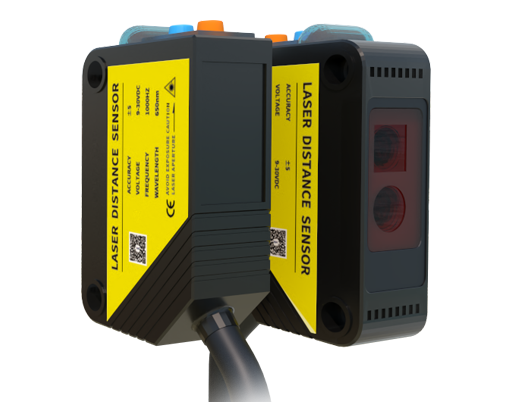
Recent advancements continue to push the boundaries of performance. The integration of blue-violet lasers offers advantages for measuring shiny, metallic surfaces common in semiconductor wafers, as shorter wavelengths reduce penetration and provide a sharper, more stable signal. Enhanced digital signal processing (DSP) algorithms improve signal-to-noise ratios, enabling reliable measurements on challenging surfaces like transparent films or rough textures. Miniaturization is another key trend, allowing sensors to be integrated into tighter spaces within complex vacuum apparatus. The development of "feedthrough" designs, where only the optical window is inside the vacuum and the main electronics remain externally, simplifies maintenance and reduces heat load. Additionally, improved materials with near-zero outgassing rates, such as certain ceramics and specially treated metals, enhance long-term reliability and vacuum integrity.
Selecting the appropriate vacuum laser sensor requires careful consideration of several parameters. The required measurement range, resolution, and sampling rate must match the application. The sensor's vacuum compatibility rating is paramount; it must be certified for the specific vacuum level (e.g., high vacuum, ultra-high vacuum) and should have documented outgassing data. The choice of laser wavelength (red, blue, infrared) depends on the target material's properties. Mechanical design aspects, including mounting options, flange types (CF, KF), and the size of the optical viewport, must align with the chamber's design. Finally, the robustness of the sensor's calibration and its long-term stability under thermal and vacuum cycling are critical for maintaining measurement accuracy over time.
In conclusion, vacuum laser sensors are enabling technologies for modern precision manufacturing and scientific research. By delivering accurate, non-contact metrology in the demanding conditions of a vacuum, they facilitate the advancement of electronics, fundamental physics, and advanced materials. As industrial processes demand greater precision and smaller scales, the evolution of these sensors—toward higher accuracy, smarter functionality, and greater robustness—will continue to play a vital role in technological innovation.

