In the realm of industrial automation, proximity sensors are widely recognized for their ability to detect metallic objects without physical contact. However, a common misconception is that these sensors are limited to metal detection. Modern advancements have significantly expanded their capabilities, enabling reliable detection of non-metallic materials such as plastics, wood, glass, and liquids. This article delves into the technologies that make this possible and explores practical applications across various industries.
Proximity sensors operate primarily on electromagnetic principles. Inductive sensors, the most traditional type, generate an electromagnetic field and detect changes caused by conductive metals. For non-metallics, capacitive proximity sensors are typically employed. These sensors create an electrostatic field and respond to changes in capacitance when any object—regardless of material—enters the sensing zone. The dielectric constant of the material influences detection sensitivity; materials with higher dielectric constants (e.g., water, ceramics) are easier to detect than those with lower values (e.g., dry wood, certain plastics). Key parameters affecting performance include sensor design, oscillation frequency, and environmental conditions like humidity or temperature.
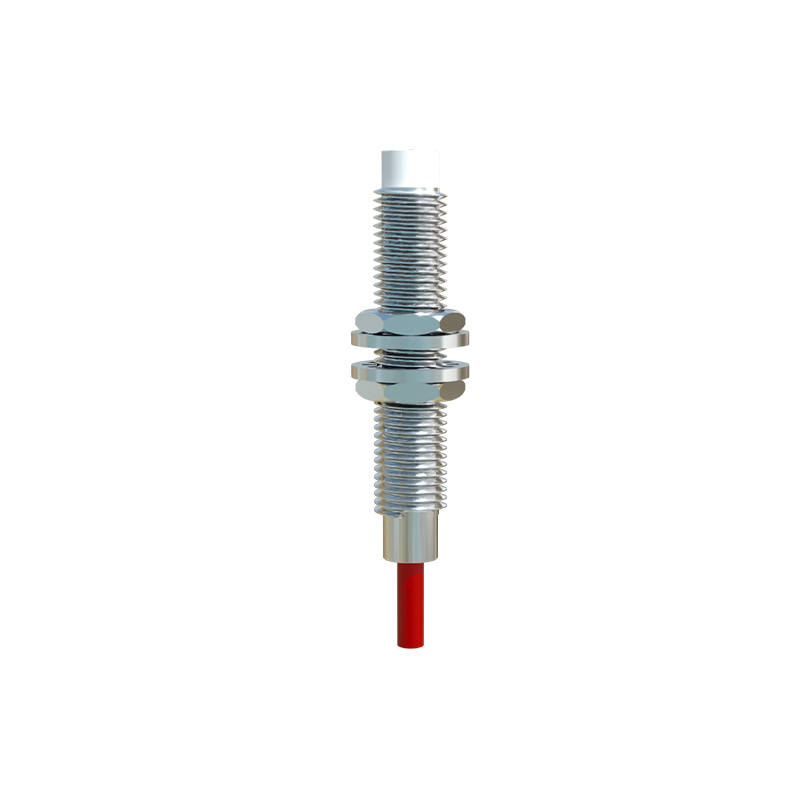
Another technology enabling non-metallic detection is ultrasonic proximity sensors. These emit high-frequency sound waves and measure the time taken for echoes to return. Since they rely on acoustic reflection rather than electromagnetic properties, they can detect virtually any solid or liquid object, provided the surface is sufficiently reflective. Ultrasonic sensors excel in applications involving transparent or colored materials where optical methods might fail. However, factors such as surface texture, angle, and ambient noise can impact accuracy.
Photoelectric sensors, though sometimes categorized separately, also function as proximity devices for non-metallics. They emit light beams (infrared, visible, or laser) and detect interruptions or reflections. Diffuse reflective models, for instance, can sense objects by measuring scattered light, making them suitable for detecting non-metallic items on conveyor belts. Their effectiveness depends on color, transparency, and surface finish, with contrasting backgrounds often enhancing reliability.
Applications for non-metallic detection are vast. In packaging, capacitive sensors verify the presence of plastic bottles or cardboard boxes, ensuring proper filling and sealing. In woodworking, they position wooden panels precisely for cutting or assembly. The food and beverage industry uses them to monitor levels of liquids in non-metallic containers, while pharmaceutical lines rely on them to detect glass vials or plastic caps. Automotive manufacturing employs these sensors to handle composite materials and rubber components, improving assembly accuracy.
Selecting the right sensor involves considering material properties, sensing distance, response time, and environmental challenges. For instance, capacitive sensors may require calibration for specific dielectric constants, while ultrasonic sensors need stable air conditions. Installation is critical—proper mounting, shielding from interference, and regular maintenance ensure longevity. Innovations like IO-Link communication now allow real-time parameter adjustments, adapting sensors to varying materials on-the-fly.
In summary, proximity sensors are versatile tools beyond metal detection. With capacitive, ultrasonic, and photoelectric technologies, they effectively sense non-metallic objects, driving efficiency in diverse industrial settings. As materials evolve, continued sensor development will further enhance precision and adaptability, solidifying their role in smart automation systems.