In the realm of high-precision measurement and condition monitoring, Japanese laser vibration sensors stand as a testament to engineering excellence and relentless innovation. These non-contact devices, utilizing laser Doppler vibrometry (LDV) principles, have become indispensable across a spectrum of industries demanding micron-level accuracy and reliability. The core technology involves directing a coherent laser beam at a target surface. The reflected light, whose frequency is shifted proportionally to the target's velocity (Doppler effect), is then interfered with a reference beam. Sophisticated signal processing electronics decode this interference to provide precise measurements of vibration velocity and displacement, all without physically touching the object under test.
Japan's leadership in this niche is built upon decades of synergistic advancement in optics, electronics, and materials science. Companies like Omron, Keyence, and Polytec (with a strong Japanese market presence and manufacturing) are at the forefront. Their sensors are renowned for exceptional specifications: sub-micrometer resolution, bandwidths extending from near DC to several megahertz, and the ability to measure on a vast range of surfaces, from ultra-hot turbine blades to delicate micro-electromechanical systems (MEMS). This performance is not merely theoretical; it is achieved through meticulous design. Japanese manufacturers excel in producing ultra-stable laser diodes, low-noise photodetectors, and advanced digital signal processors (DSPs) that filter environmental noise and extract clean vibration data.

The application landscape for these sensors is vast and critical. In the automotive and aerospace sectors, they are used for NVH (Noise, Vibration, and Harshness) analysis, modal testing of prototypes, and quality control of engine components. Within electronics manufacturing, they are essential for inspecting the integrity of soldered joints on PCBs, testing the response of miniature speakers, and characterizing the resonance of silicon wafers. In energy infrastructure, they enable predictive maintenance by monitoring vibrations in power generators, wind turbine blades, and pipelines, preventing catastrophic failures. Furthermore, in cutting-edge R&D, Japanese laser vibrometers are tools for studying biological cell membranes, evaluating artwork preservation, and developing next-generation nanotechnology.
A key differentiator is the seamless integration of hardware and software. Japanese sensor providers typically offer comprehensive suites of analysis software. These platforms allow for real-time FFT (Fast Fourier Transform) analysis, order tracking, and operational deflection shape (ODS) visualization. The user interface, while powerful, is often designed with intuitive workflows, enabling both expert analysts and production line technicians to derive actionable insights. This ecosystem approach—sensor, controller, and software—ensures a complete, reliable measurement solution.

The operational advantages are compelling. The non-contact nature eliminates mass-loading effects, a critical factor when measuring lightweight or fragile structures. It allows for measurements in hazardous environments (high voltage, extreme temperatures) and on rotating or inaccessible components. Measurements can be taken from a safe distance, enhancing operator safety. Moreover, the laser spot can be focused to a very small diameter, enabling precise point measurements on complex geometries that would challenge traditional accelerometers.
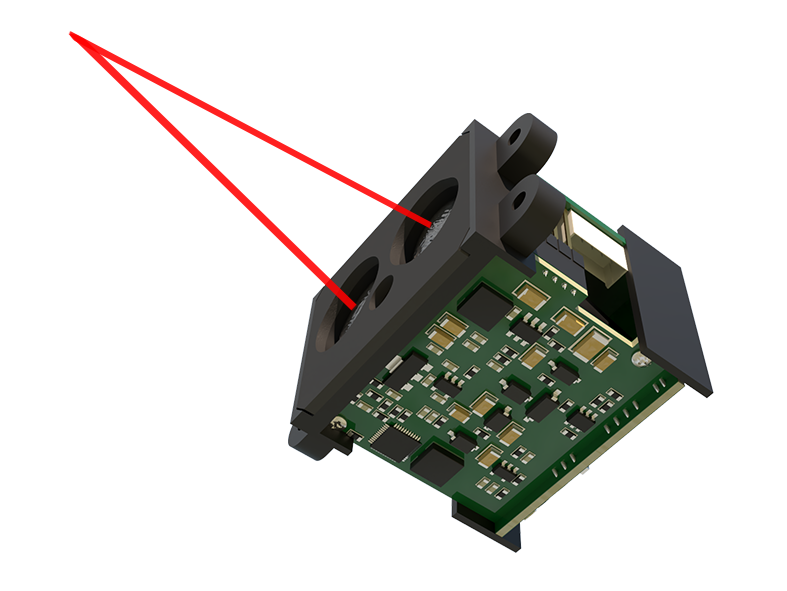
Looking ahead, the evolution of Japanese laser vibration sensors is aligned with Industry 4.0 and the Internet of Things (IoT). We are seeing the integration of Ethernet connectivity (e.g., EtherCAT), embedded intelligence for edge computing, and compatibility with industrial cloud platforms. This facilitates remote monitoring and the integration of vibration data into larger predictive maintenance and digital twin models. Miniaturization is another ongoing trend, with compact sensor heads enabling integration into automated production lines and portable field kits.
In conclusion, Japanese laser vibration sensors represent the pinnacle of non-contact metrology. Their unparalleled precision, robustness, and versatility stem from a deep industrial heritage and continuous investment in core technologies. For engineers and researchers worldwide tasked with solving complex vibration challenges, ensuring product quality, or pioneering new technologies, these sensors offer a reliable and sophisticated pathway to critical data. As manufacturing and research push the boundaries of precision, the role of these advanced measurement tools will only become more central, solidifying Japan's position as a key innovator in this essential field of sensing technology.