Proximity sensors are indispensable components in modern industrial automation, robotics, and consumer electronics. Their performance, reliability, and application suitability are fundamentally dictated by the materials used in their construction. As an electrical engineer, understanding these material choices is crucial for sensor selection, system integration, and troubleshooting. This article delves into the core materials employed in manufacturing various types of proximity sensors, explaining their properties, roles, and impact on sensor functionality.
The sensing element is the heart of any proximity sensor, and its material defines the sensor's operating principle. For inductive proximity sensors, which detect metallic objects, a ferrite core is paramount. This ceramic compound, typically made from iron oxide mixed with other metal oxides like manganese, zinc, or nickel, serves to concentrate the alternating magnetic field generated by the sensor's coil. High-permeability ferrite cores enhance sensitivity and sensing range. The coil itself is wound from fine enameled copper wire, chosen for its excellent electrical conductivity. The housing encapsulating the coil and core is usually made from a temperature-resistant polymer like PBT (Polybutylene Terephthalate) or PPS (Polyphenylene Sulfide), providing mechanical strength, chemical resistance, and electrical insulation.
Capacitive proximity sensors, capable of detecting both metallic and non-metallic materials, rely on a different material set. The active face of the sensor forms one plate of a capacitor. This electrode is often a conductive metal coating, such as a deposited layer of copper or a conductive polymer, applied to a substrate. The housing material here is critical; it must have stable dielectric properties. Materials like PTFE (Polytetrafluoroethylene) or specific engineered plastics are used to ensure the electric field projects effectively through the housing to the target. The oscillator and signal processing circuitry within these sensors are built on standard printed circuit boards (PCBs) using FR-4 laminate with copper traces.
Magnetic proximity sensors, or reed switches, utilize unique magnetic materials. The hermetically sealed glass tube contains two ferromagnetic reeds, typically made from a nickel-iron alloy like Permalloy. This alloy is chosen for its high magnetic permeability and low coercivity, allowing the reeds to flex and make contact readily under the influence of an external magnet. The glass envelope must have a thermal expansion coefficient matching that of the reed metal to prevent stress fractures during sealing and temperature cycling.
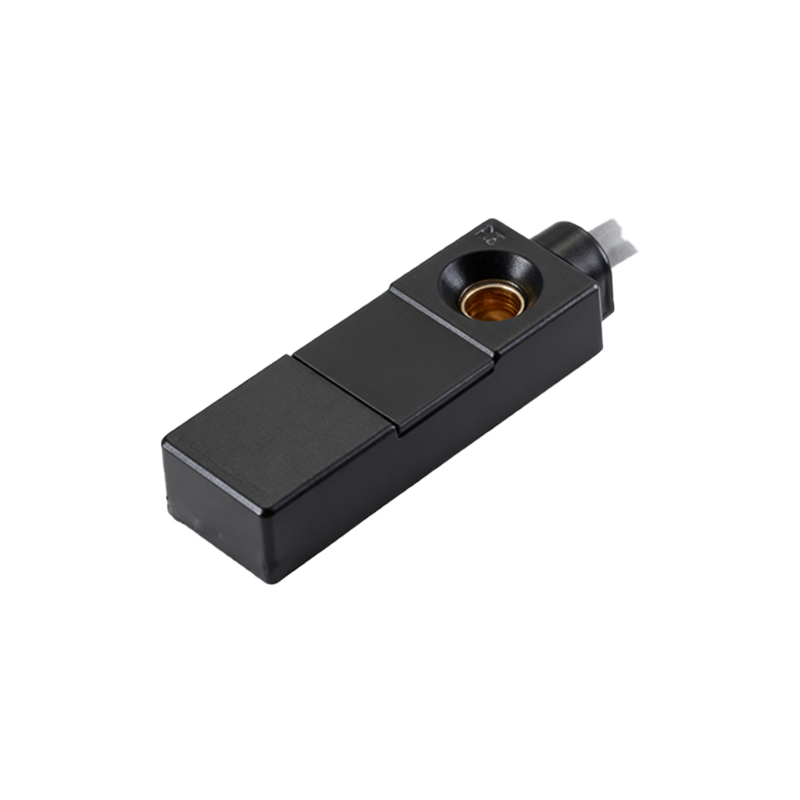
Photoelectric sensors represent another major category. Their performance hinges on optoelectronic materials. The light emitter is almost invariably a Light Emitting Diode (LED). For standard diffuse or through-beam sensors, infrared LEDs with gallium arsenide (GaAs) semiconductors are common due to their high output and immunity to ambient light. For color recognition or specific applications, red, green, or blue LEDs using different semiconductor compounds (like AlGaInP for red) are employed. The receiver is a phototransistor or photodiode, typically made from silicon, which is sensitive to the wavelength of the emitted light. The lens covering the emitter and receiver is made from optically clear plastics like polycarbonate or acrylic, designed to focus the light beam. For harsh environments, the housing may be constructed from stainless steel (e.g., SUS304) or brass with a nickel-plated finish to resist corrosion, impact, and washdowns.
Beyond the core sensing elements, auxiliary materials are vital for durability and functionality. Potting compounds, often epoxy resins or silicone gels, are used to protect internal electronics from moisture, vibration, and thermal shock. Cable entries and seals utilize various elastomers like nitrile rubber or silicone to maintain ingress protection (IP) ratings. For sensors in explosive atmospheres (ATEX/IECEx), flame-retardant materials and specially designed encapsulated housings are mandatory.
Recent material advancements are pushing sensor capabilities further. The use of high-temperature co-fired ceramic (HTCC) substrates allows sensors to operate in environments exceeding 150°C. Developments in magnetoresistive materials, like Giant Magnetoresistance (GMR) thin films, are enabling more sensitive and compact magnetic sensors. Furthermore, the integration of advanced polymers with superior shielding properties helps mitigate electromagnetic interference (EMI), a critical factor in densely packed industrial control panels.
In conclusion, the selection of materials in proximity sensor manufacturing is a precise science balancing electrical, magnetic, optical, mechanical, and chemical requirements. From the ferrite core in an inductive sensor to the GaAs crystal in an LED, each material is chosen to optimize a specific parameter—sensitivity, range, response time, or environmental resilience. For the practicing engineer, this material knowledge translates into a deeper understanding of sensor datasheets, more informed selection for challenging applications, and enhanced ability to diagnose field failures related to material degradation, such as cracked housings, chemical attack on sensing faces, or temperature-induced drift.